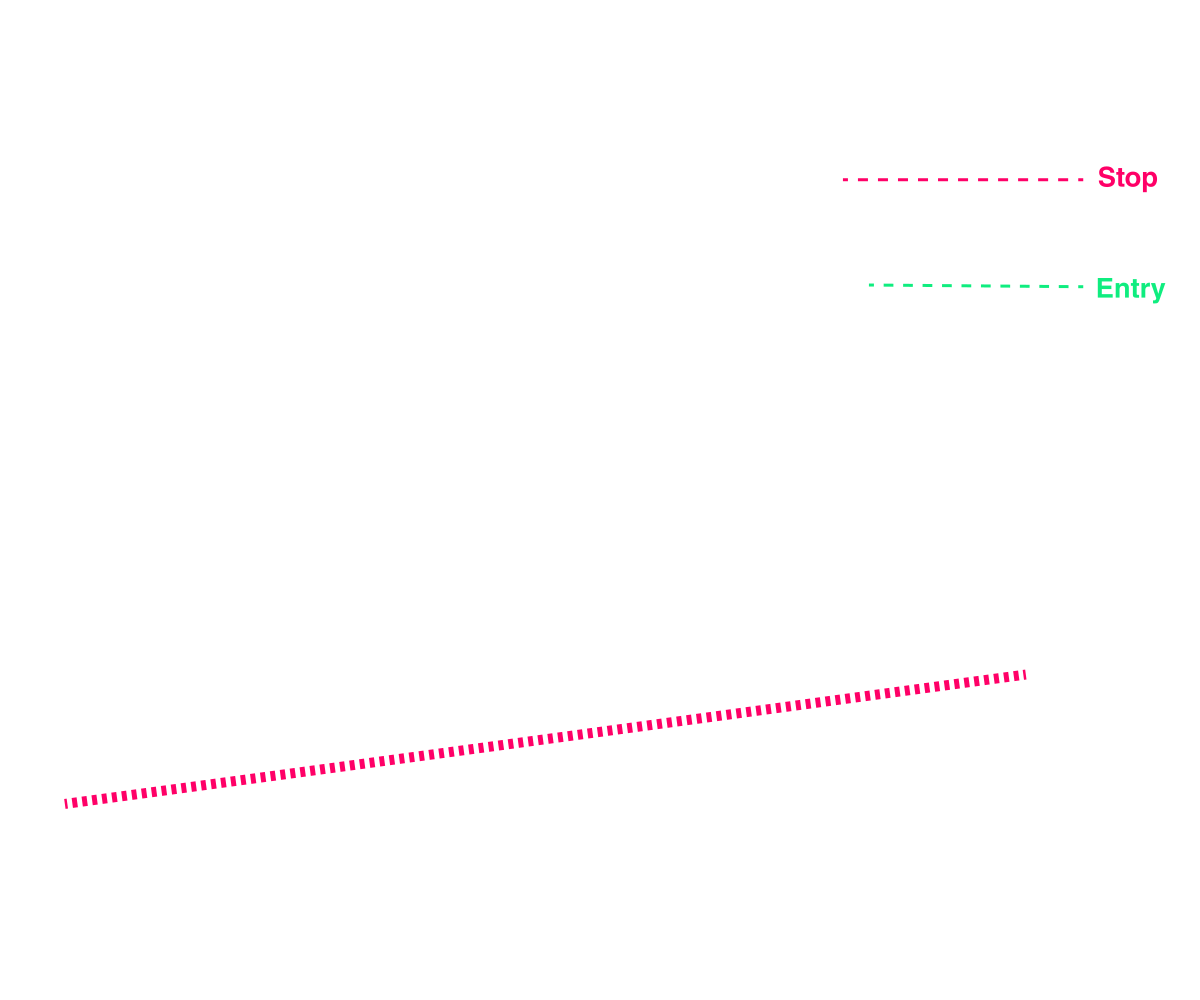
Parabolic Blow-Off Top
Definition & Identification
A Parabolic Blow-Off Top is a dramatic bearish reversal pattern that follows a near-vertical advance in price. It is identified by:
- A steepening rally where the slope of the trendline goes from normal to vertical.
- Sharp acceleration in price, often fueled by speculation, hype, or news catalysts.
- Volume expanding aggressively into the final stage of the move.
- A violent reversal once the parabola “snaps,” often retracing much of the prior rally in days or weeks.
The blow-off top is not always a clean geometric shape like a triangle or flag; instead, it’s defined by exponential price action and a climactic reversal.
Pattern Psychology
The blow-off top represents the final euphoric phase of a bull move:
- Early in the parabola, fundamentals or steady momentum attract buyers.
- As price accelerates, fear of missing out (FOMO) drives in latecomers. Every dip is aggressively bought.
- The vertical ascent reflects panic buying — traders abandon rational risk management, believing prices will only go higher.
- At the peak, supply overwhelms demand. Smart money distributes into late buyers.
- Once cracks appear, profit-taking snowballs into panic selling. Trapped longs race to exit, causing rapid declines.
This emotional cycle — greed climaxing into fear — is why blow-offs are so violent.
Reliability Stats
Bulkowski includes parabolic runs under “blow-off tops.” His research notes:
- Failure rate: Very low; once confirmed, blow-offs almost always reverse.
- Average decline after reversal: ~50% retracement of the entire parabolic leg.
- Timeframe: Declines typically occur in 1/3 the time it took to rise.
- Continuation odds: Minimal — parabolas rarely “pause” and continue higher.
In equities, blow-offs are rare but devastating. In crypto and commodities, they occur more frequently due to speculative cycles.
Trade Plan
Entry: Aggressive traders may short when parabolic slope breaks (trendline violation).
Conservative traders wait for confirmation via a lower high or neckline break after the peak.
Stop loss: Above the blow-off high (conservative) or above the last minor rally (aggressive).
Targets: First = 50% retracement of the parabolic move. Secondary = base of the parabola (common in crypto).
Invalidation: If price consolidates sideways near highs instead of reversing sharply, it may not be a blow-off.
Nuances & Common Traps
- Early shorts: Shorting during the vertical climb can be disastrous; the parabola often overshoots expectations.
- Echo rallies: After the first sharp drop, violent dead-cat bounces are common. Traders mistaking these for recoveries often get trapped.
- Volume spike: The highest volume candle often marks the peak.
- Cross-market psychology: Blow-offs are amplified in assets with high retail participation (crypto, penny stocks).
- News catalysts: Blow-offs often coincide with “too good to be true” news at the top.
When to Skip
- If the move is strong but not vertical (trend acceleration, not parabola).
- If overall market context is bullish and supports sustained trend.
- If volume does not spike into the top (may just be normal consolidation).
Summary
The Parabolic Blow-Off Top is a bearish reversal that follows vertical rallies fueled by speculation. Once broken, these patterns retrace ~50% or more of the prior advance in a fraction of the time. Traders should avoid shorting too early but act decisively once slope or neckline breaks, as the reversals are swift and brutal.