


WeWork Stock and the Q That Changes Everything
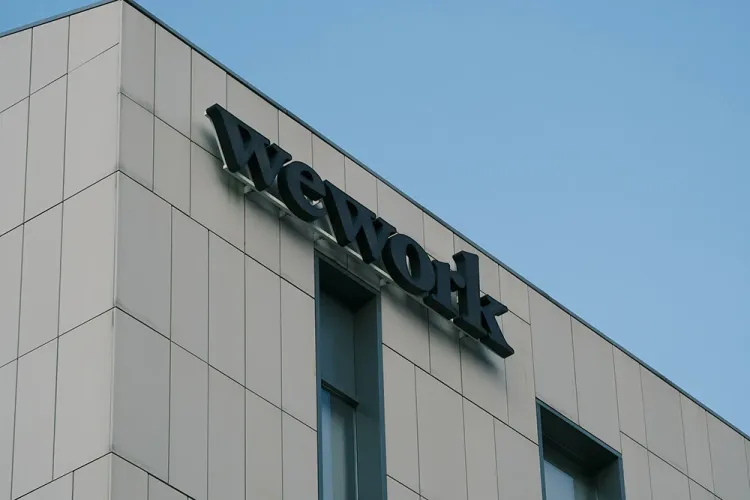
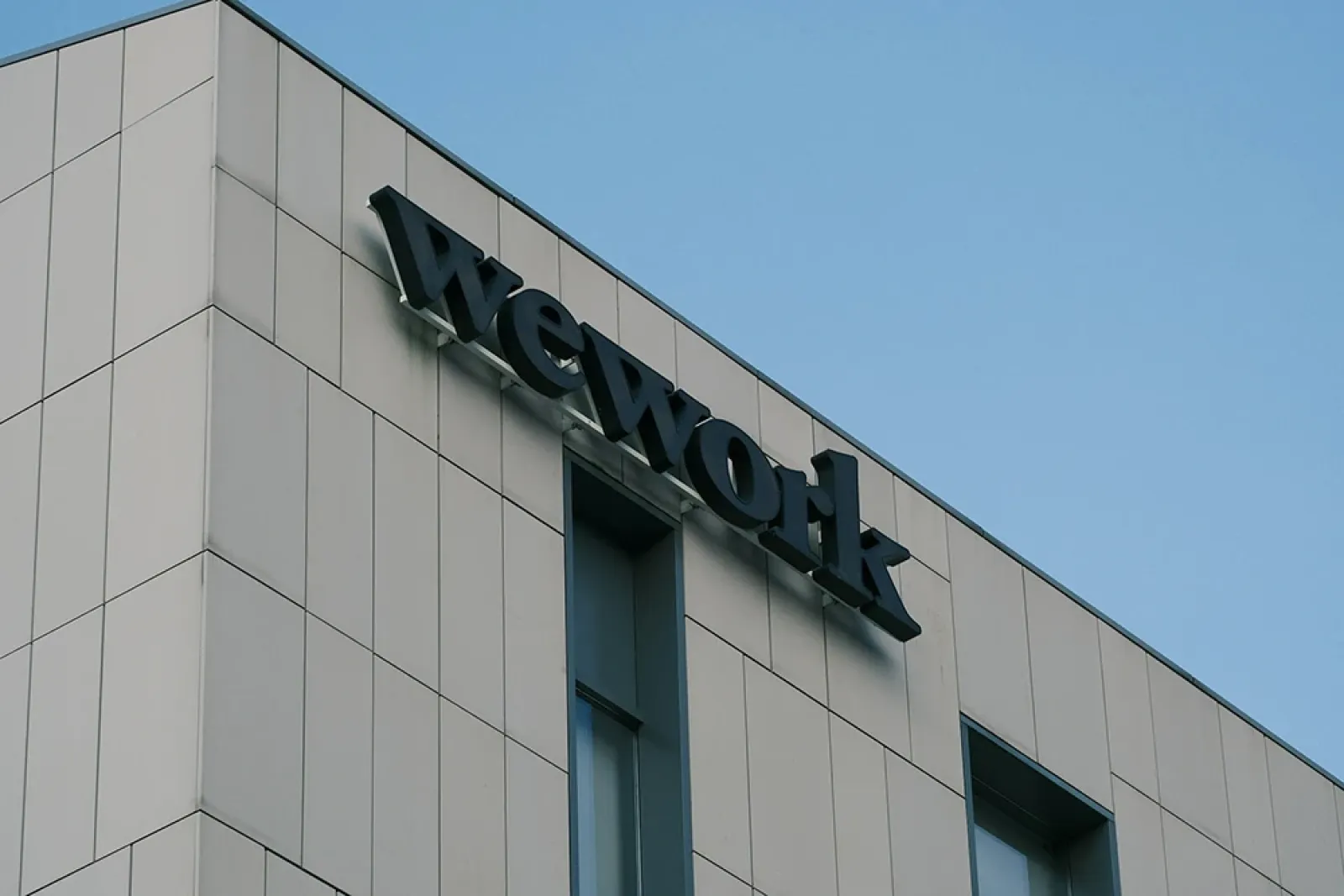
When a stock ticker suddenly sprouts a "Q" at the end, it's not a typo—it's a warning label. WEWKQ, the symbol formerly known as WE, now carries that scarlet letter of bankruptcy trading. For anyone who bought into the flexible workspace dream, this isn't just another red day. The ticker change marks the official transition from speculative hope to creditor negotiation, and if you're holding shares, the reality is pretty bleak. Most retail investors in bankruptcy plays end up with nothing once the dust settles and the lawyers finish dividing what's left.
From Unicorn to Cautionary Tale
The numbers tell a story that would be hard to believe if we hadn't watched it happen in real time. WeWork peaked at a $47 billion private valuation in 2019, backed by SoftBank's Vision Fund and powered by Adam Neumann's charisma. Fast forward through a failed IPO, a pandemic that emptied offices worldwide, and mounting losses that no amount of growth could outpace, and here we are: Chapter 11 bankruptcy filed in November 2023. The WeWork stock that once symbolized the future of work now trades for pennies on over-the-counter markets, a graveyard where bankrupt companies go to let remaining shareholders watch their investment fade to zero.
The Real Question Isn't About WeWork Anymore
Here's what matters for anyone tracking commercial real estate plays: WeWork's collapse isn't just about one company's broken business model—it's a window into how the entire office real estate sector is repricing risk in a world where remote work isn't going away. When you see a high-profile failure like this, the reflexive move is to either panic or dismiss it as an isolated case. Neither response is particularly useful. What you want to know is whether WeWork was the canary in the coal mine or just a poorly designed canary that would have failed regardless of the air quality.
The Bankruptcy Mechanics: What That Q Really Means
The "Q" suffix is FINRA's way of telling everyone that a company has filed for bankruptcy protection. Once WeWork entered Chapter 11, the stock got delisted from the NYSE and moved to OTC (over-the-counter) markets—the financial equivalent of being sent to the kids' table. This isn't some technical formality. That Q is a flashing red light warning that the company's capital structure is being reworked, and common shareholders sit at the absolute bottom of the priority list when assets get divided up.
Why WEWKQ Still Trades (And Why That's Probably Not Good News)
Just because a company files for bankruptcy doesn't mean its stock disappears immediately. Shares continue trading on OTC markets for a few reasons, none of them particularly encouraging:
-
Speculative gambling: Some traders bet on long-shot reorganization scenarios where equity holders might recover something
-
Lack of information: Retail investors who don't realize bankruptcy usually means complete equity wipeout
-
Short covering: Traders who shorted the stock need to buy shares back to close positions
-
Hope for acquisition: Occasionally, a buyer emerges and existing shareholders get a small piece
The volume tends to be thin, spreads are wide, and price movements are more about rumor and hope than anything resembling fundamental analysis.
Historical Reality Check: What Usually Happens to Shareholders
Let's be honest about what Chapter 11 typically means for common stock holders. The bankruptcy process has a strict hierarchy, and equity is dead last.
The pecking order looks like this:
-
Secured creditors get paid first (banks, bondholders with collateral)
-
Unsecured creditors come next (suppliers, landlords, employees owed wages)
-
Bondholders without collateral follow
-
Preferred shareholders might see pennies on the dollar
-
Common shareholders get whatever's left—which is usually nothing
History isn't kind here. General Motors shareholders in 2009? Wiped out. Lehman Brothers? Gone. Hertz was a rare exception where equity holders got something, but that was an unusual case during unusual times. The WeWork stock trading today is most likely heading toward zero, and anyone holding onto shares hoping for a miracle is betting against decades of bankruptcy precedent.
Reorganization vs. Liquidation: Two Different Endings
Chapter 11 bankruptcy comes in two flavors, and they matter a lot for anyone still tracking WeWork.
Reorganization means the company tries to restructure its debts, shed unprofitable locations, and emerge as a smaller but viable business. The existing equity gets cancelled, creditors often get new shares in the restructured company, and old shareholders walk away empty-handed. This is the "better" outcome for the business but still terrible for stock holders.
Liquidation means they're selling everything off piece by piece to pay creditors whatever they can. The brand might get sold, leases get terminated, furniture gets auctioned. By the time everything's divided up, common shareholders are lucky if there's even a bankruptcy filing to frame. WeWork is currently in reorganization mode, but that doesn't mean your shares are safe—it just means the company might survive in some form while your equity doesn't.
What Went Wrong: The WeWork Model


WeWork's business model had a fatal flaw baked into its foundation from day one, and once you see it, you can't unsee it. The company signed long-term leases with landlords—typically 10 to 15 years—then turned around and rented that same space to customers on month-to-month or short-term contracts. When times are good and demand is high, this works. You're collecting rent from multiple small tenants on flexible terms while paying fixed costs to your landlord. But the moment demand drops or the economy hiccups, you're stuck holding expensive, empty real estate with no way out. This wasn't a bug in the system. It was the system.
The Flexible Workspace Trap
The pitch was elegant: companies want flexibility, employees want cool spaces with free beer, and WeWork would aggregate demand to make it all work. The execution revealed why traditional landlords don't operate this way.
Here's what the model actually created:
-
Mismatched duration risk: 15-year lease obligations funded by monthly memberships that could cancel anytime
-
Negative operating leverage: Fixed costs stayed constant while revenue could vanish in weeks
-
Capital intensity disguised as tech: Despite the "tech company" branding, this was a real estate play that needed constant cash infusions
-
Margin compression: Price competition with other coworking spaces and direct landlords offering their own flexible options
-
Concentration risk: Heavy exposure to expensive urban markets where remote work trends hit hardest
The flexible workspace concept isn't inherently doomed—IWG (formerly Regus) has made it work for decades by being far more conservative with expansion and debt. WeWork's version was flexibility for customers, rigidity for the company, and that asymmetry killed them.
How the Pandemic Turned Problems Into a Crisis
The post-2020 world didn't create WeWork's problems; it just removed any remaining room for error. Before COVID, occupancy rates were high enough to paper over the structural issues. Companies were still believers in dense urban offices, and the growth story kept capital flowing. Then everything changed at once. Remote work went from fringe benefit to standard practice. Companies started questioning whether they needed any office space at all, let alone expensive Manhattan or San Francisco addresses. WeWork's occupancy dropped, but those lease payments to landlords kept coming due every month. The cash burn rate, already problematic, became unsustainable.
The Numbers That Couldn't Add Up
When you dig into WeWork's financials before bankruptcy, the debt structure tells you everything you need to know about why the WeWork stock never recovered.
The capital structure looked like this:
-
$13+ billion in lease liabilities: Long-term commitments to landlords that couldn't be easily broken
-
$3+ billion in debt: Bonds and loans with interest payments and covenants
-
Declining revenue: Membership cancellations outpacing new sign-ups in key markets
-
Negative free cash flow: Burning hundreds of millions quarterly with no path to profitability
-
Failed refinancing attempts: Credit markets closed to a company everyone could see was struggling
The Bottom Line: WeWork was trying to solve a liquidity problem that was actually a solvency problem—they didn't just need more time, they needed a completely different business model, and bankruptcy was the only way to reset those lease obligations they never should have signed in the first place.
Broader Office Real Estate Implications


The WeWork stock collapse is a data point, not the whole story. But it's a data point that tells us something about the health of office real estate as an asset class. The question isn't whether WeWork's specific problems translate directly to other players—they don't. The question is whether the same forces that exposed WeWork's vulnerabilities are creating pressure across the entire sector. And the answer, judging by vacancy rates and REIT performance, is yes.
Current office market conditions show some uncomfortable patterns:
-
Major city vacancy rates: San Francisco pushing 30%+, New York around 20%, similar stories in other tech hubs
-
Sublease space flooding markets: Companies shedding excess office commitments, adding to available inventory
-
Decreased lease renewal rates: Tenants downsizing when contracts expire rather than expanding
-
Remote work stabilization: Hybrid models have stuck around, meaning permanently lower demand for office square footage
-
Return-to-office mandates hitting resistance: Even companies pushing for in-person work aren't getting pre-2020 occupancy levels
Office REITs Facing the Heat
Traditional office landlords aren't structured like WeWork—they own buildings rather than sublease them, and their tenants often have longer-term commitments. But that doesn't make them immune to the same demand shock. Boston Properties (BXP), SL Green (SLG), and Vornado (VNO) have all seen their shares take significant hits as investors reprice office exposure. These are established operators with decades of experience, and they're still dealing with declining occupancy, tenants wanting rent concessions, and questions about whether their buildings will ever return to pre-pandemic utilization rates. The REITs with heavy office exposure trade at discounts to net asset value that suggest the market thinks book values are overstated—in other words, those buildings might not be worth what the balance sheets claim.
WeWork vs. Traditional Landlords: Different Problems, Same Headwinds
Here's where the distinction matters. WeWork's collapse came from operational leverage gone wrong—they amplified both the upside and downside of office demand through their sublease model.
Traditional office landlords face different but related challenges:
-
Refinancing risk: Buildings bought or refinanced at low interest rates now facing much higher costs
-
Tenant creditworthiness: More companies struggling financially or choosing to downsize
-
Capital expenditure demands: Buildings need constant investment in amenities to compete
-
Longer feedback loops: 5-10 year leases mean today's weak demand shows up in cash flows gradually
-
Regional variation: Not all markets are equally affected—sunbelt cities performing better than coastal tech hubs
WeWork was a canary. Traditional office REITs are the coal miners. Different roles, same air quality.
The Great Office Bifurcation
One trend becoming impossible to ignore: Class A office space is holding up relatively better while Class B and C properties are getting hammered. Companies that are bringing people back to offices want premium locations with modern amenities—the trophy buildings in prime locations. Older buildings in secondary locations are seeing occupancy crater and valuations collapse. This flight to quality creates a weird dynamic where some office REITs with newer, better-located properties might actually benefit as tenants consolidate into fewer, nicer spaces. But the sector overall is shrinking, so this is more about relative performance than absolute strength.
Remember: The WeWork stock going to zero doesn't mean all office real estate is doomed, but it does mean the sector is going through a structural repricing that hasn't finished playing out—and anyone holding office-heavy REITs needs to understand which side of the Class A vs. Class B/C divide their holdings fall on.
Reading the Tea Leaves for Investors


Office real estate doesn't exist in isolation. When one corner of commercial property starts showing cracks, the contagion risk spreads through correlations that aren't always obvious until they matter. The WeWork stock implosion happened to one company, but the ripple effects touch everything from regional banks with CRE loan exposure to construction companies to property management software firms. Understanding these connections helps you avoid getting blindsided by seemingly unrelated portfolio hits.
Key correlation risks to track:
-
Regional banks with commercial real estate loans: Heavy office loan exposure creates credit risk and capital concerns
-
Construction and development firms: Fewer new office projects means less work for builders and materials suppliers
-
Property management and services companies: CBRE, JLL, and Cushman & Wakefield see fee pressure when transactions slow
-
Office furniture and design: Herman Miller, Steelcase, and similar plays suffer when companies stop outfitting spaces
-
Urban-focused retail REITs: Foot traffic in downtown cores depends partly on office worker density
Where Smart Money Is Rotating
While office REITs struggle, other commercial real estate segments are seeing relative strength as institutional investors rebalance portfolios. These alternatives aren't bulletproof, but they're benefiting from different demand drivers.
Sectors drawing interest:
-
Industrial REITs (PLD, DRE): E-commerce and supply chain reshoring keep warehouse demand strong
-
Data centers (DLR, EQIX): AI compute needs and cloud infrastructure driving expansion
-
Cell tower REITs (AMT, CCI): 5G buildout and increasing data consumption create steady cash flows
-
Life science properties (ARE): Biotech and pharma need specialized facilities that can't be easily converted
-
Self-storage (PSA, EXR): Recession-resistant with pricing power in inflationary environments
These aren't recommendations—just observations about where capital has been flowing as investors exit office exposure.
Technical Levels to Watch
IF office REIT support levels from 2020 COVID lows start breaking, THEN you're looking at potential capitulation selling and further downside.
IF volume spikes on down days exceed volume on up days consistently, THEN institutional distribution is likely continuing.
IF short interest in office-heavy REITs keeps climbing, THEN the market expects more pain ahead (or a squeeze setup is building).
IF dividend cuts get announced by major office REITs, THEN expect immediate 10-20% drops as income investors exit.
Quick technical checklist for office REITs:
-
Watch the 200-day moving average—breaks below often signal longer-term downtrends
-
Monitor relative strength vs. broader REIT indices to see if office is underperforming peers
-
Check credit spreads on corporate bonds—widening spreads mean debt markets pricing in more risk
-
Track institutional ownership changes in 13F filings to see if smart money is reducing positions
Sentiment Indicators Worth Monitoring
The narrative around office real estate shifts slowly, then suddenly. Right now we're in the "slowly" phase where everyone knows there's a problem but hasn't fully repriced for it. Sentiment indicators help you spot when that shifts to "suddenly." Analyst downgrades are becoming more frequent. Sell-side research that spent 2021-2022 calling office REITs "oversold" is now quietly lowering price targets. Conference call language from REIT management teams has gone from "temporary disruption" to "structural headwinds" to "strategic repositioning"—corporate speak for "we're in trouble and need to change everything." When you see major institutional holders who've owned these names for decades finally throwing in the towel, that's when you know sentiment has truly shifted. The WeWork stock trajectory from darling to disaster happened faster than most office REITs will experience, but the psychological pattern is similar: denial, hope, acceptance, capitulation.
The Contrarian Case


Saying office real estate looks attractive right now will get you laughed out of most investor conversations. But contrarian plays aren't about being right when everyone agrees with you—they're about identifying when pessimism has overshot reality. Some sharp investors are picking through the wreckage, not because they think remote work is reversing, but because they think certain assets are now priced for apocalypse when the actual outcome might just be "pretty bad." The difference between catastrophe and mere decline creates opportunity if you can identify which properties and markets have been unfairly lumped into the sell-everything pile.
The bull case for selective office exposure:
-
Valuation capitulation: Some office REITs trade at 40-50% discounts to pre-COVID levels despite maintaining occupancy
-
Dividend yields: Beaten-down prices push yields into 8-10% territory if dividends hold
-
Conversion opportunities: Older office buildings in residential-starved cities becoming apartment conversion targets
-
Government mandates: Federal and some corporate return-to-office pushes creating floor on demand
-
Replacement cost dynamics: Building new Class A space costs far more than buying distressed existing assets
-
Long-term lease visibility: Multi-year tenant commitments provide cash flow certainty despite sector pessimism
Markets and Properties That Might Surprise
Not all office markets are created equal, and the blanket pessimism creates pockets where fundamentals look better than prices suggest. Geographic and property-type distinctions matter more now than they have in decades.
Places and assets potentially positioned better:
-
Sunbelt cities with population growth: Austin, Nashville, Miami seeing in-migration and company relocations
-
Government and healthcare-adjacent properties: Tenants with stable, long-term space needs
-
Life science-convertible buildings: Properties that can pivot to lab space in biotech clusters
-
Transit-oriented developments: Locations where commuting is genuinely convenient, not theoretical
-
Trophy assets in gateway cities: Best-in-class Manhattan or San Francisco buildings still commanding tenant interest
-
Suburban campuses: Tech companies may eschew downtown but still want employees together somewhere
The WeWork stock crash doesn't distinguish between these categories—it's a headline that drags down sentiment across the board. That indiscriminate selling is where opportunities hide.
When Cheap Actually Becomes Value
This is the hard part. Falling knives look like bargains all the way down until they're not knives anymore, just broken pieces on the floor. Office REITs have looked "cheap" for three years running, and they've mostly kept getting cheaper. The repricing isn't done until we see actual capitulation—forced selling from leveraged holders, dividend cuts flushing out yield chasers, and asset sales establishing new price discovery. Value emerges when the worst-case scenario is priced in but the actual outcome has a reasonable chance of being better. Right now, some office assets are priced assuming 50%+ vacancy rates and permanent impairment. If reality settles at 25-30% vacancy with stable cash flows on remaining tenants, the upside from current prices could be substantial. But timing that inflection point is the difference between catching a bounce and catching a falling knife. The investors building positions now aren't expecting V-shaped recoveries—they're betting on U-shaped ones that take years to play out, and they're comfortable being early because the risk-reward at current prices compensates for the uncertainty.
Trading vs. Investing Considerations


The WeWork bankruptcy creates two completely different opportunity sets depending on your timeline. Traders see volatility spikes and panic selling. Investors see multi-year repricing cycles. Getting these mixed up is how you end up buying what you think is a long-term value play only to watch it drop another 30% over six months, or selling a swing trade at a loss right before a major bounce. The same news event creates different playbooks based on whether you're working in days or years.
Short-term trading dynamics around WeWork headlines:
-
Sympathy selling: Office REITs and CRE-exposed stocks drop on WeWork news regardless of actual connection
-
Volatility expansion: Options pricing spikes as uncertainty increases across the sector
-
News cycle rebounds: Initial panic selling often followed by oversold bounces within days
-
Sector rotation: Money flowing out of office names needs somewhere to go, creating relative strength elsewhere
-
Headline risk remains elevated: Every new bankruptcy or distressed sale triggers another round of selling
Options Market Tells a Story
The options market around office REITs has gotten interesting in ways that reveal how professional traders are positioning. Implied volatility has expanded significantly compared to realized volatility—meaning options are pricing in bigger moves than stocks are actually making. That premium exists because nobody knows where the bottom is, so anyone selling puts wants to get paid for the uncertainty. For traders, this creates opportunities in volatility plays rather than directional bets. Selling premium on beaten-down office REITs through covered calls or cash-secured puts can generate income if you're comfortable owning the underlying at lower prices. The flip side: buying puts as portfolio insurance or speculating on further downside has gotten expensive. The market knows office real estate is vulnerable, and that knowledge is already priced into option premiums.
Pro tips for trading around office real estate volatility:
-
Watch for gap-downs on earnings or dividend announcements—these often fill partially within days
-
Short-term oversold bounces happen fast; don't chase, wait for entries on strength followed by pullbacks
-
Liquidity dries up quickly in smaller REITs; stick to high-volume names for tight spreads
-
Correlation breaks down during panic—not all office REITs move together when selling accelerates
News Trading vs. Structural Positioning
Here's where people get tripped up. The WeWork stock getting crushed is news. The repricing of office real estate as an asset class is a structural shift that takes years. News trading means you're in and out based on headlines—buying the dip after a bankruptcy announcement, selling the bounce a week later, repeat. Structural positioning means you're building or avoiding exposure based on your view of where office demand will be in 2027, not next month. Both approaches can work, but mixing them is disaster. If you buy an office REIT thinking you're trading an oversold bounce, but it keeps dropping and you decide to "invest for the long term" instead of taking your loss, you've just turned a trading mistake into a value trap. Conversely, if you're building a long-term position but panic sell on the next bad headline, you've let short-term noise wreck your structural thesis.
The Bottom Line: The WeWork bankruptcy is a trading catalyst that happens to sit inside a multi-year structural shift—knowing which game you're playing determines whether volatility is your friend or your enemy, and confusing the two is how traders become accidental long-term holders of declining assets.
WeWork Stock Is the Headline, But Not the Whole Story


WeWork's bankruptcy is easy to write off as one company's spectacular failure—bad leadership, worse timing, and a business model that never made sense at scale. And sure, that's all true. But treating this as an isolated event misses the bigger picture. WeWork was the most leveraged, most exposed, most fragile player in a sector that's dealing with fundamental demand destruction. They went down first because they had the least margin for error, not because they're the only ones feeling the pressure. The office real estate repricing isn't done just because the weakest player already failed. If anything, WeWork's collapse is the opening act, not the finale.
Metrics That Actually Matter
Watching office real estate health means tracking indicators that tell you whether things are stabilizing or still deteriorating. Headlines grab attention, but data shows direction.
Keep your eye on these numbers:
-
Net absorption rates: Are more tenants moving in or out of office space in key markets?
-
Effective rent growth: Are landlords raising rents or offering increasing concessions to keep tenants?
-
Lease renewal rates: What percentage of expiring leases actually renew vs. tenants vacating?
-
Cap rate trends: Are property sales happening at higher cap rates (lower valuations) than last year?
-
REIT FFO guidance: Are funds from operations meeting, beating, or missing management projections?
-
Credit default swap spreads: What's the market pricing for default risk on office REIT debt?
-
Office utilization data: Are badge swipes and building traffic trending up or flat?
These metrics update slower than stock prices but tell you more about actual business conditions.
The Bigger Commercial Real Estate Picture
Office struggles fit into a broader rotation that's been playing out across commercial real estate for several years now. Capital is moving from oversupplied, demand-challenged sectors into areas with better supply-demand dynamics and secular tailwinds.
The pattern looks like this:
-
Money leaving: Traditional office, regional malls, certain retail formats
-
Money entering: Industrial/logistics, data centers, cell towers, medical office, self-storage
-
Question marks: Multifamily (supply concerns in some markets), hotels (cyclical exposure), student housing (demographic shifts)
-
Conversion plays: Office-to-residential, retail-to-fulfillment centers, adaptive reuse projects
-
Geographic shifts: Sunbelt gaining at expense of legacy gateway cities, though best assets in any market still command premium
This isn't a temporary rotation based on economic cycle positioning. It's a structural reallocation based on changed patterns in how people work, shop, and consume services. Office real estate isn't dying, but it's shrinking as a percentage of institutional portfolios, and that reallocation creates both winners and losers beyond just the office sector itself.
What This Means for Your Portfolio
The WeWork stock going to zero doesn't require you to dump every office-related holding tomorrow, but it should prompt some honest questions about exposure and conviction. If you own office REITs, do you have a specific thesis for why those assets will perform differently than the sector overall, or are you just hoping things get better? If you're considering adding exposure because valuations look cheap, have you distinguished between value and value trap? The lesson from WEWKQ isn't "avoid all office real estate forever"—it's that leverage, timing, and business model quality matter tremendously when sectors face structural headwinds. Some office assets will survive and eventually thrive. Others will follow WeWork into distress. The hard part is knowing which is which while the repricing is still happening. Your portfolio decisions should reflect whether you have genuine insight into that distinction or whether you're better off avoiding the sector entirely until the dust settles. There's no shame in admitting you don't have edge in a rapidly changing space. Sometimes the smartest move is watching from the sidelines while others figure out where the bottom actually is.
