

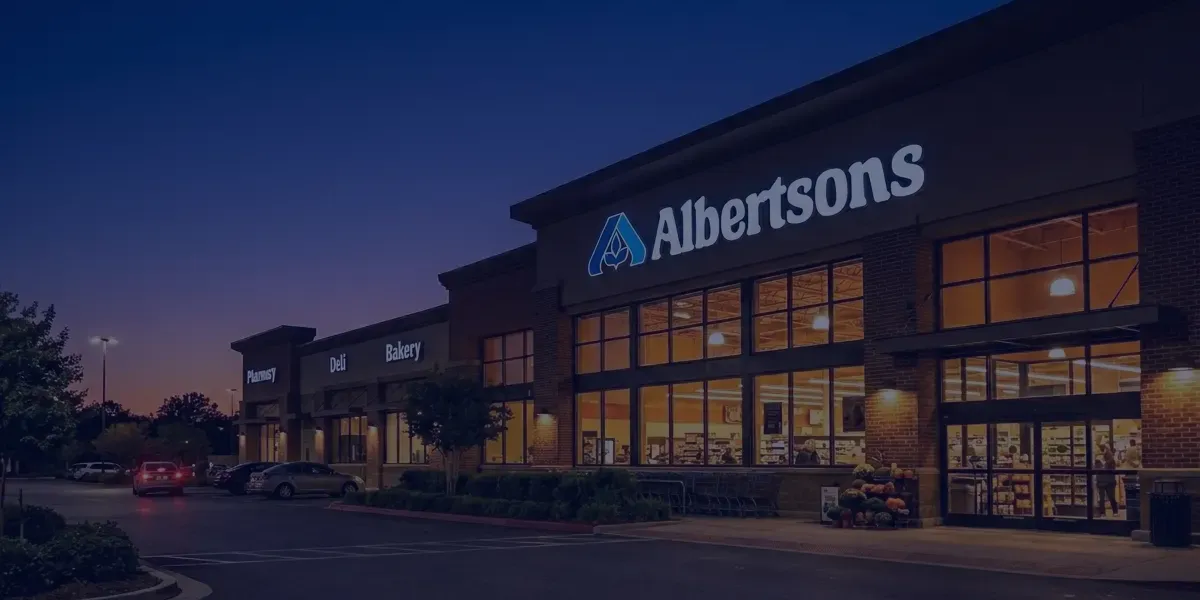

Understanding Albertsons Stock Today


Albertsons Companies (NYSE: ACI) represents one of the largest grocery retailers in the United States, operating over 2,200 stores under banners including Safeway, Vons, Jewel-Osco, and its namesake Albertsons brand. For investors, Albertsons stock presents a particular kind of opportunity—a mature, cash-generating business in a defensive sector, trading at a discount to historical levels following the collapse of its proposed merger with Kroger in late 2024. The company now operates as a standalone entity under new CEO Susan Morris, pursuing a "Customers for Life" strategy focused on digital growth, pharmacy expansion, and operational efficiency through AI and technology investments.
Key Questions Before Buying
The Albertsons investment thesis has fundamentally changed since the merger collapsed, and investors need to evaluate the company on its standalone merits rather than as a merger arbitrage play.
Questions investors should answer before buying Albertsons stock:
-
Can Albertsons compete effectively as a standalone company against Walmart, Costco, Amazon, and discount grocers like Aldi?
-
Does the current valuation adequately compensate for the risks in the grocery industry?
-
How sustainable is the dividend given the company's debt levels and thin industry margins?
-
What impact will ongoing litigation with Kroger and the $774 million opioid settlement have on the company's finances?
-
Is the new management team's strategy sufficient to drive growth in a highly competitive environment?
-
How do labor relations and unionization affect the company's cost structure and margin outlook?
What This Analysis Covers
This analysis examines Albertsons stock from multiple angles to help you determine whether it belongs in your portfolio.
Topics this analysis will cover:
-
Company overview including store banners, geographic footprint, and business model
-
The competitive landscape of the grocery industry and where Albertsons fits
-
Financial performance including revenue trends, profitability, and balance sheet health
-
The aftermath of the failed Kroger merger and ongoing litigation
-
Dividend sustainability and shareholder return policies
-
Valuation analysis compared to grocery peers
-
Key risks facing the company
-
Bull and bear cases for the stock
Keep In Mind: Albertsons stock has undergone a significant transformation from merger speculation target to standalone grocery operator, and any investment decision must account for this new reality—the company trades at a discount for reasons that may or may not be justified by its fundamentals and competitive position.
Albertsons Company Overview
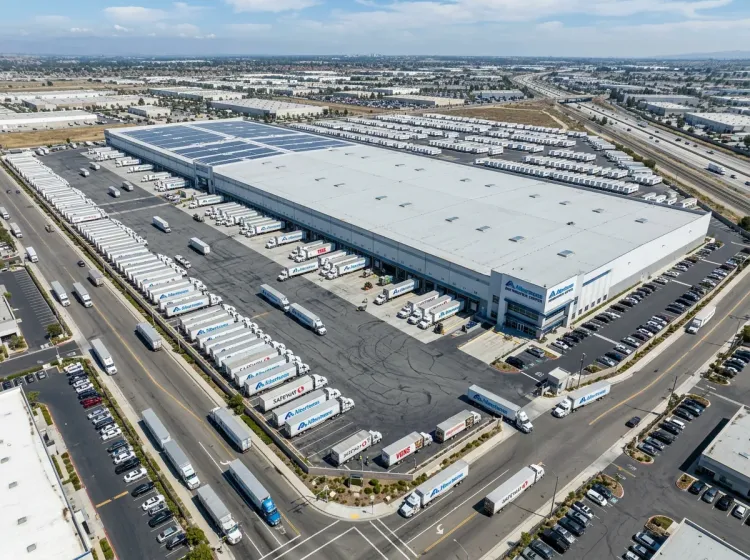
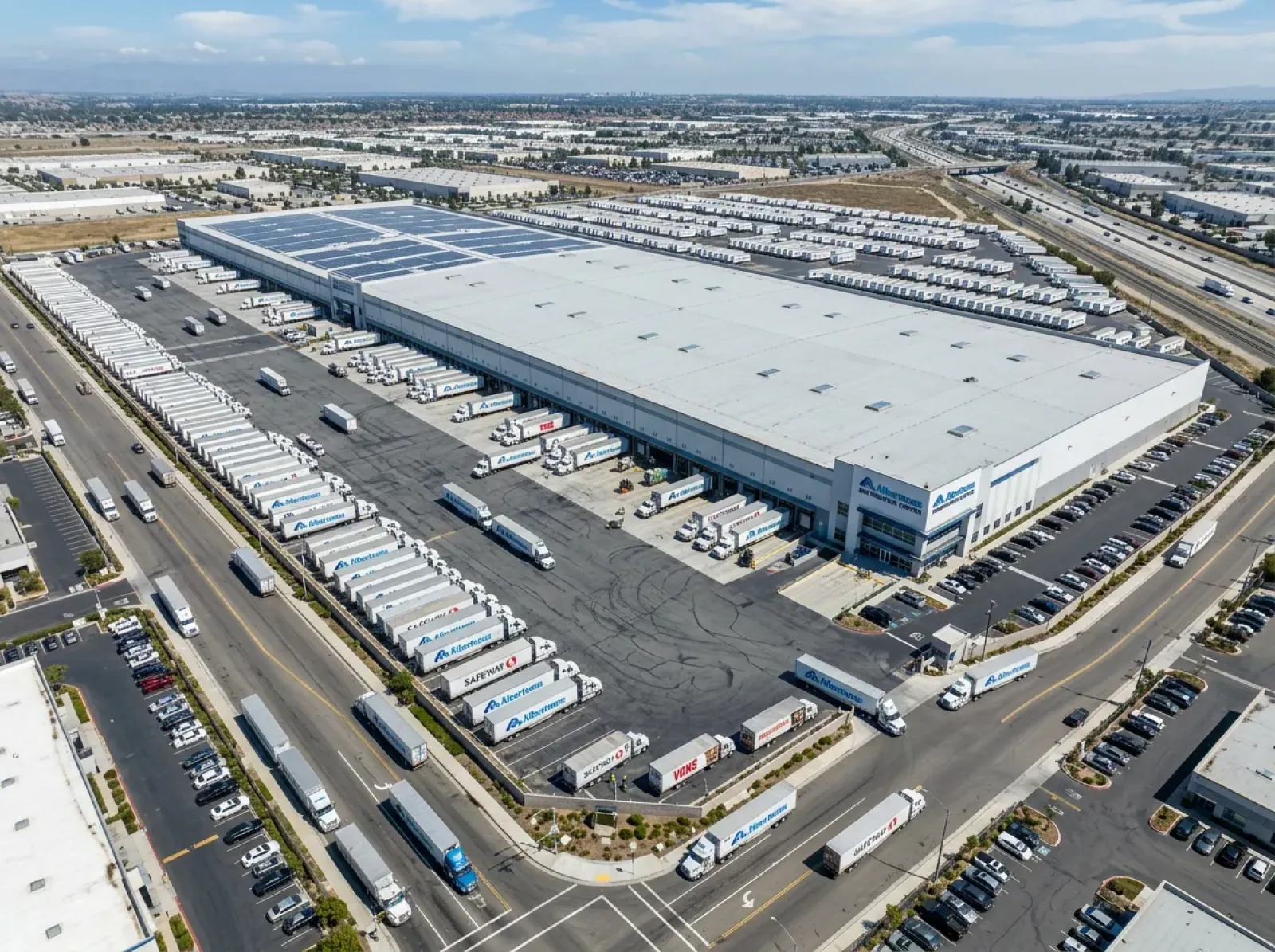
Albertsons Companies traces its roots to 1939 when Joe Albertson opened his first grocery store in Boise, Idaho with a $12,500 investment. The company has grown through decades of expansion and consolidation, becoming one of the largest food and drug retailers in the United States. Today, Albertsons operates approximately 2,270 stores across 34 states and the District of Columbia, employs roughly 280,000 workers, and generated $83.2 billion in revenue for fiscal year 2025. The company went public in June 2020 at $16 per share, raising $1.3 billion in its IPO. Albertsons stock now trades on the NYSE under the ticker ACI, representing a mature grocery business with strong regional market positions but facing intense competition from larger national players.
Store Banners and Business Model
Albertsons operates under more than 20 well-known regional banners, each with loyal customer bases developed over decades of community presence.
The company's store portfolio includes Albertsons, Safeway, Vons, Jewel-Osco, Shaw's, Acme, Tom Thumb, Randalls, United Supermarkets, Pavilions, Star Market, Haggen, and Carrs, among others. This multi-banner approach allows the company to maintain strong regional identities while benefiting from centralized purchasing, distribution, and technology investments. Revenue streams extend beyond traditional grocery sales to include pharmacy operations across approximately 1,700 in-store pharmacies, fuel centers at over 400 locations, and a growing digital business. The company's private label portfolio—including O Organics, Open Nature, Signature Select, and Lucerne—generates higher margins than national brands and has become increasingly important as consumers seek value. Digital sales have grown substantially, increasing 16% in the most recent quarter, with services like DriveUp & Go curbside pickup now including free pharmacy prescription pickup nationwide.
Leadership and Strategic Direction
Following the merger collapse, Albertsons underwent a leadership transition that positioned the company for its standalone future.
Susan Morris assumed the CEO role on May 1, 2025, succeeding Vivek Sankaran who led the company through the pandemic and the ultimately unsuccessful merger attempt. Morris, previously Executive Vice President and Chief Operations Officer, brings deep operational expertise to a company that must now compete independently rather than as part of a larger combined entity. Her "Customers for Life" strategy emphasizes several priorities: expanding digital capabilities through AI and technology investments, growing the pharmacy business as a traffic driver, strengthening private label offerings, and improving operational efficiency. The company has invested heavily in technology infrastructure, using AI to reshape operations from inventory management to personalized customer experiences. Loyalty membership has grown to over 51 million members, providing valuable data for targeted marketing and personalization. Under Morris's leadership, Albertsons has also returned capital to shareholders through dividend increases and share repurchases, signaling confidence in the company's cash generation even as it invests in competitive positioning.
The Bottom Line: Albertsons stock represents a large-scale grocery operation with strong regional banners, diversified revenue streams including pharmacy and digital, and new leadership focused on competing independently—but investors must evaluate whether the company's strategy can generate growth in an industry dominated by larger, more efficient competitors.
The Grocery Industry Landscape
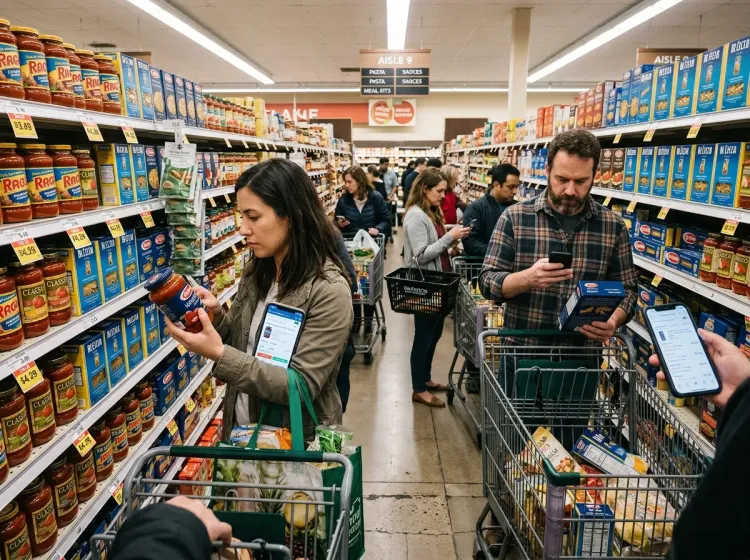
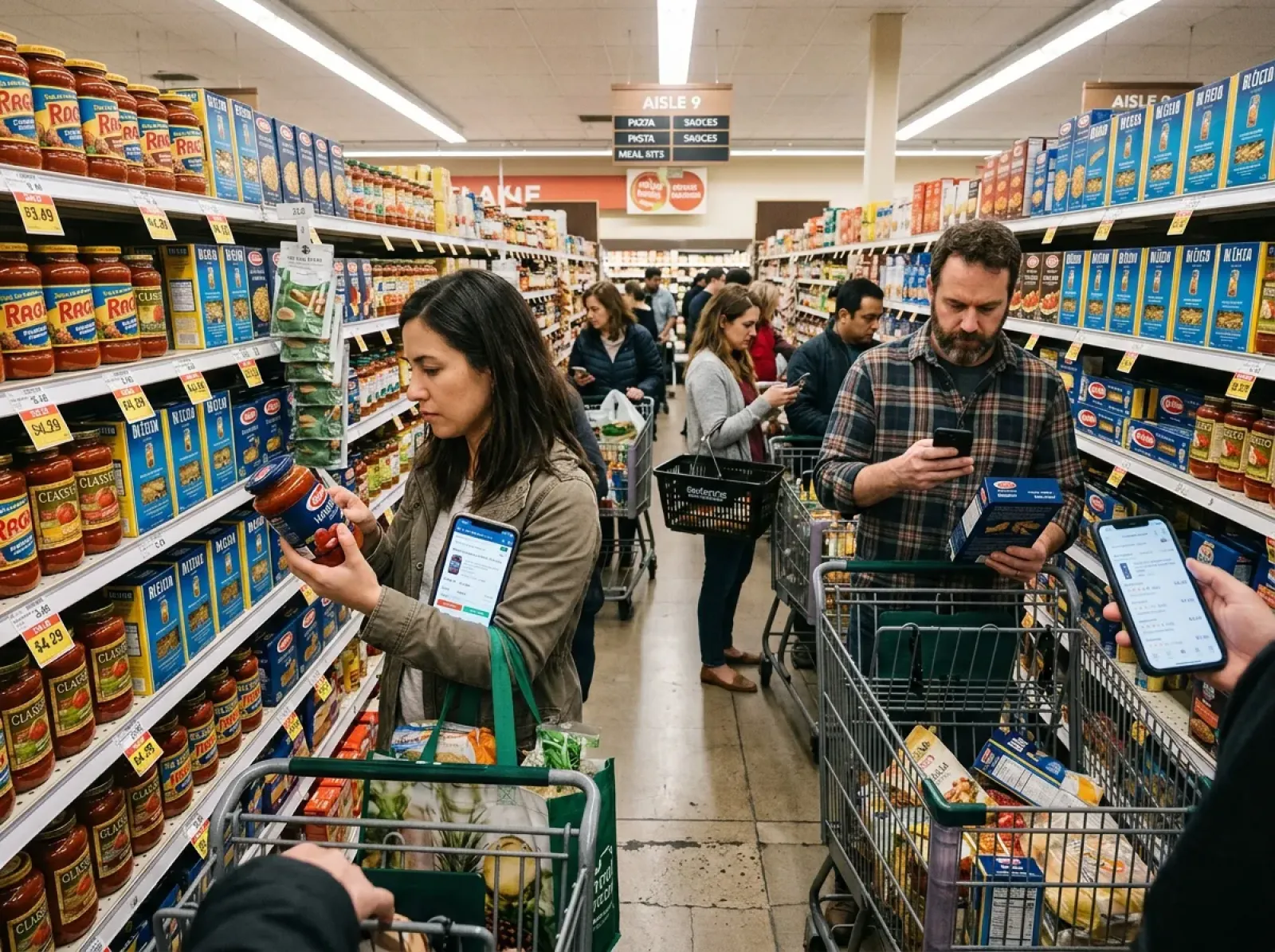
The grocery industry in 2026 presents a challenging environment for traditional supermarket operators. Food-at-home inflation has moderated to roughly 3.1%, easing some pressure on consumers, but shopping behavior has fundamentally shifted toward value-focused channels. Large supermarket chains including Kroger, Albertsons, and Ahold Delhaize have lost ground as discounters like Aldi, Walmart, and Costco offer produce, meat, and other staples for less. Store visit data tells the story clearly: Aldi's store visits rose 8% year over year in 2025, compared to Costco's 5.9% growth, Albertsons' 1.6% increase, and Kroger's 0.8% rise. The overall grocery sector saw visits increase 3.1%, meaning traditional supermarkets are underperforming even as the industry grows.
The Competitive Battlefield
Traditional grocers face pressure from multiple directions simultaneously, with competitors attacking different segments of their customer base.
The competitive threats facing traditional supermarkets:
-
Walmart dominates with scale advantages, aggressive price rollbacks, and share gains across all income brackets including upper-income households
-
Costco's membership model generates loyalty and buying power that traditional grocers cannot match
-
Aldi plans to open 180 new U.S. stores in 2026 alone, expanding its discount footprint aggressively into new markets
-
Lidl continues growing its East Coast presence, clustering stores in strategic regions
-
Amazon's grocery ambitions, while evolving, keep pressure on digital capabilities and delivery expectations
-
Dollar stores have expanded fresh and frozen food offerings, capturing budget-conscious shoppers
-
Grocery Outlet, Sprouts Farmers Market, and other specialty players are adding stores rapidly
-
Sam's Club has announced plans to open around 15 new locations annually, competing directly with Costco
Margin Pressures and Industry Challenges
Grocery retailing has always operated on thin margins, but current conditions make profitability even more difficult to achieve.
The grocery industry typically operates on net margins between 1% and 3%, leaving little room for error. Labor costs continue rising, particularly for heavily unionized operators like Albertsons, which faced a major strike in Colorado in late 2025. Supply chain costs, while improved from pandemic peaks, remain elevated compared to pre-2020 levels. Technology investments required to compete on digital capabilities demand capital that pressures near-term profitability. Shrinkage from theft has become a significant issue across the retail industry. Pharmacy margins face pressure from the Inflation Reduction Act's Medicare Drug Price Negotiation Program, which took effect in January 2026 and reduced pharmacy sales for operators like Albertsons. Regulatory scrutiny around pricing practices, including concerns about "shrinkflation," adds compliance costs and reputational risk.
Consumer Trends Reshaping Grocery
Understanding how consumer behavior has evolved helps explain why Albertsons stock and other traditional grocers face headwinds.
Key consumer trends affecting grocery retail:
-
"Value-Based Loyalty" defines the current era, with price-conscious consumers prioritizing savings over brand relationships
-
"De-branding" has accelerated as shoppers choose private label products over national brands to stretch budgets
-
Younger shoppers between ages 25 and 34 showed a 6 percentage point decline in spending at traditional grocery stores compared to the prior year
-
Higher-income households with annual incomes above $100,000 showed a 7 percentage point decline in traditional grocery spending
-
Even affluent consumers are becoming more conscious of price and value according to Albertsons' own management
-
Digital expectations continue rising, with shoppers demanding convenient pickup, delivery, and seamless app experiences
-
The "Pharmacy as Front Door" trend drives traffic to grocers with robust pharmacy operations as customers pick up prescriptions, including popular GLP-1 medications, and purchase groceries in the same trip
-
Health and wellness categories are growing faster than traditional grocery, rewarding operators who invest in these areas
Remember: The grocery industry landscape presents significant challenges for traditional supermarket operators like Albertsons, with discounters gaining share, margins under pressure from multiple directions, and consumer preferences shifting toward value channels—context that must inform any evaluation of Albertsons stock as an investment.
Financial Performance
Albertsons has delivered steady if unspectacular financial performance over recent years, with revenue growing from $77.6 billion in fiscal 2023 to $83.2 billion in fiscal 2025 (ended February 2026). This represents compound annual growth of roughly 3.5%, driven by a combination of same-store sales improvements, digital channel expansion, and pharmacy growth. However, the company operates in an industry where margins are razor-thin and profitability can swing dramatically based on competitive dynamics, labor costs, and one-time charges. Fiscal 2025 illustrates this reality: while the company generated $3.9 billion in adjusted EBITDA, GAAP net income fell to just $217 million due to a $600 million charge related to the opioid settlement framework.
Key financial metrics for fiscal 2025:
-
Revenue of $83.2 billion, up 3.5% from the prior year
-
Identical sales growth of 2.0% for the full year
-
Digital sales increased 21% year over year
-
Adjusted EBITDA of $3.9 billion, representing approximately 4.7% of revenue
-
Adjusted earnings per share of $2.18
-
GAAP net income of $217 million, down 77% due to the opioid settlement charge
-
Gross margin of approximately 27%
-
Capital expenditures of $1.8 billion to $1.9 billion for store remodels and technology investments
Profitability and Margin Analysis
Understanding Albertsons' profitability requires distinguishing between adjusted figures that strip out one-time items and GAAP results that include everything.
The company's gross margin of roughly 27% is typical for grocery retailers who must balance competitive pricing with profitability. Operating margins run much thinner—adjusted EBITDA margins hover around 5%, and net margins in good years run between 1% and 2%. These slim margins leave little buffer for unexpected costs or competitive missteps. The opioid settlement charge that reduced fiscal 2025 GAAP earnings demonstrates how vulnerable profitability becomes when large legal or restructuring costs hit. Labor costs represent another ongoing pressure, with union negotiations creating both uncertainty and potential margin compression. Management has emphasized technology and AI investments as paths to improved efficiency, but these require upfront spending that pressures near-term margins even as they promise future benefits.
Same-Store Sales Momentum
Same-store sales growth, called "identical sales" in Albertsons' reporting, measures the health of the existing store base and matters more than total revenue growth for assessing operational performance.
Fiscal 2025 delivered identical sales growth of 2.0%, a decent result given the competitive environment but notably slower than prior years when pandemic tailwinds and inflation boosted grocery spending. The fourth quarter showed concerning deceleration, with identical sales increasing just 0.7%—impacted by pharmacy headwinds from the Inflation Reduction Act and a challenging competitive environment. CEO Susan Morris acknowledged that even higher-income shoppers have become more price-conscious, suggesting that competitive pressure on traffic and basket size continues. Digital sales provide a bright spot, growing 21% for the year and 16% in the fourth quarter, though this channel typically carries lower margins than in-store purchases. Loyalty membership grew 12% to 51.2 million members, providing valuable customer data even as transaction growth moderates.
Balance Sheet and Debt Levels
Albertsons stock carries above-average financial risk due to the company's elevated debt load, a legacy of its leveraged buyout history and subsequent consolidation.
Balance sheet considerations for investors:
-
Total debt of approximately $7.4 billion against shareholder equity of roughly $3.2 billion
-
Debt-to-equity ratio of approximately 230%, elevated compared to many consumer staples peers
-
Net debt of approximately $15.1 billion when including lease obligations
-
Net debt to EBITDA ratio of 4.5x, indicating meaningful leverage
-
Interest coverage ratio of 4.2x, adequate but not exceptionally strong
-
Cash on hand of approximately $166 million, relatively thin for a company of this size
-
Recent $1.5 billion debt refinancing in November 2025 extended maturities to 2031 and 2034, improving the maturity profile
-
The company has actively returned capital through dividends and share buybacks despite the leverage, raising questions about capital allocation priorities
Think of it this way: Albertsons stock offers exposure to a cash-generating business with a dividend yield approaching 4%, but the elevated debt levels mean that profitability pressures or unexpected costs have an amplified impact on shareholder returns—the leverage works both ways, magnifying gains in good times and losses in bad times.
The Kroger Merger Situation


The proposed merger between Kroger and Albertsons represented the most significant attempted consolidation in grocery industry history. In October 2022, Kroger announced plans to acquire Albertsons for $24.6 billion, arguing that the combined company—with approximately 5,000 stores and $209 billion in annual revenue—would be better positioned to compete against dominant players like Walmart, Costco, and Amazon. The deal promised Albertsons shareholders a substantial premium to the pre-announcement stock price. For over two years, the merger dominated discussions about Albertsons stock, with shares trading largely as a merger arbitrage play rather than on standalone fundamentals. That chapter ended in December 2024 when federal and state judges blocked the deal, leading both companies to terminate the agreement and triggering a legal battle that continues today.
What Happened to the Merger
The Kroger-Albertsons merger faced regulatory opposition from the start and ultimately failed to convince judges that the combination would benefit consumers.
Key events in the merger timeline:
-
October 2022: Kroger announces $24.6 billion acquisition agreement with Albertsons
-
The companies argued they needed scale to compete with Walmart, Costco, and Amazon in a fragmented market
-
September 2023: Kroger and Albertsons announced a $2.9 billion divestiture plan, selling 579 stores to C&S Wholesale Grocers to address competition concerns
-
February 2024: The FTC filed a lawsuit to block the merger, arguing it would harm competition and raise prices
-
Washington state Attorney General Bob Ferguson also filed suit to prevent the combination
-
Judges questioned whether C&S Wholesale, with fewer than 24 existing retail stores, could realistically operate the divested locations as a viable competitor
-
December 2024: Both a federal judge in Oregon and a Washington state judge issued orders blocking the merger
-
December 2024: Albertsons terminated the merger agreement and filed a breach of contract lawsuit against Kroger seeking at least $6 billion in damages, including a $600 million termination fee
-
Kroger called the lawsuit "baseless" and announced a $7.5 billion stock buyback
The Ongoing Litigation
With the merger dead, Albertsons and Kroger now face each other in court rather than as partners, with significant financial stakes for both companies.
The primary legal battle centers on who bears responsibility for the merger's failure. Albertsons argues that Kroger did not do enough to satisfy regulatory concerns and owes substantial damages. Kroger contends that both companies worked in good faith and that Albertsons' claims lack merit.
IF Albertsons prevails in the Delaware Court of Chancery litigation… THEN the company could receive up to $600 million or more in termination fees and damages, providing a one-time cash boost.
IF Kroger prevails or the case settles for minimal amounts… THEN Albertsons receives little to nothing, and the legal distraction ends but without financial benefit.
IF the litigation drags on through 2026 and beyond… THEN management attention and legal costs continue consuming resources that could otherwise support operations.
IF consumer class action lawsuits achieve class certification and proceed to trial… THEN both companies face additional legal exposure and reputational risk regardless of the termination fee outcome.
Life as a Standalone Company
The merger's collapse forced Albertsons to pivot from merger target to independent operator, a transition that has shaped every aspect of the company's current strategy.
For shareholders who bought Albertsons stock during the merger speculation period, the collapse proved painful. The stock peaked near $35 during the height of merger optimism but fell sharply after the regulatory blocks, eventually stabilizing in the $16 to $19 range as the market priced in standalone fundamentals rather than deal premiums. The company responded by accelerating capital returns to shareholders, increasing the dividend by 13% and expanding share repurchase authorization to $2 billion. New CEO Susan Morris has articulated a standalone strategy focused on digital growth, pharmacy expansion, AI-driven efficiency, and private label development.
IF the standalone strategy succeeds in driving consistent identical sales growth above 2% and margin improvement… THEN Albertsons stock could re-rate higher as the market gains confidence in the company's independent future.
IF competitive pressures continue eroding market share to discounters and large players… THEN the rationale for the original merger—that scale was necessary to survive—may prove correct, leaving Albertsons in a weakened competitive position.
IF another acquirer emerges with interest in Albertsons' store network and regional market positions… THEN a new merger premium could materialize, though regulatory scrutiny would likely apply to any significant grocery combination.
IF Albertsons must continue competing independently against Walmart, Costco, and an expanding Aldi… THEN execution of the current strategy becomes paramount, with little margin for error given the company's debt load and thin industry margins.
The Bottom Line: The Kroger merger collapse represents a defining event for Albertsons stock, ending two years of merger arbitrage trading, forcing the company onto a standalone path under new leadership, and creating ongoing litigation that may or may not deliver meaningful financial recovery—leaving current investors to evaluate Albertsons purely on its ability to compete independently in a challenging grocery landscape.
Dividend and Shareholder Returns
Albertsons has positioned itself as an income-generating investment, offering a dividend yield that exceeds most grocery peers and the broader market. The company currently pays a quarterly dividend of $0.17 per share, which translates to an annualized yield of approximately 4% at recent stock prices. This yield stands out in a sector where many competitors pay little or no dividend—Walmart yields under 1%, Costco yields around 0.5%, and many discounters pay nothing at all. For income-focused investors, Albertsons stock offers a relatively attractive payout, but the sustainability of that dividend depends on the company's ability to generate consistent free cash flow while managing its substantial debt load and funding necessary capital investments.
Dividend History and Sustainability
Albertsons initiated its dividend program following the 2020 IPO and has steadily increased payments, most recently raising the quarterly dividend 13% from $0.15 to $0.17 per share in April 2026.
The dividend increase signals management confidence in the company's cash generation, but investors should examine the underlying sustainability. Albertsons paid approximately $323 million in dividends during fiscal 2025, a manageable figure relative to the company's $3.9 billion in adjusted EBITDA. However, the company also carries significant debt service obligations, requires substantial capital expenditures ($1.8 to $1.9 billion annually) to maintain and upgrade stores, and has committed to aggressive share repurchases. The payout ratio relative to GAAP earnings has spiked in recent periods due to one-time charges like the opioid settlement, but relative to adjusted earnings and free cash flow, the dividend appears covered for now. The risk lies in any sustained decline in profitability—thin grocery margins mean that competitive pressure or cost inflation could quickly stress the company's ability to maintain both dividend payments and necessary capital investments.
Share Buybacks and Capital Returns
Beyond dividends, Albertsons has returned substantial capital to shareholders through aggressive share repurchase programs, particularly following the merger collapse.
Capital return activity in recent periods:
-
Share repurchase authorization increased to $2 billion remaining capacity
-
During fiscal 2025, the company invested approximately $1.5 billion repurchasing 78.7 million shares
-
A $750 million accelerated share repurchase agreement completed in January 2026, delivering 42.7 million shares
-
Combined with dividends, the company returned over $1.8 billion to shareholders in fiscal 2025
-
The aggressive buyback pace reflects management's view that the stock is undervalued and a desire to offset merger-related disappointment
-
At current share prices, the remaining $2 billion authorization could retire a significant portion of outstanding shares
-
However, the pace of repurchases may slow if cash flow tightens or debt reduction becomes a higher priority
Quick tip: When evaluating Albertsons stock for income, consider the total shareholder yield—dividends plus buybacks divided by market capitalization—which has exceeded 15% in recent periods, far above the dividend yield alone.
Quick tip: Watch for changes in buyback pace or dividend growth rate as signals of management's confidence in cash flow sustainability—any slowdown could indicate stress that hasn't yet shown up in reported earnings.
Competitive Position


Albertsons occupies a challenging middle ground in the grocery industry—larger than regional players but smaller and less efficient than the dominant national competitors. The company's roughly $83 billion in annual revenue sounds impressive until you compare it to Walmart's U.S. grocery business generating well over $200 billion, Costco's $250 billion in total revenue with a devoted membership base, and even Kroger's $150 billion operation. Scale matters in grocery because it drives purchasing power, distribution efficiency, and the ability to invest in technology and price competitiveness. Albertsons' regional strength and banner diversity provide some advantages, but the company faces an uphill battle against competitors who can simply outspend and underprice.
How Albertsons compares to key competitors:
-
Walmart dominates with unmatched scale, aggressive price rollbacks, and share gains across all income brackets including affluent households
-
Costco's membership model generates customer loyalty and buying power that traditional grocers cannot replicate, with store visits growing 5.9% year over year
-
Kroger operates at roughly double Albertsons' revenue scale, providing greater purchasing leverage despite similar competitive challenges
-
Aldi's store visits grew 8% year over year compared to Albertsons' 1.6%, with 180 new U.S. stores planned for 2026 alone
-
Amazon continues investing in grocery through Whole Foods, Amazon Fresh, and delivery capabilities, keeping digital pressure on traditional operators
-
Dollar stores have expanded fresh and frozen offerings, capturing budget-conscious shoppers who might otherwise visit Albertsons banners
-
Albertsons' strength lies in regional market density where its banners hold leading positions, but this advantage erodes as national players expand into these markets
Private Label Strategy
Private label products represent one of Albertsons' most significant competitive advantages, offering higher margins than national brands while meeting consumer demand for value.
The company's private label portfolio includes well-regarded brands like O Organics, Open Nature, Signature Select, Lucerne, and Waterfront Bistro. These products typically generate gross margins several percentage points higher than equivalent national brand items, directly benefiting profitability. The current consumer trend toward "de-branding"—choosing store brands over national names to stretch budgets—plays directly into this strength. Albertsons has invested in quality and variety across its private label offerings, positioning them as genuine alternatives rather than cheap substitutes. However, competitors have noticed the same opportunity. Walmart continues increasing private brand penetration, Costco's Kirkland Signature enjoys cult-like loyalty, and even Aldi's entire model centers on private label dominance. Albertsons' private label success matters for Albertsons stock valuation, but it's a strength that competitors are actively working to match or exceed.
Digital and Loyalty Capabilities
Digital sales and loyalty programs represent areas where Albertsons has invested heavily and shown genuine progress, though the competitive bar keeps rising.
Digital sales grew 21% during fiscal 2025, with the DriveUp & Go curbside pickup service now including free pharmacy prescription pickup nationwide. The company has deployed AI and technology investments to improve personalization, inventory management, and operational efficiency. CEO Susan Morris has emphasized that these technology investments are "fundamentally reshaping how we operate and serve our customers." The loyalty program has grown to 51.2 million members, up 12% year over year, providing valuable first-party data for targeted marketing and personalization. The Albertsons Media Collective monetizes this data through a retail media network that sells advertising to consumer packaged goods companies. These digital capabilities narrow the gap with larger competitors, but Walmart's e-commerce grew at double-digit rates with nearly 50% growth in store-fulfilled delivery, and Amazon's digital DNA remains unmatched. Albertsons is playing catch-up in a race where the leaders keep accelerating.
Did You Know? Albertsons' "Pharmacy as Front Door" strategy leverages prescription pickups—including popular GLP-1 medications—to drive store traffic, with customers often purchasing groceries during the same trip, creating a competitive moat that pure grocery discounters cannot easily replicate.
Did You Know? The Albertsons Media Collective retail media business represents a high-margin revenue stream that essentially lets consumer brands pay for access to Albertsons' customer data and in-store advertising, contributing to profitability without requiring additional inventory or store labor.
Valuation Analysis


Albertsons stock trades at a significant discount to the broader market and to many consumer staples peers, reflecting both the challenges facing traditional grocery retailers and the uncertainty surrounding the company's standalone prospects. At recent prices around $16 to $17 per share, the stock trades at approximately 7 to 8 times trailing adjusted earnings per share of $2.18, well below the S&P 500's average price-to-earnings ratio near 20x. This discount could represent either a value opportunity for patient investors or a fair reflection of limited growth prospects and elevated risks. The answer depends on whether you believe Albertsons can execute its standalone strategy successfully or whether competitive pressures will continue eroding the company's market position.
Price-to-Earnings and Peer Comparison
Comparing Albertsons' valuation to grocery industry peers reveals a company priced for minimal expectations, which could cut either way for investors.
Albertsons trades at roughly 7 to 8 times adjusted earnings, while Kroger typically commands multiples in the 10 to 12 range despite facing similar competitive challenges. Walmart trades at premiums above 25 times earnings, reflecting its dominant market position and consistent execution. Costco commands an even higher premium, often exceeding 40 times earnings, as investors pay up for its unique membership model and devoted customer base. Among traditional grocers, Albertsons sits near the bottom of the valuation range. This discount partly reflects the company's higher debt load compared to peers, the competitive pressures squeezing traditional supermarkets, and lingering uncertainty following the merger collapse. Analysts maintain price targets averaging around $21 to $24, implying 30% to 40% upside from current levels, but this gap between target and trading price has persisted for months, suggesting the market requires more evidence before re-rating the stock higher.
What the Valuation Implies
The market's valuation of Albertsons stock embeds specific assumptions about the company's future that investors should understand before buying.
What current valuation metrics suggest:
-
Price-to-sales ratio near 0.12x reflects the market's view that revenue alone means little in a low-margin industry
-
The single-digit P/E multiple implies expectations for minimal earnings growth or potential earnings decline
-
Enterprise value to EBITDA around 5 to 6x sits below historical averages for consumer staples, indicating skepticism
-
Analyst forecasts for earnings growth of just 1.2% annually and revenue growth of 1.7% annually fall far below broader market growth rates
-
The dividend yield approaching 4% exceeds most peers, suggesting the market values Albertsons more as an income vehicle than a growth investment
-
Price-to-book value near 5x appears reasonable for a company with valuable store real estate and established brands
-
The gap between analyst price targets and current trading price indicates that even bullish analysts struggle to convince the market
-
Institutional ownership near 99% means the shareholder base consists largely of professional investors who have already evaluated these dynamics
-
Value investors have shown interest in the low P/E and high shareholder yield, but growth investors find little to attract them
Remember: Albertsons stock valuation reflects a market that expects minimal growth and assigns significant risk to the competitive and financial challenges facing the company—meaning the stock could rise substantially if execution improves, but the discount exists for reasons that may prove justified if competitive pressures intensify or profitability deteriorates.
Risks to Consider


Every investment carries risks, and Albertsons stock comes with a substantial list that investors should weigh carefully before committing capital. Some of these risks are specific to Albertsons' situation—its debt load, the litigation aftermath of the merger collapse, labor relations—while others reflect broader challenges facing the entire grocery industry. Understanding these risks doesn't mean avoiding the stock, but it does mean sizing positions appropriately and knowing what could go wrong.
Risks facing Albertsons investors:
-
The ongoing litigation with Kroger over the failed merger creates uncertainty, with outcomes ranging from a $600 million recovery to receiving nothing while incurring substantial legal costs
-
The $774 million opioid settlement framework represents a significant cash outflow that has already impacted reported earnings and will pressure cash flow as payments are made
-
Competition from discount grocers continues intensifying, with Aldi opening 180 new U.S. stores in 2026 and Lidl expanding its East Coast presence
-
Walmart's relentless price rollbacks and share gains across all income demographics directly threaten Albertsons' customer base, including affluent shoppers who previously showed less price sensitivity
-
Amazon's grocery ambitions, while evolving, keep pressure on digital capabilities and delivery expectations that require ongoing investment to match
-
Costco's membership model creates customer loyalty that traditional grocers cannot easily replicate, drawing away basket share from traditional supermarket trips
-
Labor costs represent an ongoing pressure point, with Albertsons' heavily unionized workforce demanding higher wages and benefits, as demonstrated by the Colorado strike in late 2025
-
Union contract renewals create periodic uncertainty and potential for work stoppages that could disrupt operations and damage customer relationships
-
Grocery retail's inherently thin margins—typically 1% to 3% net—leave minimal buffer for competitive missteps, cost inflation, or unexpected expenses
-
The company's elevated debt load with a debt-to-equity ratio around 230% amplifies both gains and losses, creating greater sensitivity to any profitability decline
-
Interest rate sensitivity affects the company's debt service costs, particularly as older debt matures and must be refinanced at current rates
-
The Inflation Reduction Act's Medicare Drug Price Negotiation Program has already reduced pharmacy revenue, with ongoing impact expected
-
Consumer spending patterns remain sensitive to economic conditions, and any recession could pressure both traffic and basket sizes as households cut back
-
Shrinkage from theft has become a significant issue across retail, eroding margins without clear near-term solutions
-
The departure of CEO Vivek Sankaran and transition to Susan Morris creates execution risk during a period when flawless execution is needed
-
Regulatory scrutiny around grocery pricing practices, including concerns about "shrinkflation," adds compliance costs and reputational risk
-
Younger shoppers between ages 25 and 34 are migrating away from traditional grocery stores at faster rates than older demographics, suggesting long-term structural challenges
-
Higher-income households are also reducing traditional grocery spending, undermining what was previously considered a more stable customer segment
-
Technology investments required to compete on digital capabilities demand ongoing capital that pressures near-term profitability
-
Store closure decisions to optimize the portfolio can generate short-term charges while reducing the revenue base
-
Private equity ownership history has left the company with a capital structure optimized for financial engineering rather than operational flexibility
-
Any future acquisition interest from other grocers would likely face similar regulatory scrutiny that killed the Kroger deal
The Bottom Line: Albertsons stock carries meaningful risks across multiple dimensions—competitive pressures from better-capitalized rivals, thin margins vulnerable to cost inflation or pricing pressure, elevated debt that amplifies any profitability decline, ongoing litigation uncertainty, and structural challenges as consumers migrate toward discount and warehouse channels—making position sizing and risk tolerance the critical considerations for any investor evaluating the opportunity.
Bull Case for Albertsons
Despite the considerable risks, a reasonable bull case exists for Albertsons stock that has attracted value investors and income-focused shareholders. The company operates in a defensive sector where people need to eat regardless of economic conditions, generates substantial cash flow from an established store base, pays an attractive dividend yield approaching 4%, and trades at a valuation that implies very low expectations. If management executes the standalone strategy effectively, if competitive pressures stabilize rather than intensify, and if the market eventually re-rates the stock closer to peer multiples, significant upside exists from current levels. Bulls don't need everything to go right—they just need the company to prove it can survive and modestly thrive as an independent operator.
Regional Strength and Defensive Characteristics
Albertsons' collection of regional banners holds leading market positions in many geographic areas, providing a competitive moat that national players cannot easily replicate.
In markets where Safeway, Jewel-Osco, Vons, or other Albertsons banners have operated for decades, the company benefits from customer loyalty, convenient store locations, and established supply chains. These regional strongholds generate consistent traffic even as national competitive dynamics shift. The grocery sector itself offers defensive characteristics—food purchases remain relatively stable through economic cycles compared to discretionary spending. While consumers may trade down to private labels or seek deals more aggressively during recessions, they don't stop buying groceries. The pharmacy business adds another defensive layer, with prescription needs remaining consistent regardless of economic conditions and the "Pharmacy as Front Door" strategy driving incremental grocery traffic.
DO consider that Albertsons' regional density creates local competitive advantages that show up in consistent identical sales performance even as national market share metrics favor discounters.
DO recognize that grocery's defensive nature provides downside protection during economic uncertainty, making the dividend more reliable than yields from cyclical businesses.
DO factor in that the company's $83 billion revenue base and 2,200+ stores represent substantial infrastructure that would be expensive for competitors to replicate.
DON'T assume regional strength alone can overcome the structural advantages of larger, more efficient competitors over the long term.
DON'T ignore that even defensive sectors face margin pressure, and thin grocery margins provide less cushion than other consumer staples categories.
DON'T overweight the defensive thesis—grocery is defensive relative to discretionary retail but not immune to competitive disruption.
Income and Optionality
For income-focused investors, Albertsons offers an attractive yield while providing optionality for additional upside through either operational improvement or renewed acquisition interest.
The nearly 4% dividend yield exceeds most equity alternatives in the consumer staples sector and provides tangible returns while waiting for the investment thesis to play out. Management's 13% dividend increase and aggressive share repurchases signal confidence in cash generation sustainability, though investors should monitor these metrics for any change in tone.
Beyond the dividend, Albertsons stock offers optionality that isn't priced into the current valuation. If the standalone strategy succeeds in driving consistent 2%+ identical sales growth with improving margins, the stock could re-rate toward peer multiples, generating capital appreciation alongside the dividend income. Alternatively, the failed Kroger merger doesn't preclude future acquisition interest—another strategic or financial buyer might eventually see value in Albertsons' store network, regional positions, and customer data, potentially offering a premium to current prices. The litigation outcome with Kroger could also provide a one-time boost if Albertsons recovers meaningful damages. None of these outcomes are guaranteed, but the current valuation prices in very little positive optionality.
Remember: The bull case for Albertsons stock rests on regional competitive strength in a defensive sector, an attractive dividend yield approaching 4%, a valuation that embeds minimal expectations, and optionality from potential operational improvement, acquisition interest, or litigation recovery—making the stock appealing to value and income investors who believe the risks are adequately compensated by the discounted price.
Bear Case for Albertsons


The bear case for Albertsons stock is straightforward and sobering: the company sought a merger with Kroger precisely because management believed scale was necessary to compete long-term, and now that merger has failed. The competitive dynamics that motivated the deal—Walmart's dominance, Costco's efficiency, Amazon's digital capabilities, Aldi's aggressive expansion—haven't changed. If anything, they've intensified. Bears argue that Albertsons' current valuation isn't a discount waiting to be corrected but a fair reflection of a company facing structural decline in a brutally competitive industry. The dividend yield looks attractive until you consider whether it can be sustained as margins compress and competitive pressures mount.
The Scale Problem Remains Unsolved
Kroger and Albertsons explicitly argued that they needed to combine to achieve the scale necessary to compete with Walmart, Costco, and Amazon—and that reasoning didn't disappear when the merger did.
The merger prospectus laid out the competitive challenge clearly: traditional supermarkets were losing ground to larger, more efficient players who could leverage scale for better purchasing terms, more technology investment, and aggressive pricing. Albertsons remains subscale relative to these competitors. Walmart's grocery business alone generates roughly 2.5 times Albertsons' revenue, providing purchasing leverage that translates directly into lower shelf prices. Costco's membership model extracts customer commitment that traditional grocers cannot match. Aldi's stripped-down operating model achieves efficiency that full-service supermarkets struggle to replicate. Without the Kroger combination, Albertsons must somehow close these competitive gaps through operational excellence alone—a task that management itself implicitly acknowledged was insufficient when pursuing the merger.
DO recognize that the merger failure validates the competitive concerns rather than resolving them.
DO consider that competitors continue investing and expanding while Albertsons navigates post-merger uncertainty and litigation distraction.
DO factor in that younger and higher-income shoppers are abandoning traditional grocery at accelerating rates, suggesting structural rather than cyclical challenges.
DON'T assume current regional strength will persist as national players expand into these markets with superior pricing and convenience.
DON'T underestimate how quickly margin pressure can erode earnings for a company operating with 1% to 2% net margins.
DON'T ignore that the company's own leadership sought an exit through merger, suggesting limited confidence in the standalone path.
Limited Growth and Margin Compression
Analysts forecast earnings growth of just 1.2% annually and revenue growth of 1.7% annually—and even these modest projections may prove optimistic if competitive pressures intensify.
The grocery industry offers limited organic growth opportunities in a mature market where population growth and inflation provide the primary tailwinds. Albertsons cannot easily add stores in an environment of industry overcapacity, and same-store sales growth depends on either taking share from competitors or benefiting from food price inflation—neither of which the company controls.
Meanwhile, margin compression risks lurk from multiple directions. Labor costs continue rising as unions negotiate for higher wages and benefits, with the Colorado strike demonstrating workers' willingness to take action. Pharmacy margins face regulatory pressure from the Inflation Reduction Act. Price investment may become necessary to retain customers migrating to discounters. Technology investments required to stay competitive demand ongoing capital spending. Each of these pressures eats into already-thin margins, potentially squeezing earnings even if revenue grows modestly. The elevated debt load amplifies this risk—any earnings decline hits equity holders harder when substantial cash flow must service debt before reaching shareholders.
Remember: The bear case for Albertsons stock centers on the uncomfortable reality that management sought a merger because they believed standalone survival was challenging, and now that the merger has failed, the company must somehow execute what its own leadership considered the inferior path—competing independently against larger, more efficient rivals in an industry where margins are thin, growth is limited, and competitive pressures show no signs of easing.
The Verdict on Albertsons Stock


Albertsons presents a classic value investing dilemma: a company generating substantial cash flow, paying an attractive dividend, and trading at a significant discount to peers—but facing genuine structural challenges that may justify that discount. The numbers are straightforward enough. Revenue of $83 billion, adjusted EBITDA approaching $4 billion, a dividend yield near 4%, and a P/E ratio in the single digits.
These metrics attract value and income investors who see a cash-generating business priced for pessimism. But the competitive dynamics are equally clear. Walmart, Costco, and Aldi continue gaining share. Younger and wealthier shoppers are migrating away from traditional supermarkets. Margins remain thin with multiple compression risks. The merger that management pursued as the preferred path forward failed, leaving the company to execute a standalone strategy against competitors who outgun it on scale, efficiency, and in some cases technology.
Who Should Consider This Stock
Albertsons stock suits a specific type of investor—one who values income, has patience for turnarounds, accepts concentrated risk, and believes the current price adequately compensates for the challenges ahead.
Income investors seeking yields above 3% with some capital appreciation potential may find Albertsons attractive, particularly those who view grocery as sufficiently defensive to provide dividend stability through economic cycles. Value investors comfortable with out-of-favor sectors and willing to wait years for re-rating may see opportunity in the gap between current prices and analyst targets. Contrarian investors who believe the market has overreacted to the merger failure and competitive fears might view this as an entry point before sentiment shifts.
However, growth investors should look elsewhere—analyst forecasts for low-single-digit growth offer nothing for those seeking compounding businesses. Risk-averse investors may find the debt load, competitive pressures, and thin margins incompatible with their tolerance. Index investors already have grocery exposure through broader holdings without taking concentrated single-stock risk. The honest assessment is that Albertsons stock rewards patience and conviction while punishing those who need quick returns or can't stomach volatility. Whether the nearly 4% dividend provides adequate compensation while waiting for the thesis to play out depends entirely on your assessment of the competitive risks and management's ability to execute—questions that reasonable investors can answer differently and still be acting rationally.
