



What FOMO Trading Really Means


FOMO—fear of missing out—is the anxious feeling that others are profiting from an opportunity while you're stuck on the sidelines watching. In trading, FOMO manifests as the powerful urge to chase stocks that have already made significant moves, to abandon your trading plan in pursuit of whatever is running right now, and to enter positions without proper analysis because waiting feels unbearable when prices are moving. Every trader knows this feeling. You had a stock on your watchlist, waited for your entry criteria, and while you waited, it ripped 30% higher without you. Now you're staring at the chart, calculating how much you would have made, and feeling an almost physical pull to buy even though the setup no longer makes sense.
Why FOMO Is So Destructive
FOMO trading ranks among the most damaging emotional patterns because it systematically leads to poor entries at the worst possible times.
Why FOMO causes disproportionate damage:
-
FOMO-driven entries typically occur after significant moves when risk-reward has deteriorated
-
The emotional urgency overrides analytical process, leading to positions without defined stops or exit plans
-
FOMO often triggers oversizing as traders try to compensate for gains they perceive as lost
-
Chasing creates a pattern of buying high that compounds into consistent underperformance
-
The psychological damage from repeated FOMO failures erodes confidence and discipline over time
-
FOMO positions frequently reverse immediately after entry, as the late buyer becomes exit liquidity for earlier participants
-
Each FOMO-driven loss reinforces emotional trading patterns rather than breaking them
The Universal Experience
If you've traded for any length of time, you've experienced the specific pain of watching a position you almost took—or almost stayed in—move dramatically without you.
This experience is universal because markets constantly produce moves that feel like they should have been yours. The stock you sold yesterday gaps up 15%. The position you closed for a small gain continues for another 50%. The name you researched but didn't buy becomes the talk of financial media. These moments create the emotional foundation for FOMO trading—the sense that profits are escaping, that others are capturing what you deserve, and that action must be taken immediately before even more opportunity slips away.
What This Article Covers
This article explains the psychology behind FOMO trading and provides practical strategies for managing it.
Topics this article will explain:
-
The psychological and evolutionary roots of FOMO and why it feels so compelling
-
How FOMO manifests in specific trading behaviors that damage performance
-
Common triggers that activate FOMO responses in traders
-
The real financial and psychological costs of FOMO-driven decisions
-
How to distinguish legitimate opportunity recognition from impulsive chasing
-
Practical strategies for managing FOMO when it arises
-
Building a trading plan that reduces FOMO vulnerability
-
The role of social media in amplifying trading FOMO and how to protect yourself
-
Reframing your relationship with missed opportunities to reduce their emotional power
The Psychology Behind Trading FOMO
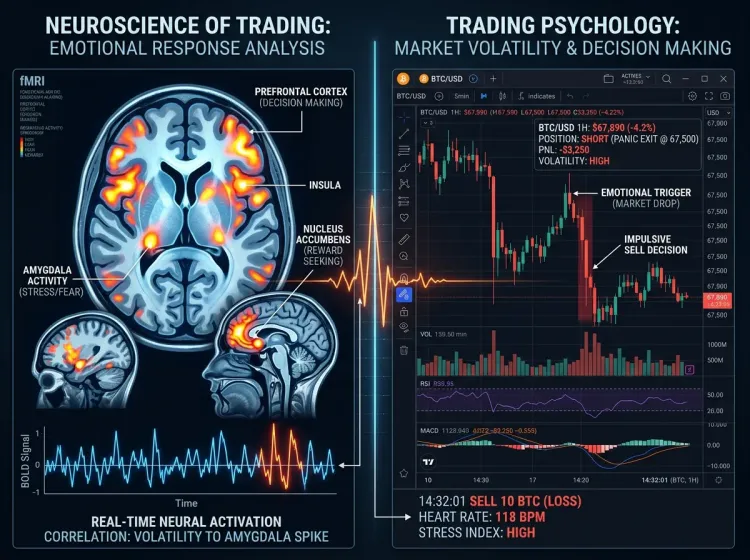
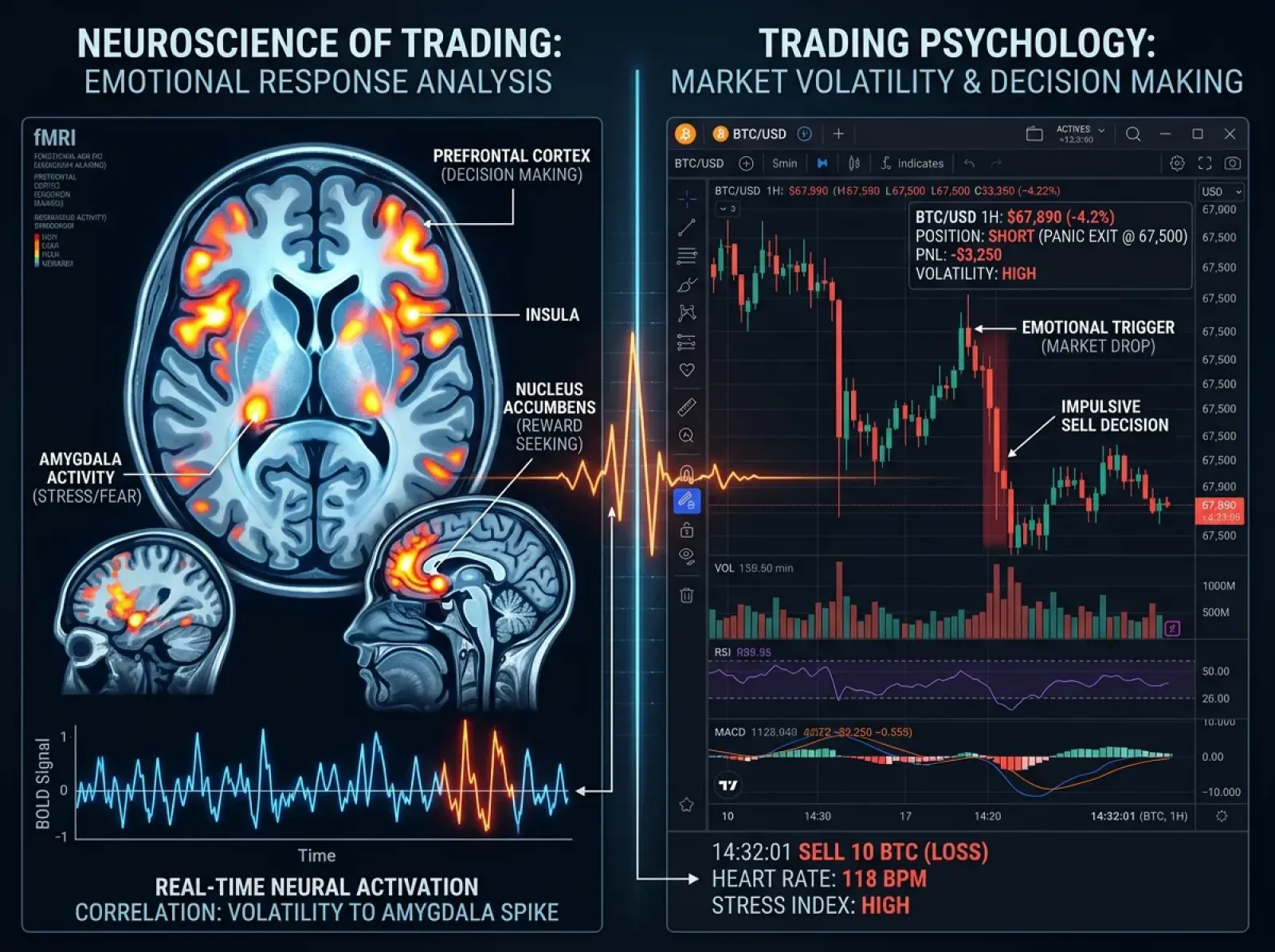
FOMO isn't a character flaw or a sign of trading immaturity—it's a deeply rooted psychological response that evolved over millions of years and remains wired into your brain whether you want it there or not. Understanding the psychological machinery behind FOMO trading helps explain why this emotion feels so overwhelming and why simply telling yourself to stop chasing rarely works. The fear of missing out connects to some of the most fundamental human drives: the need for social belonging, the anxiety around relative status, and the brain's asymmetric response to losses compared to gains.
Evolutionary Roots and Social Comparison
The brain evolved to treat exclusion from group benefits as a survival threat, and this ancient programming activates when you watch others profit while you sit on the sidelines.
Psychological drivers behind FOMO:
-
For our ancestors, being excluded from group resources—food, shelter, protection—could mean death, creating deep-seated fear of missing what others receive
-
This exclusion anxiety transfers directly to trading, where watching others profit triggers the same neural circuits that once monitored tribal resource distribution
-
Social comparison is automatic and unavoidable—the brain constantly measures your outcomes against visible others, regardless of whether the comparison is meaningful
-
Relative performance anxiety means that making money feels bad if others made more, and missing a move feels like losing even when your capital remains intact
-
Loss aversion, the well-documented tendency to feel losses roughly twice as intensely as equivalent gains, extends to missed opportunities
-
The brain processes a missed gain similarly to an actual loss, activating the same neural pathways and producing genuine emotional pain
-
When you see a stock run 50% without you, your brain doesn't register neutral capital preservation—it registers that you lost the 50% you should have had
-
This psychological framing turns infinite missed opportunities into an endless stream of perceived losses, making FOMO trading feel like damage control rather than reckless chasing
The Bottom Line: FOMO trading stems from evolutionary programming that treats exclusion as danger and missed resources as losses, combined with social comparison instincts and loss aversion that make watching others profit while you sit out feel like genuine harm—which is why the emotion is so powerful and why willpower alone rarely defeats it.
How FOMO Manifests in Trading Behavior


FOMO doesn't announce itself clearly—it disguises itself as conviction, opportunity recognition, or decisive action. Recognizing how FOMO actually shows up in your trading behavior is the first step toward managing it. The patterns are predictable and consistent across traders regardless of experience level, account size, or strategy type. If you see yourself in these behaviors, you're not uniquely flawed—you're human and trading in conditions designed to trigger these exact responses.
How FOMO manifests in trading decisions:
-
Chasing stocks that have already made significant moves, entering after 20%, 50%, or even 100% gains because it might keep going
-
Buying extended names far from any reasonable support level, creating positions with terrible risk-reward from the start
-
Entering without proper analysis, setup confirmation, or defined thesis because the urgency feels too great to wait
-
Skipping your normal checklist or entry criteria because this opportunity feels different or time-sensitive
-
Oversizing positions to make up for perceived missed gains, as if larger size can compensate for late entry
-
Risking 5% or 10% of your account on a single FOMO trade when your normal risk is 1-2%
-
Abandoning your trading plan in favor of impulsive action, telling yourself you'll return to discipline after this one trade
-
Breaking your own rules around sectors, market cap, setup type, or timing because the fear of missing out overrides the plan
-
Holding through warning signs because momentum might continue and selling feels like locking in the mistake of entering late
-
Ignoring deteriorating price action, failed breakouts, or increased volatility because exiting means admitting the FOMO entry was wrong
-
Adding to losing positions because the stock must bounce—you can't have missed the move and then lost money chasing it
-
Refusing to take small losses on FOMO trades, allowing them to become large losses while hoping for vindication
The Pattern Behind the Behaviors
Every FOMO trading behavior shares a common structure: emotional urgency overriding analytical process, leading to entries with poor risk-reward, undefined exits, and position sizes that reflect desperation rather than strategy.
The FOMO trader chases because waiting feels like losing. They skip analysis because the move is happening now. They oversize because small positions won't make up for what they already missed. They hold through warning signs because exiting confirms the mistake. And they refuse to cut losses because doing so means the FOMO was real, it was wrong, and they have to live with both the miss and the loss. This chain of behaviors turns a single emotional impulse into compounding damage—not just the cost of the bad trade, but the psychological reinforcement of emotional decision-making that makes the next FOMO episode even harder to resist.
Common FOMO Triggers


FOMO doesn't strike randomly—it's activated by specific triggers that create the perception of missed opportunity and exclusion from profits others are capturing. Learning to recognize your personal FOMO triggers allows you to anticipate emotional responses before they hijack your decision-making. Some triggers come from external sources like social media or news coverage. Others come from your own trading experience, like watching a watchlist stock run or missing an entry by pennies. All of them create the same urgent feeling that action must be taken now.
Common triggers that activate FOMO trading responses:
-
Social media posts showing massive gains, particularly screenshots of P&L or percentage returns without context
-
Trading forums and communities celebrating winning trades while losses go unreported
-
Watching a stock on your watchlist make a significant move without you because you waited for better entry
-
Seeing a setup you identified play out exactly as expected—after you decided not to take it
-
News coverage of market rallies creating the impression that everyone is making money except you
-
Financial media highlighting hot sectors, meme stocks, or momentum names with dramatic recent performance
-
Friends, colleagues, or family members discussing winning trades or portfolio gains
-
Casual mentions of returns that exceed your own, triggering social comparison anxiety
-
Missing an entry by a small amount—your limit order missed by a few cents—and watching the trade work perfectly
-
Near-misses that feel like the market specifically denied you the opportunity you deserved
-
Stocks gapping up past your planned entry point, leaving you to decide between chasing or missing entirely
-
Multiple consecutive missed opportunities creating cumulative frustration that lowers impulse resistance
-
End-of-day or end-of-week reviews showing what you would have made if you'd taken the trades you considered
Managing Your Exposure to Triggers
You can't eliminate FOMO triggers entirely, but you can control your exposure to the most potent ones and build awareness of how specific triggers affect your behavior.
DO identify which triggers most reliably produce FOMO responses in your trading by reviewing past impulsive decisions.
DO limit exposure to social media during active trading hours when you're most vulnerable to acting on FOMO.
DO recognize that social media presents a curated highlight reel, not an accurate representation of trading reality.
DO use watchlist alerts that notify you of setups rather than watching every tick, which amplifies missed-entry pain.
DO acknowledge near-misses without letting them justify abandoning your entry criteria on the next attempt.
DON'T follow traders who primarily post gains without context, losses, or educational content.
DON'T compare your returns to others' reported returns, which suffer from severe survivorship and selection bias.
DON'T engage in trading discussions during market hours when hearing about others' wins can trigger impulsive action.
DON'T beat yourself up for near-misses—they're an unavoidable part of using limit orders and defined entry criteria.
DON'T allow cumulative frustration from multiple missed trades to justify lowering your standards on the next setup.
Keep In Mind: FOMO trading triggers are predictable and often controllable through deliberate exposure management, and recognizing which specific triggers affect you most strongly—whether social media, watchlist runners, near-misses, or social conversations—allows you to build defenses before the emotional response overwhelms your discipline.
The Real Cost of FOMO Trading
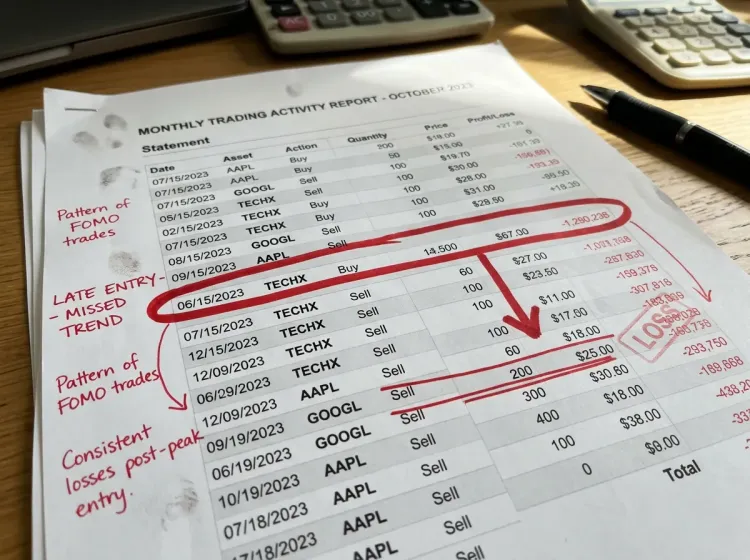
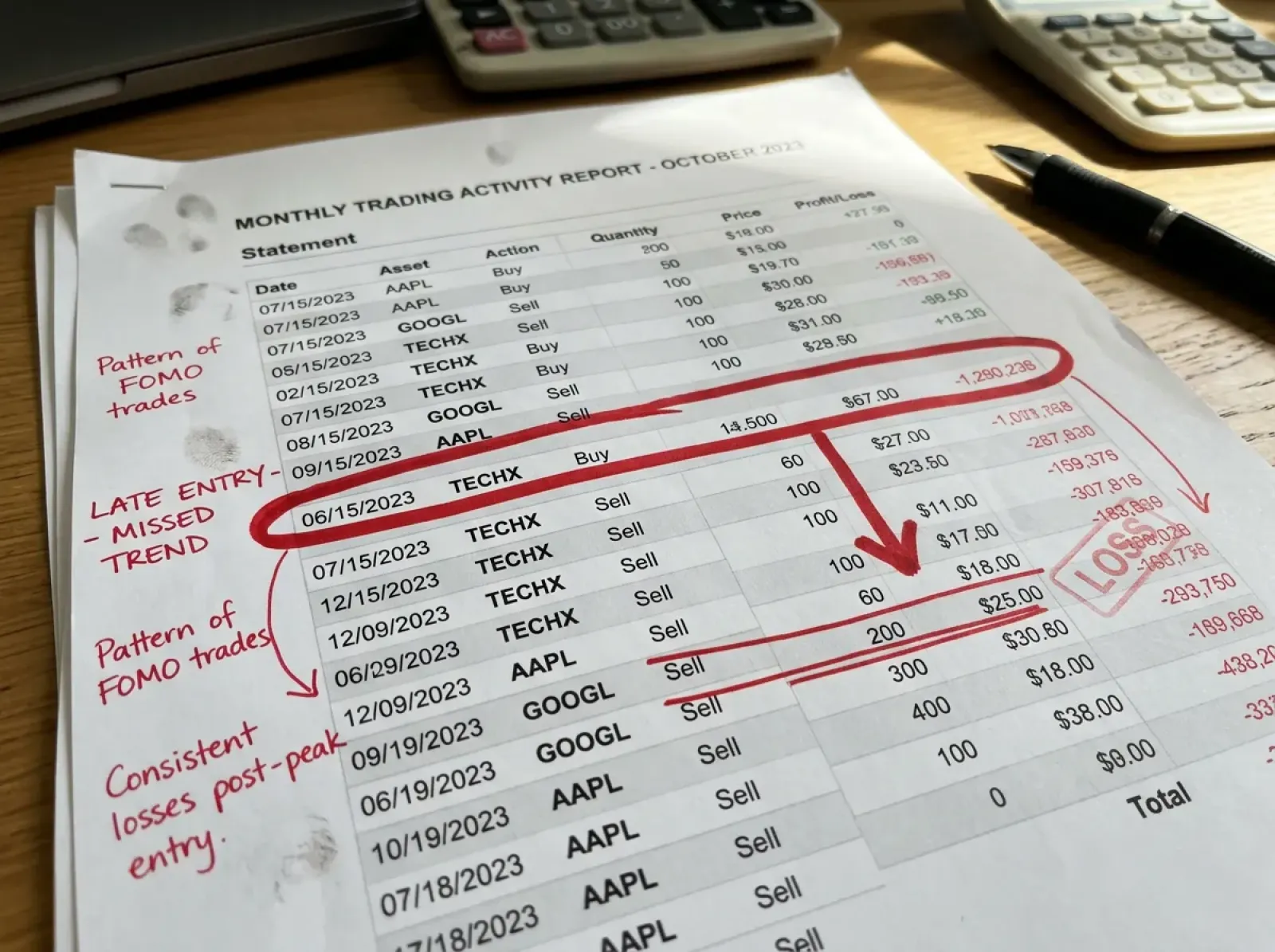
FOMO trading extracts costs that extend far beyond the immediate loss on any single trade. The damage compounds through poor entries, undefined risk, trapped capital, and psychological erosion that makes future discipline harder to maintain. Traders often underestimate these costs because they focus on the occasional FOMO trade that works, ignoring the systematic pattern of losses that accumulates over time. Understanding the full cost structure helps create the motivation needed to change behavior.
The real costs of FOMO-driven decisions:
-
Buying at extended prices far from support creates immediate unrealized losses when even minor pullbacks occur
-
Poor risk-reward from late entries means you risk more to make less compared to disciplined entries at proper levels
-
Entering without defined stops leaves you without a plan when the trade moves against you
-
Undefined exits lead to hoping and holding rather than systematic risk management
-
Oversized positions amplify losses when FOMO entries fail, turning manageable setbacks into significant damage
-
Taking losses that wouldn't have occurred with discipline—losses that exist solely because FOMO overrode your process
-
Capital trapped in poor entries becomes unavailable for legitimate setups that emerge while you're stuck in a losing position
-
Opportunity cost of watching quality setups develop while your capital is locked in FOMO trades waiting for recovery
-
Psychological damage from repeated FOMO failures erodes confidence in your ability to trade with discipline
-
Each FOMO loss reinforces the emotional pattern, making the next episode more likely rather than less
-
The shame and frustration of knowing you broke your own rules creates negative emotional associations with trading itself
-
Cumulative account damage from systematic FOMO trading can turn otherwise profitable strategies into losing ones
How the Costs Compound
FOMO trading creates cascading damage where each mistake increases the probability and severity of the next.
IF you chase a stock at extended prices and it pulls back… THEN you face the choice of taking an immediate loss or holding without a plan, both of which have costs.
IF you hold without a stop and the pullback continues… THEN your capital becomes trapped while better opportunities pass you by, compounding the original mistake.
IF you finally exit at a significant loss after holding too long… THEN frustration and the desire to recover can trigger another FOMO trade to make back what you lost.
IF that recovery attempt also fails because it was driven by emotion rather than process… THEN you've now compounded one FOMO loss into two, deepening both financial and psychological damage.
IF this pattern repeats multiple times… THEN your account suffers systematic damage while your confidence in your own discipline collapses.
IF you lose faith in your ability to follow rules… THEN even your disciplined trades become harder to execute because you no longer trust yourself.
The Bottom Line: FOMO trading costs more than the immediate loss on any single trade—it costs you favorable risk-reward through late entries, capital availability through trapped positions, psychological stability through repeated failures, and ultimately confidence in your ability to trade with discipline, creating a compounding damage cycle that makes each subsequent FOMO episode more likely and more expensive.
FOMO vs. Legitimate Opportunity Recognition


Not every entry into a moving stock is FOMO trading. Strong stocks often get stronger, and waiting for pullbacks that never come can mean missing legitimate opportunities. The challenge is distinguishing between impulsive chasing driven by fear of missing out and rational entries into stocks showing genuine strength with remaining edge. This distinction matters because dismissing all entries into moving stocks as FOMO can be just as costly as chasing everything that moves. The goal isn't to never buy strength—it's to buy strength for the right reasons with appropriate risk management.
The Difference Between Chasing and Identifying Strength
Chasing and strength identification may look similar from the outside, but they differ fundamentally in process, risk management, and emotional state.
Characteristics of legitimate strength identification:
-
Entry is based on predefined criteria that the stock currently meets, not on price movement alone
-
You can articulate a specific thesis beyond "it's going up"
-
Risk is defined before entry with a stop level that makes sense technically
-
Position size follows your normal rules rather than being inflated to capture more of the move
-
You would take this setup regardless of whether you had the stock on your watchlist before
-
The entry offers acceptable risk-reward even accounting for the move that's already occurred
-
You feel calm and analytical rather than urgent and anxious
Characteristics of FOMO chasing:
-
Entry is driven primarily by price movement and fear of missing more
-
Your thesis is essentially "it's running and I need to be in it"
-
You enter without a defined stop or with a stop so wide it doesn't represent real risk management
-
Position size is larger than normal because you're trying to make up for perceived missed gains
-
You feel rushed, anxious, or afraid rather than calm and prepared
-
You wouldn't take this same setup if you hadn't been watching it run
Evaluating Whether Edge Remains
A stock that has moved significantly can still offer edge—the question is whether the current setup meets objective criteria.
IF the stock has pulled back to a support level after the initial move and your entry criteria are now met… THEN entering is legitimate opportunity recognition, not FOMO, even though you watched the initial run.
IF the stock continues extended without pullback but you're entering solely because it keeps going… THEN this is likely FOMO trading regardless of how you justify it.
IF you can define a stop level that invalidates the setup and the distance to that stop creates acceptable risk-reward… THEN the entry may be reasonable even at current prices.
IF your only stop level is "where it hurts too much" or "below the recent low" without technical basis… THEN you're chasing without proper risk definition.
IF you would recommend this exact entry to another trader based purely on the setup… THEN it's probably legitimate.
IF you would feel embarrassed explaining this entry to a trading mentor… THEN FOMO is likely driving the decision.
Distinguishing Urgency from Impulsivity
Legitimate opportunity sometimes requires quick action, but urgency born from a prepared plan feels different from impulsivity born from fear.
Prepared urgency occurs when a setup you've been tracking hits your predefined entry criteria and you execute according to plan. The action is fast but the decision was made in advance. Impulsive FOMO trading occurs when you had no plan, the stock started moving, and now you're scrambling to get in before it's too late. The action is fast because you're afraid, not because the plan requires speed. The internal feeling differs noticeably: prepared urgency feels like executing a rehearsed play, while impulsive FOMO feels like panic that you're being left behind. Learning to recognize this internal difference—calm execution versus anxious scrambling—provides a reliable signal for distinguishing legitimate entries from FOMO chasing.
Strategies to Manage FOMO


Managing FOMO requires more than willpower—it requires structural changes to how you approach trading that reduce exposure to triggers, create barriers between impulse and action, and reframe the meaning of missed opportunities. The strategies that work don't fight FOMO directly but rather create conditions where FOMO has less power and fewer opportunities to hijack your decisions. No single technique eliminates FOMO entirely, but combining multiple approaches builds a defense system that keeps emotional impulses from translating into damaged accounts.
Strategies for managing FOMO trading:
-
Accept that missing trades is an unavoidable part of trading—you cannot capture every move, and attempting to do so guarantees poor entries
-
Recognize that the best traders in the world miss opportunities constantly, and their success comes from discipline on the trades they do take
-
Focus on process rather than individual outcomes, measuring success by whether you followed your rules rather than whether any single trade made money
-
Understand that good process sometimes misses winners and bad process sometimes catches them—but over time, process wins
-
Use watchlists and price alerts instead of constant chart monitoring, reducing real-time exposure to moves that trigger FOMO responses
-
Set alerts at levels where your entry criteria would be met rather than watching every tick and feeling the pull of each move
-
Pre-define entry criteria that must be met before any position is taken, creating a checklist barrier between impulse and action
-
Write down what would need to be true for an entry to be valid, then verify those conditions before clicking buy
-
Establish position sizing rules that cap exposure regardless of emotional state, preventing the oversizing that turns FOMO trades into account-damaging events
-
Use fixed percentage risk limits that apply universally, removing the temptation to size up on high-conviction or FOMO-driven trades
-
Create a waiting period between impulse and execution—even five minutes can allow rational thought to override emotional urgency
-
Review FOMO trades separately in your journal to build awareness of patterns and costs specific to emotion-driven entries
Building Multiple Layers of Defense
No single strategy defeats FOMO trading—effective management requires multiple overlapping defenses that catch you at different stages of the impulse-to-action chain.
The acceptance that missing trades is normal prevents FOMO from activating as intensely in the first place. Process focus reduces the emotional charge of any single missed opportunity. Alerts instead of constant monitoring reduce exposure to triggers. Pre-defined criteria create a checkpoint that impulse must pass through. Position sizing rules limit damage when FOMO does slip through. Waiting periods create space for reason. Journal review builds pattern recognition for next time. Each layer catches some FOMO impulses that slip past the others, and together they dramatically reduce the frequency and cost of FOMO-driven trades.
Remember: FOMO trading management requires structural changes—acceptance, process focus, reduced monitoring, pre-defined criteria, position sizing rules, and waiting periods—that work together to create multiple barriers between emotional impulse and account-damaging action, because willpower alone consistently fails against the evolutionary programming that makes FOMO so powerful.
Building a FOMO-Resistant Trading Plan
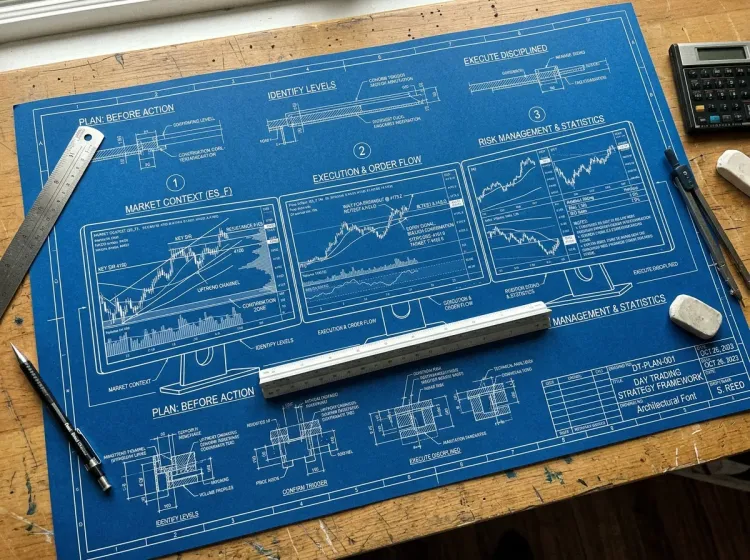
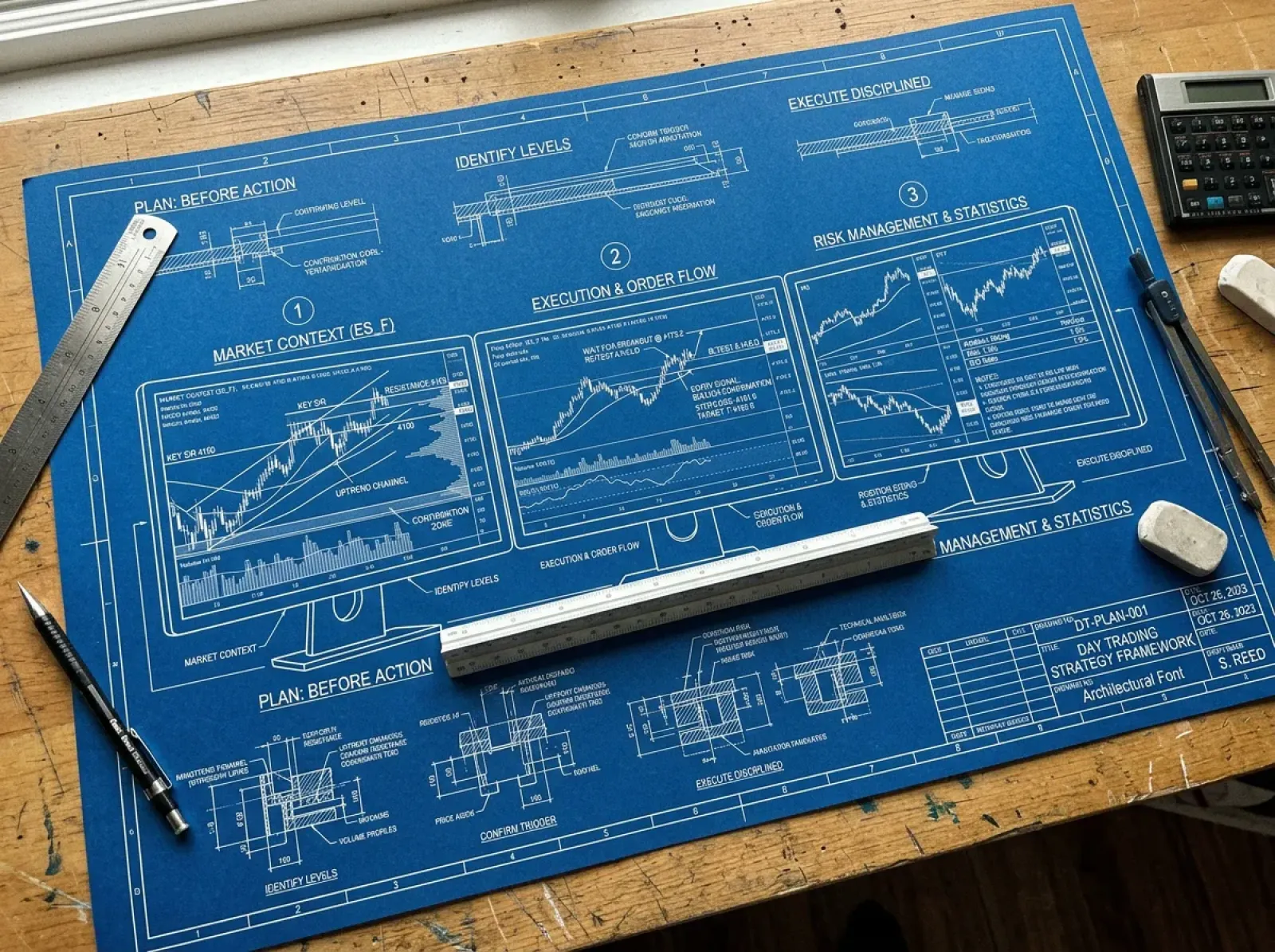
The best defense against FOMO trading is a trading plan that anticipates it, addresses it explicitly, and creates rules that function even when emotions are running high. Vague intentions to be disciplined collapse under the pressure of watching a stock run without you. Specific, written rules with clear criteria provide structure that holds when willpower doesn't. A FOMO-resistant plan doesn't rely on your ability to feel calm—it assumes you won't feel calm and gives you a framework to follow anyway.
Clear Entry Criteria Before Price Moves
The most effective FOMO prevention happens before the move occurs—by defining what would make an entry valid before the stock demands your attention.
Elements of pre-defined entry criteria:
-
Specific setup type or pattern that must be present, not just "looks good" or "moving up"
-
Defined price levels where entry makes sense technically, established before the move happens
-
Volume and confirmation requirements that separate valid breakouts from noise
-
Risk-reward minimums that must be met for the entry to qualify
-
Maximum distance from support or entry trigger beyond which the setup is invalid
-
Time-of-day rules if certain periods produce worse outcomes for your strategy
-
Checklist format that requires checking each criterion before execution
-
Written documentation that exists independent of your emotional state in the moment
Rules for When It's Too Late
Equally important to knowing when to enter is knowing when the opportunity has passed and entry no longer makes sense.
Your plan should specify maximum chase limits—how far beyond your ideal entry point you're willing to buy. This might be a percentage above the trigger level, a specific number of ATR units, or distance from a key moving average. Whatever the metric, having a defined "too late" threshold prevents the rationalization that occurs when you're watching a runner and convincing yourself that one more entry still makes sense. The rule should be mechanical: if price exceeds this level without your entry, the trade is dead for today.
Quick tip: Define your maximum chase limit before the trading day begins and write it down—deciding in the moment how much chase is acceptable invites emotional reasoning to raise the limit repeatedly.
Quick tip: Consider having two chase thresholds—one for normal market conditions and a tighter one for volatile or extended market environments when FOMO risk is elevated.
Accountability Systems for Tracking FOMO
Building accountability into your plan creates consequences for FOMO trading that help offset the immediate emotional pull toward chasing.
Track FOMO trades separately in your journal, tagging them so you can review their outcomes as a category. Calculate your win rate and average return on FOMO trades versus planned trades—seeing the data often reveals a consistent pattern of underperformance that intellectual knowledge alone doesn't convey. Share your FOMO statistics with a trading partner, mentor, or community that will hold you accountable. Some traders impose self-penalties for FOMO trades—reduced size for the rest of the day, mandatory review before the next session, or other consequences that create friction against the behavior. The goal is making the cost of FOMO trading visible and immediate rather than abstract and dispersed across your long-term results.
Reframing Your Relationship with Missed Opportunities

The way you think about missed trades directly affects how often FOMO trading hijacks your decisions. If missed opportunities feel like losses, your brain will treat them as emergencies requiring immediate action. If you can genuinely internalize that a trade you didn't take costs you nothing, the emotional charge behind FOMO diminishes substantially. This reframing isn't about pretending you don't care—it's about aligning your emotional responses with mathematical reality.
Reframing principles for missed opportunities:
-
A trade you didn't take isn't a loss—your capital remains exactly where it was, unchanged and available for the next opportunity
-
You cannot lose money you never risked, no matter how much the stock moves after you decided not to enter
-
Missed gains exist only in imagination, while real losses reduce actual capital that took real effort to accumulate
-
Markets produce infinite opportunities, but your capital is finite—you cannot capture every move, and attempting to do so depletes the resource that allows any trading at all
-
The opportunity cost of missing a trade is usually zero, since another opportunity will emerge soon
-
The opportunity cost of chasing includes potential losses, trapped capital, psychological damage, and unavailability for better setups
-
Asymmetric risk exists: missing a winner costs you nothing real while chasing and losing costs you actual money
-
Your identity as a trader should center on discipline and process execution, not on capturing every move that occurs
-
The trader who misses opportunities but preserves capital and discipline will outperform the trader who chases everything over any meaningful timeframe
Building Identity Around Discipline
How you define success as a trader shapes whether missed opportunities feel like failures or like evidence of proper execution.
If you measure yourself by whether you caught the big moves, you'll feel like a failure every time something runs without you—which happens constantly. If you measure yourself by whether you followed your process and managed risk appropriately, missed opportunities become irrelevant to your self-assessment. This identity shift changes everything. The disciplined trader who watches a stock run 50% without them doesn't feel shame or urgency—they feel neutral or even positive about having standards that prevented a chase entry. They understand that their edge comes from selectivity and process, not from being in every move. FOMO trading becomes less tempting when chasing contradicts your core identity rather than serving it.
Remember: Reframing missed opportunities as non-events rather than losses neutralizes the emotional fuel behind FOMO trading, and building an identity around discipline rather than catching every move transforms the experience of watching stocks run without you from painful exclusion into evidence of proper execution.
Living With FOMO Trading


FOMO isn't something you defeat once and never experience again—it's a permanent feature of trading that arises from psychological programming you can't uninstall. The goal isn't elimination but management: recognizing FOMO when it appears, having structures that prevent it from translating into impulsive action, and gradually reducing its frequency and intensity over time. Paradoxically, experiencing FOMO can even be useful information. If you feel intense FOMO about a move, many other traders probably feel the same way—which tells you something about crowd psychology, potential exhaustion points, and where late buyers might be entering. FOMO as a signal has value; FOMO as a decision-making driver causes damage.
The Long Game of Emotional Management
Progress with FOMO trading comes through thousands of small moments where you notice the impulse, pause before acting, and choose discipline over emotion—not through any single breakthrough that makes the struggle disappear.
Each time you recognize FOMO arising and don't act on it, you build the neural pathways that make recognition and restraint easier next time. Each time you review a FOMO trade in your journal and see its true cost, you create memories that compete with the urgency of future impulses. Each time you watch a stock run without you and remind yourself that your capital is intact and another opportunity is coming, you weaken the connection between missed moves and emotional emergency. This is slow work without dramatic turning points. You won't wake up one day cured of FOMO. But traders who commit to the long game of emotional management find that FOMO becomes less frequent, less intense, and less likely to translate into damaged accounts—not because they've transcended human psychology, but because they've built systems and awareness that function despite it.

The Role of Social Media in Trading FOMO
Social media has transformed trading FOMO from an occasional experience into a constant assault. Before the internet, you might hear about a colleague's winning trade at the water cooler. Now you're exposed to thousands of traders posting gains, screenshots of massive returns, and breathless commentary about whatever is running—all day, every day, across multiple platforms. This environment is perfectly designed to trigger FOMO responses repeatedly, creating a distorted perception of what normal trading looks like and making your own disciplined approach feel inadequate by comparison.
How Highlight Reels Distort Reality
Social media presents a curated selection of wins that creates a fundamentally misleading picture of trading outcomes.
Nobody posts their average Tuesday. Nobody screenshots the position that went nowhere or the small loss taken according to plan. The trades that get shared are the outliers—the 200% winner, the perfect entry at the exact low, the options trade that turned $500 into $50,000. When your feed consists entirely of these outliers, your brain calibrates its expectations accordingly. Normal returns start feeling like failure. Disciplined trades that make a reasonable profit feel disappointing compared to the lottery winners filling your screen. This distortion makes FOMO trading more likely because your baseline for what's achievable has been artificially inflated by a stream of unrepresentative results.
Survivorship Bias in Trading Communities
The traders you see consistently posting wins are the survivors—a tiny fraction of all traders whose continued presence creates a misleading sample.
How survivorship bias amplifies FOMO:
Traders who blow up accounts disappear from communities, leaving only winners visible
The most active posters are often those with recent big wins, overrepresenting success
Long-term consistent traders rarely post because their individual trades aren't exciting
New traders entering communities see only the survivors and assume these results are typical
Accounts that go quiet after losses are invisible, while accounts celebrating wins stay prominent
Communities naturally accumulate winner narratives while loser narratives vanish
This creates an ecosystem where FOMO trading seems justified because everyone appears to be succeeding
Protecting Your Mental State
Using social media productively requires deliberate curation and boundaries that most traders never implement.
Unfollow or mute accounts that primarily post gains without context, losses, or educational content. Limit trading social media exposure during market hours when FOMO can immediately translate into impulsive action. Remind yourself constantly that what you're seeing is not representative—for every posted win, hundreds of losses go unmentioned. Consider whether the traders posting constant gains are actually profitable long-term or just experiencing variance that will eventually correct. Create boundaries around when and how long you engage with trading content, treating it like any other potentially addictive stimulus that requires management.
Keep In Mind: Social media creates an environment optimized for triggering FOMO trading through highlight reels that distort normal expectations and survivorship bias that makes success appear more common than it is—protecting yourself requires deliberate curation, exposure limits, and constant awareness that what you're seeing represents a tiny, unrepresentative slice of actual trading reality.