


Ross Stock: The Discount Giant That Keeps Winning

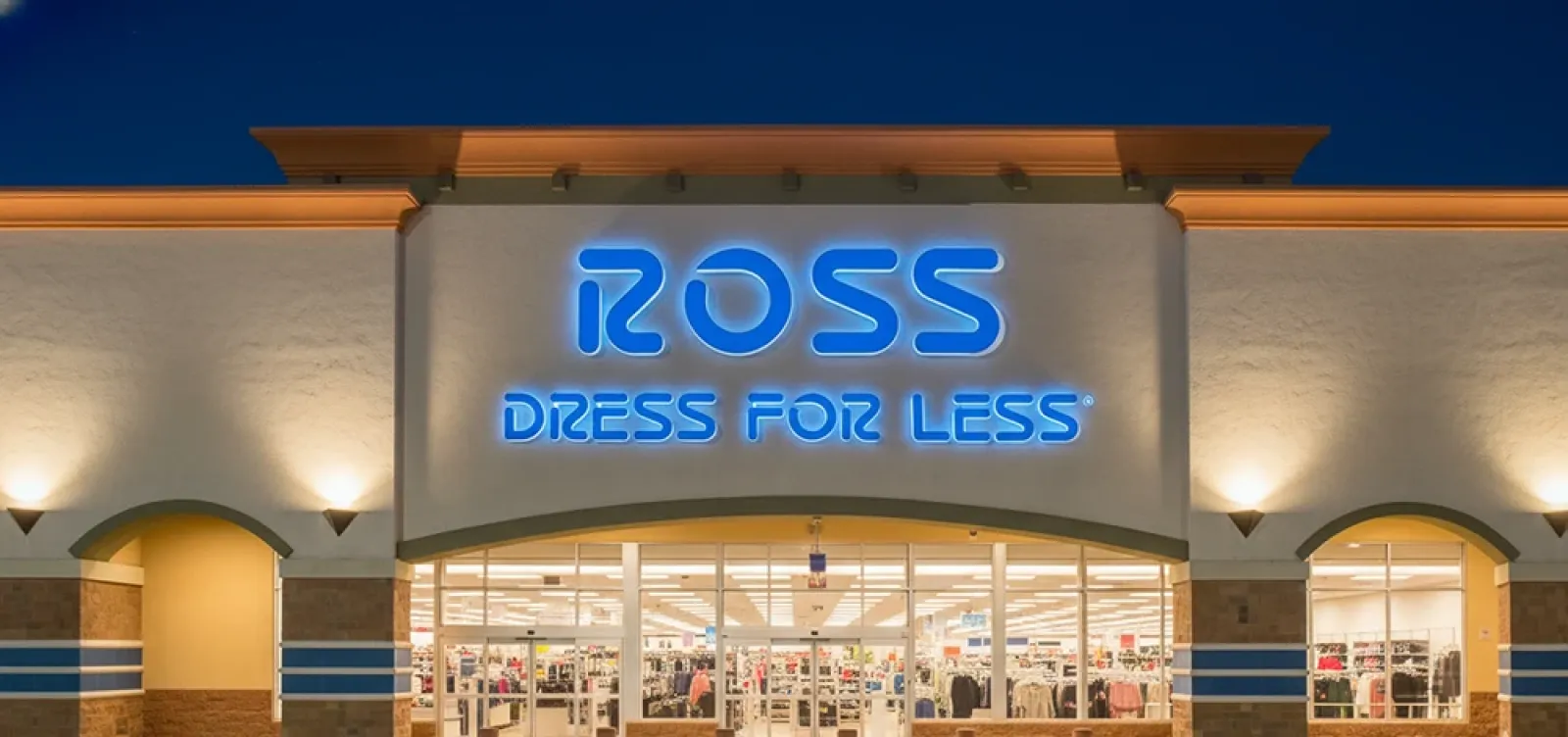
While most retailers spent the past few years figuring out how to survive, Ross Stores quietly built something remarkable. The company operates over 1,950 stores across the United States, generating roughly $20 billion in annual revenue by selling brand-name merchandise at 20-60% below department store prices. That's not just a business model—it's a formula that works whether the economy is booming or stumbling.
What Makes Off-Price Retail Different Right Now
The off-price retail model runs on a simple truth: there's always excess inventory somewhere in the supply chain. Manufacturers overproduce. Department stores overorder. Trends shift faster than warehouses can adjust. Ross steps in and buys this merchandise at steep discounts, then passes the savings to customers who enjoy the thrill of finding designer jeans next to kitchen gadgets next to kids' toys—all at prices that make sense.
Here's why this matters more than ever:
-
Economic pressure changes shopping habits - When budgets tighten, even affluent shoppers trade down to off-price retailers rather than abandon their favorite brands
-
Inventory chaos creates opportunities - Supply chain disruptions over the past few years left retailers with mountains of excess merchandise, creating a target-rich environment for Ross's buyers
-
The treasure hunt experience can't be replicated online - While e-commerce dominates traditional retail, off-price stores offer something Amazon can't: the dopamine hit of discovering unexpected deals in person
-
Store economics actually work - Ross operates with minimal advertising spend, no loyalty programs, and basic store layouts that keep costs low and margins high
The Bottom Line: Ross stock represents a bet on a counter-intuitive retail reality—sometimes the best way to win isn't through innovation or disruption, but by mastering the fundamentals while everyone else chases the next big thing.
The Business Model That Actually Works


Most retail strategies sound impressive in PowerPoint presentations but crumble under real-world pressure. Ross's approach works because it's built on purchasing discipline and operational efficiency rather than marketing magic. The company doesn't try to predict what customers want six months from now—it buys what manufacturers need to move right now, at prices that guarantee margin even before the merchandise hits the sales floor.
How Ross Sources Merchandise at Steep Discounts
Ross employs over 900 buyers who spend their days hunting through manufacturer overruns, canceled orders, and department store excess inventory. These aren't random closeouts—the buyers target name brands and quality merchandise that retail customers already recognize and trust. When a premium apparel brand produces 10,000 extra units of a jacket that sold well but not quite well enough, Ross steps in with cash offers at 40-70% below wholesale. The manufacturer clears warehouse space, Ross acquires desirable inventory, and customers eventually score deals. Nobody loses except maybe the department stores that paid full wholesale six months earlier.
The Treasure Hunt Experience
Walk into a Ross store and you'll notice something immediately: organized chaos. Racks packed with merchandise, new items arriving constantly, and no guarantee that the perfect item you saw last week will still be there tomorrow. This isn't poor inventory management—it's deliberate psychological strategy.
The scarcity principle drives purchasing decisions. When customers know inventory turns over rapidly and deals disappear quickly, they buy now rather than later. Research on consumer behavior shows that time-limited opportunities trigger faster decision-making and higher satisfaction with purchases. Ross has engineered this into every square foot of their stores:
-
Constantly rotating inventory creates repeat visits—customers return weekly to see what's new rather than shopping seasonally like traditional retail
-
Low stock depth means if you see two of your size, you're probably looking at the entire available inventory, which accelerates purchase decisions
-
Mixed categories force customers to browse the entire store, increasing basket size and impulse purchases
-
Brand name presence provides quality assurance without Ross needing to build its own brand equity
Operating Leverage Through Minimal Advertising
Here's where Ross stock really separates itself from traditional retail investments. The company spends roughly 1% of revenue on advertising compared to 3-5% for department stores. Ross doesn't need television commercials or social media campaigns because the value proposition sells itself through word-of-mouth and the treasure hunt experience brings customers back naturally. Those saved percentage points flow straight to operating margin, giving Ross a structural cost advantage that compounds over time. When competitors cut prices to drive traffic, they squeeze already thin margins. When Ross holds a sale, they're still profitable on merchandise they acquired at rock-bottom prices weeks earlier.
Numbers That Tell the Story


Financial metrics tell you what's actually happening versus what management wants you to believe is happening. Ross's numbers over the past five years paint a picture of consistent execution through wildly different retail environments—from pandemic shutdowns to inflation spikes to consumer spending shifts.
Revenue Growth Trajectory
Between 2019 and 2024, Ross grew revenue from $16.0 billion to approximately $20.4 billion, representing a compound annual growth rate near 5%. That might not sound explosive compared to tech darlings, but context matters. This growth happened while traditional department stores shed locations and revenue, and while the entire retail sector wrestled with supply chain chaos and changing consumer behavior.
Breaking down the growth drivers reveals the real story:
-
Store count expansion from roughly 1,546 locations in 2019 to over 1,950 by late 2024—a measured pace that avoids oversaturation
-
Comparable store sales growth averaging 2-4% annually in normal years, with notable strength in 2021-2022 as consumers shifted spending back to apparel and home goods
-
Average transaction values increased as Ross successfully passed through selective price increases while maintaining the discount positioning
-
Market share gains from department stores and specialty retailers struggling with inventory management
Operating Margin Strength
Ross stock benefits from some of the healthiest margins in retail. The company maintains operating margins between 10-13%, depending on the year, while traditional department stores struggle to reach 8%. This gap exists because Ross's cost structure is fundamentally different. Lower rent per square foot from B and C mall locations, minimal marketing spend, basic store fixtures, and high inventory turnover all contribute to a margin profile that gives Ross flexibility when economic conditions shift.
Store Expansion and Geographic Footprint
Ross operates in 40 states with room to grow. Management estimates the potential for 3,000 Ross Dress for Less locations and another 700+ dd's DISCOUNTS stores across the United States. That's roughly 1,750 additional locations beyond current count—years of expansion runway without needing international exposure or complicated new concepts. The company has been particularly aggressive filling in markets across the Midwest and Southeast, targeting areas with growing populations and limited off-price retail competition.
Think of it this way: Ross stock gives you exposure to a retail model that doesn't need revenue to double every three years to justify its valuation. The math works on steady, predictable growth powered by new stores entering underpenetrated markets and existing stores maintaining healthy productivity. Boring beats brilliant when boring actually compounds.
Why Ross Wins When Others Struggle
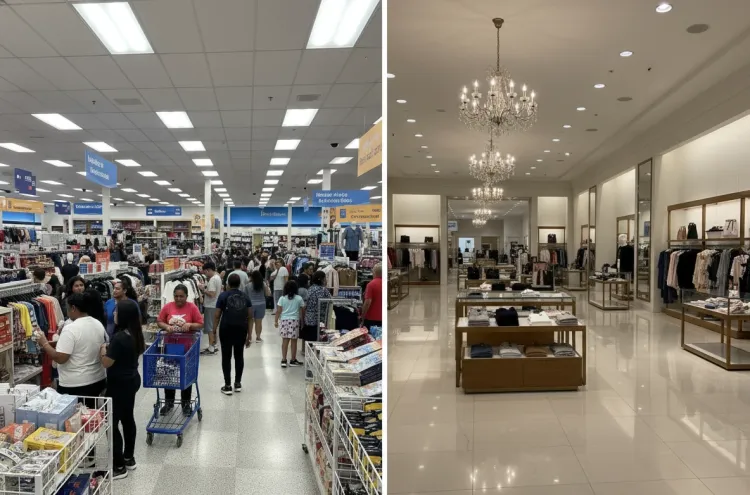
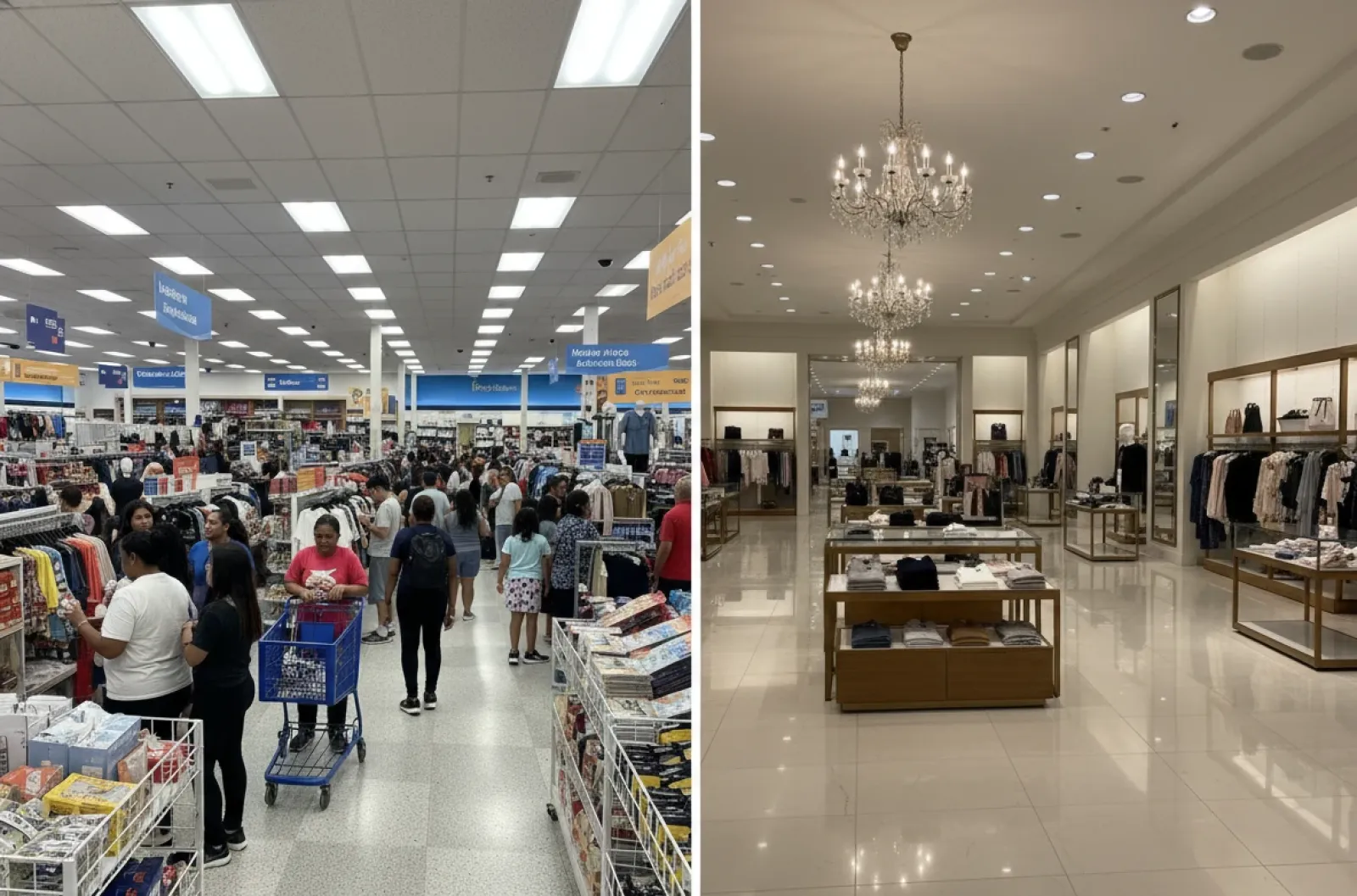
Recessions and economic slowdowns ruin most retail businesses. Ross tends to get stronger. The company's performance during the 2008 financial crisis, the 2020 pandemic disruption, and the 2022-2023 inflationary period shows a pattern: when consumer wallets tighten, off-price retail gains market share. That's not luck—it's a business model designed to benefit from the exact conditions that destroy traditional retailers.
Performance During Economic Uncertainty
Economic pressure creates a psychological shift in how people shop. Middle-income consumers who normally browse Nordstrom start checking Ross first. Upper-income shoppers who never considered off-price retail discover they can maintain their lifestyle without the markup. This trading-down behavior is practically hardwired into human nature—we'll sacrifice shopping experience and convenience before we sacrifice the brands and quality levels we've grown accustomed to.
The data backs this up:
-
During the 2008-2009 recession, Ross grew comparable store sales while department stores posted double-digit declines
-
Throughout 2020's pandemic disruption, Ross recovered faster than traditional retail once stores reopened, with customers prioritizing value over experience
-
During 2022's inflation spike, Ross maintained traffic levels while many retailers saw store visits decline as consumers became more selective
-
Customer demographics broaden during downturns—Ross attracts higher-income shoppers temporarily, and many become permanent customers once they realize the value proposition
Consumer Behavior Shifts Toward Value
The long-term trend favors Ross stock regardless of short-term economic cycles. Younger generations show less brand loyalty to specific retailers and more interest in finding deals. Social media amplifies "haul" content where shoppers showcase their discount finds, turning frugality into social currency. The stigma that once existed around off-price shopping has largely disappeared—finding a $200 designer shirt for $49.99 at Ross is now something people brag about rather than hide.
Inventory Management in a Volatile Supply Chain
Supply chain chaos creates winners and losers. Ross is consistently a winner. When container ships backed up at ports and factories overproduced to compensate for delays, retailers ended up drowning in inventory they couldn't sell at full price. That's Ross's opportunity. The company's buying team swoops in with cash offers for excess merchandise, acquiring quality inventory at even steeper discounts than usual. While competitors panic about markdowns eating into margins, Ross thrives on buying those very markdowns from the source.
The company's inventory model also adapts faster than traditional retail. Ross doesn't commit to seasonal buys six months in advance. Buyers make purchasing decisions continuously based on available deals and current customer demand. If athletic wear is hot this month, buyers can pivot quickly. If home goods slow down, they pull back. This flexibility becomes a massive advantage when consumer preferences shift unpredictably.
Real Estate Advantages
Here's a quietly powerful aspect of Ross stock: the company benefits from retail failures. As department stores and specialty retailers close locations, prime real estate opens up at favorable lease rates. Ross has been particularly smart about moving into vacated spaces in strong retail corridors, often negotiating deals that make sense only because the previous tenant went bankrupt or restructured. The company also targets new development in growing suburbs where land is more affordable and customer demographics align perfectly with the off-price model. Ross isn't competing for flagship locations in premium malls—they're building a network of efficient boxes in secondary locations that generate excellent returns on invested capital.
The Competition Landscape


Off-price retail isn't a monopoly. Ross competes directly with TJX Companies (which operates TJ Maxx, Marshalls, and HomeGoods) and Burlington Stores for the same excess inventory from the same manufacturers. All three companies use similar business models, target overlapping customer demographics, and often locate stores within miles of each other. The question for Ross stock investors isn't whether competition exists—it's whether Ross can maintain its position and profitability while sharing the market.
Understanding the competitive dynamics requires looking at each player's strengths:
-
TJX Companies dominates by scale with over 4,800 stores globally and roughly $54 billion in annual revenue, making it roughly 2.5x larger than Ross
-
Burlington operates around 1,000 stores focused heavily on apparel and home goods, with revenue near $9 billion
-
Ross sits in the middle with its 1,950+ stores and $20 billion revenue base, large enough to command supplier relationships but nimble enough to adapt quickly
-
All three have grown steadily over the past decade, suggesting the market is expanding rather than consolidating into a zero-sum battle
Ross vs. TJX Companies
TJX is the elephant in the room—bigger, more established, with international presence through TK Maxx in Europe and Australia. The company has brand recognition advantages through decades of marketing TJ Maxx and Marshalls. But size creates complexity. TJX manages multiple banner brands with different positioning, operates in diverse international markets with varying economic conditions, and coordinates a massive supply chain across continents.
Ross benefits from focus. The company operates primarily two concepts (Ross Dress for Less and dd's DISCOUNTS) concentrated in the United States. This simplicity allows faster decision-making, more consistent execution, and operating margins that match or exceed TJX despite the scale disadvantage. For Ross stock investors, the key insight is that both companies can win—off-price retail is taking share from traditional department stores and full-price specialty retail, creating room for multiple strong players.
Market Share Dynamics
The off-price retail segment has grown from roughly $30 billion in annual sales a decade ago to over $80 billion today. That growth came primarily at the expense of department stores, which lost nearly $50 billion in revenue over the same period. Ross, TJX, and Burlington collectively captured most of those dollars.
Current market dynamics favor continued growth:
-
Department store closures accelerate as Macy's, Nordstrom, and others shrink footprints, freeing up both customers and inventory supply
-
Specialty retailers struggle with fast fashion competition and changing consumer preferences, creating more excess inventory for off-price channels
-
E-commerce hasn't disrupted the model because the treasure hunt experience and try-before-you-buy convenience keep customers visiting physical stores
-
Market penetration remains low in many geographic areas, particularly smaller cities and rural markets where population density doesn't support department stores but can sustain off-price locations
Differentiation Factors
Ross stock represents a slightly different bet than investing in TJX or Burlington. The companies overlap significantly but have subtle differences that matter for long-term performance.
Ross differentiates through:
-
Geographic concentration in the Western and Southern United States where population growth outpaces the national average
-
Price positioning that skews slightly lower than TJ Maxx, targeting customers who prioritize absolute lowest price over shopping environment
-
Store format emphasizing simplicity and efficiency over aesthetics—basic fixtures, fluorescent lighting, concrete floors that minimize build-out costs
-
Family focus with strong children's apparel and toy categories that drive repeat visits from parents
-
dd's DISCOUNTS concept targeting even more price-sensitive customers in urban markets where Ross Dress for Less might not be the right fit
-
Inventory turn speed that some analysts believe edges out competitors, allowing Ross to refresh merchandise more frequently and maintain the treasure hunt appeal
Risks Worth Watching


No investment comes without vulnerabilities. Ross stock has proven resilient through multiple economic cycles, but the business model contains structural dependencies that could create problems under specific conditions. Understanding these risks doesn't mean avoiding the investment—it means knowing what could go wrong and monitoring the right indicators.
The main risk categories break down like this:
-
Supply-side disruption if manufacturers and retailers suddenly manage inventory perfectly, eliminating excess
-
Labor cost inflation squeezing margins faster than Ross can offset through productivity or pricing
-
Digital commerce evolution potentially cracking the code on replicating treasure hunt psychology online
-
Economic scenarios that simultaneously reduce consumer spending and inventory availability
Dependence on Excess Inventory
IF manufacturers get dramatically better at demand forecasting, THEN Ross loses its primary supply source. AI-driven inventory systems could theoretically reduce overproduction across the retail ecosystem. Fast fashion brands like Zara already minimize markdowns through smaller batches and shorter lead times.
IF a severe recession causes manufacturers to cut production sharply, THEN Ross faces inventory shortages at attractive price points. Less overproduction means less excess inventory to acquire.
IF direct-to-consumer brands continue taking share from wholesale channels, THEN the pool of available excess inventory shrinks. Brands controlling their own distribution have less reason to offload merchandise to off-price retailers.
Wage Inflation and Labor Market Pressures
IF minimum wage increases accelerate faster than productivity improvements, THEN operating margins compress. A $2 per hour wage increase across the network adds tens of millions in annual expenses.
IF labor markets stay tight and turnover remains elevated, THEN customer experience suffers. High turnover creates operational inconsistency—poorly stocked shelves and longer checkout lines.
E-Commerce Limitations
IF someone cracks authentic treasure hunt psychology through digital channels, THEN Ross's in-store advantage diminishes. Current off-price e-commerce hasn't replicated the browsing experience, but technology evolves.
If younger generations show sustained preference for online shopping, THEN Ross's customer base ages out without replacement. Demographics matter for long-term growth even when the current model works.
Margin Compression Scenarios
IF competing off-price retailers bid more aggressively for limited inventory, THEN Ross loses pricing power at the source. More competition for excess inventory drives up wholesale acquisition costs.
IF consumer spending contracts while inflation stays elevated, THEN Ross faces pressure to lower prices even as costs remain high. This scissors effect—rising expenses and falling pricing power—creates margin compression.
Ross stock works well in many economic environments, but not all of them. The ideal scenario is moderate growth with periodic inventory gluts from traditional retailers. The worst scenario is severe recession with manufacturers cutting production to match demand, combined with labor cost inflation and fierce competition for available inventory.
The Investment Thesis
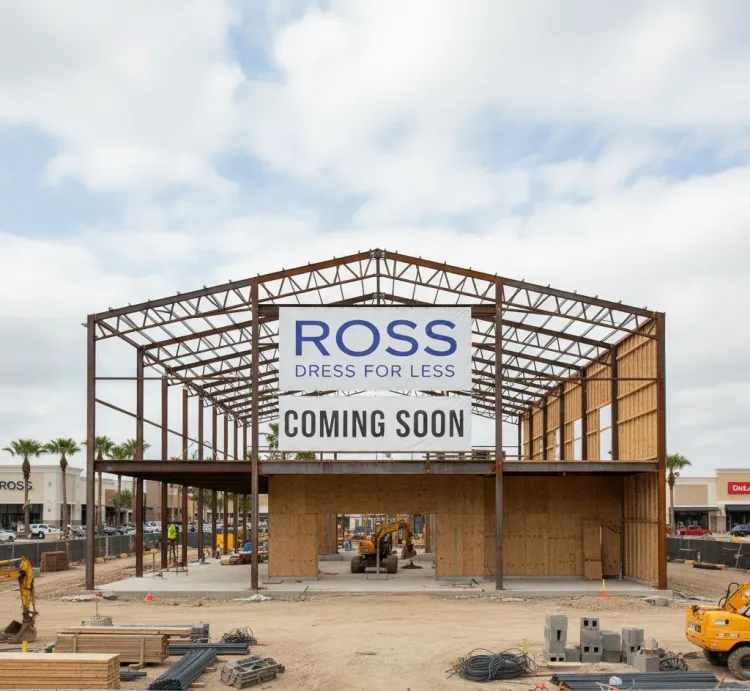
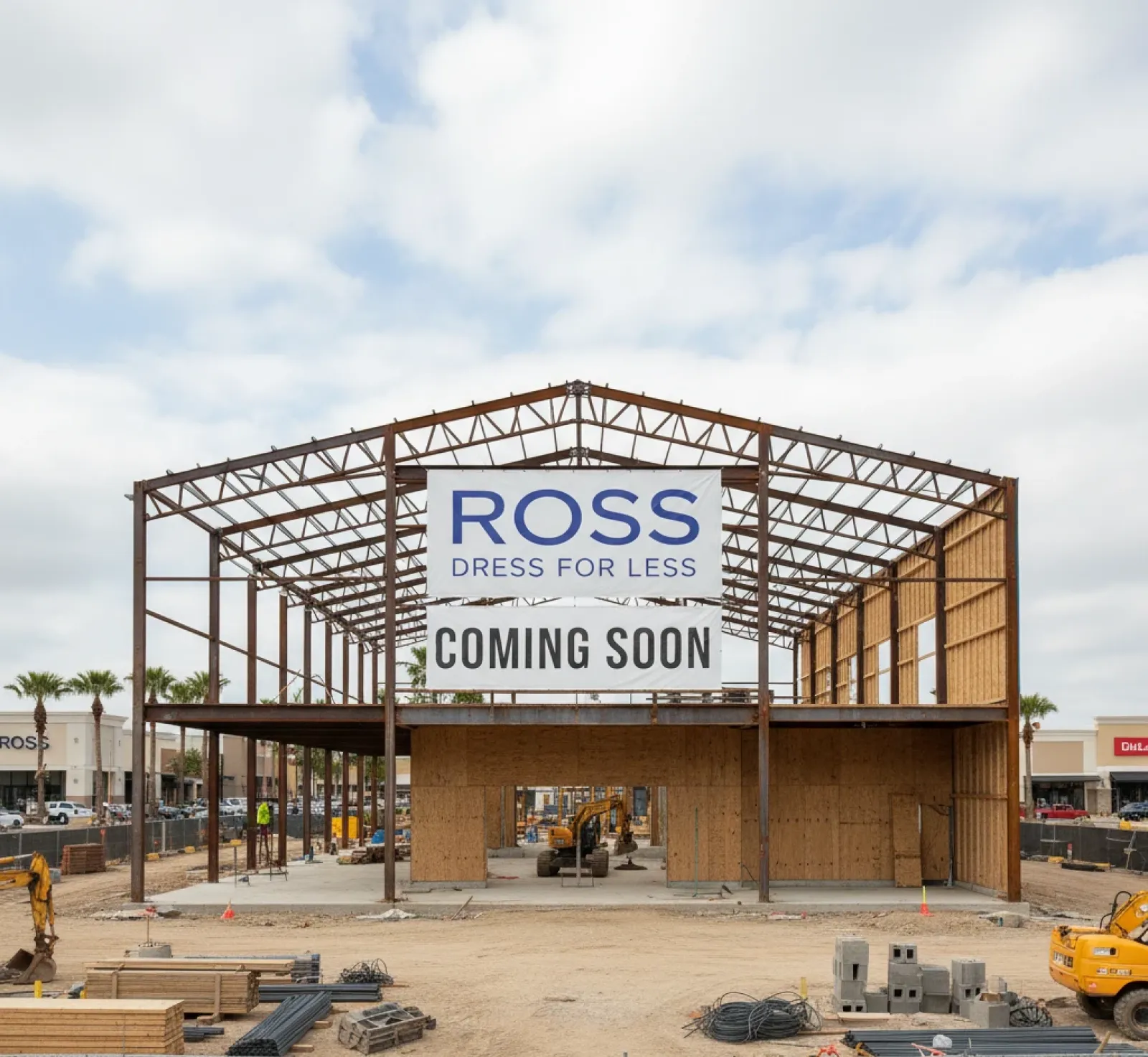
Buying Ross stock means betting that off-price retail continues taking share from traditional retail, that the company executes its expansion plan without stumbling, and that the business model remains relevant as shopping habits evolve. The thesis doesn't require perfect conditions—just steady execution in a market environment that plays to Ross's strengths more often than not.
Valuation Compared to Historical Multiples
Ross has historically traded between 18-25x forward earnings during normal market conditions, with occasional dips into the mid-teens during broader market selloffs or company-specific concerns. The valuation typically sits at a slight discount to TJX Companies, reflecting TJX's larger scale and international diversification, but commands a premium to most traditional retailers given the superior margin profile and growth consistency. When Ross stock trades below 20x forward earnings, history suggests patient investors get rewarded. Above 25x, the price is pricing in fairly optimistic scenarios. The company's ability to maintain double-digit operating margins and generate strong free cash flow supports premium valuations relative to department stores and specialty retailers that struggle to reach high single-digit margins.
Growth Runway Ahead
Management estimates room for roughly 3,000 Ross Dress for Less locations and 700+ dd's DISCOUNTS stores across the United States. Current count sits around 1,950 locations total, leaving approximately 1,750 stores worth of expansion potential over the next decade or more.
Breaking down what this means for investors:
-
New store productivity remains strong with recent openings achieving comparable sales productivity to mature locations within 18-24 months
-
Geographic whitespace exists particularly in the Midwest, Southeast, and smaller metropolitan areas where off-price penetration remains low
-
Unit economics support expansion with new stores typically achieving payback periods under three years
-
No international risk required for the growth story to work—the domestic opportunity alone provides years of runway
-
Store count growth of 60-80 locations annually would extend the expansion timeline through 2035 and beyond, providing visible growth without aggressive acceleration
Recession-Resistant Characteristics
Ross stock offers defensive characteristics rare in retail. The business model benefits from consumer trading down during economic pressure, gains market share when traditional retailers struggle, and sources inventory more cheaply when suppliers become desperate to move excess merchandise. This doesn't make Ross completely recession-proof—sales still declined during pandemic shutdowns and could fall in a severe downturn—but the company has demonstrated relative strength versus retail peers during every economic slowdown of the past two decades. The combination of value positioning, treasure hunt appeal, and operational efficiency creates a business that bends rather than breaks when economic conditions deteriorate.
Management Track Record
Ross has been led by disciplined operators who prioritize consistent execution over flashy initiatives. The management team has successfully navigated multiple retail disruptions, maintained healthy same-store sales growth through varying conditions, and expanded the store base without sacrificing returns on invested capital. Executive compensation ties closely to performance metrics that align with shareholder interests—operating margin, comparable store sales growth, and return on invested capital. The company returns cash to shareholders through share repurchases rather than dividends, reflecting confidence in the ability to deploy capital at attractive returns. Perhaps most telling: Ross hasn't chased risky international expansion, acquired struggling competitors, or launched unproven concepts that distract from the core business. That kind of strategic patience and focus is harder to find than you'd think in retail management.
Quick tips for evaluating Ross stock:
-
Compare the current P/E ratio to the 18-25x historical range and consider where we sit in the economic cycle
-
Monitor new store opening pace and productivity—slowing openings or weak performance from recent locations signals problems
-
Watch operating margin trends quarterly—compression below 11% suggests cost pressures outpacing pricing power
-
Track comparable store sales relative to inflation—Ross should grow comps faster than inflation over time
-
Pay attention to inventory turnover rates—slowing turns mean merchandising execution is weakening
Ross Stock: A Retail Investment That Actually Makes Sense
Most retail stocks tell stories about innovation, disruption, or transformation. Ross tells a different story—one about doing simple things consistently well while competitors chase complexity. The company doesn't need to reinvent shopping or build the next e-commerce platform. It just needs to keep buying excess inventory cheaply, turning it quickly, and opening stores in markets that can support the model. That's not exciting, but it's profitable and repeatable.
What separates Ross from typical retail investments:
-
The business model improves during the conditions that destroy competitors—economic pressure and inventory chaos create opportunities rather than existential threats
-
Growth doesn't require betting on unproven concepts—the expansion runway comes from replicating a formula that's worked for decades in new geographic markets
-
Margins stay healthy without pricing power—Ross doesn't need to raise prices to protect profitability because the cost structure is fundamentally efficient
-
Customer loyalty stems from value proposition rather than brand attachment—people shop at Ross because the deals make sense, not because of emotional connection to the brand
-
Success doesn't depend on predicting trends—buyers react to available inventory rather than forecasting what will be popular months from now
Where Ross Stock Fits in Conservative Portfolios
For investors prioritizing stability and consistent performance over explosive growth, Ross offers exposure to consumer discretionary spending without the volatility of fashion retailers or the disruption risk facing department stores. The stock tends to hold up relatively well during market downturns because the business model has defensive characteristics.
Ross works well for portfolios focused on:
-
Income replacement through growth—the company compounds value through business expansion rather than dividend payments
-
Retail exposure without existential risk—off-price retail is taking share from traditional retail, not fighting for survival against e-commerce
-
Recession hedging within equity allocations—Ross typically outperforms retail peers when economic conditions weaken
-
Long-term compounding—consistent mid-single-digit revenue growth plus margin stability plus share buybacks creates steady returns
Where Ross Stock Fits in Growth-Oriented Portfolios
Ross won't deliver the multi-bagger returns that come from early-stage tech investments or transformational business models. The store expansion runway provides visible growth, but we're talking about 5-7% annual revenue growth rather than 30%+ trajectories. For growth investors, Ross serves as a stabilizer—a position that keeps working when speculative bets hit turbulence.
The stock makes sense for growth portfolios when:
-
Market valuations seem stretched—Ross offers reasonable valuation and proven cash flow generation when high-growth names trade at extreme multiples
-
Portfolio balance requires defensive growth names—not every position needs to be high-risk, high-reward
-
Retail sector exposure is desired—Ross provides cleaner growth characteristics than most retail alternatives
-
Tax-deferred accounts need steady compounders—the lack of dividends and consistent business performance makes Ross well-suited for IRAs and 401(k)s
Portfolio Sizing Considerations
Ross stock deserves meaningful allocation if it fits your strategy, but probably shouldn't dominate a portfolio. The business model works until it doesn't—and while off-price retail has proven durable, it's not immune to disruption.
Pro tips for position sizing:
-
Conservative portfolios: 3-5% allocation provides retail exposure without concentration risk
-
Growth portfolios: 2-3% allocation as a stabilizer alongside higher-volatility positions
-
Sector rotation strategies: Overweight during economic uncertainty, underweight during strong consumer spending periods
-
Dollar-cost averaging works well given the stock's tendency to remain range-bound for extended periods before breaking out
Ross stock represents a bet on consistency winning over time in an industry littered with companies that tried to be clever and failed. The business won't change the world, but it might steadily compound your capital while you wait for your riskier bets to pay off.
