


The Reality About Koch Industries Stock


Koch Industries is the second-largest privately held company in the United States, with annual revenues exceeding $125 billion and operations spanning energy, chemicals, manufacturing, commodities trading, and more. The company employs roughly 120,000 people across dozens of subsidiaries and operates in nearly 60 countries. By revenue, it's larger than many Fortune 100 companies you can actually invest in. This scale and success naturally make people wonder how they can buy Koch Industries stock and participate in the company's growth.
Why This Article Exists
People search for Koch Industries stock information because the company is massive, profitable, and diversified—exactly the kind of business investors want to own. But there's a problem: you can't buy it.
What this article will cover:
-
Why Koch Industries remains private and what that means for potential investors
-
The advantages Koch gains from staying private that public companies don't have
-
What investment options exist related to Koch (spoiler: very limited)
-
Comparable public companies you can actually invest in instead
-
How to think about private vs. public companies as an investor
-
Whether Koch could ever go public and what that might look like
-
The broader trend of major companies avoiding public markets
-
Why accepting what you can't invest in is part of being a smart investor
What Koch Industries Actually Is


Koch Industries started in 1940 as an oil refining business and evolved into one of the largest conglomerates in the world. The company operates across multiple sectors with a portfolio of subsidiaries that most people interact with regularly without realizing they're Koch-owned. From the paper products you use to the fertilizer that grows your food to the asphalt on roads, Koch Industries has a presence in everyday life that rivals any public corporation.
Business Operations and Scale
Koch Industries isn't just big in one industry—it's diversified across several major sectors with market-leading positions in each.
Core business segments:
-
Energy and refining through subsidiaries like Flint Hills Resources and Koch Pipeline
-
Chemicals and polymers including Koch Chemical Technology and Invista
-
Commodities trading and services through Koch Ag and Energy Solutions
-
Forest and consumer products including Georgia-Pacific (paper towels, tissue, building materials)
-
Manufacturing and industrial products across multiple specialized subsidiaries
-
Technology and innovation divisions supporting the broader business units
Revenue and Comparison to Public Companies
The scale of Koch Industries puts it in the same league as major public corporations, even though most investors have never seen its financials.
Did You Know? Koch Industries' annual revenue of over $125 billion would rank it around 20th on the Fortune 500 if it were public—larger than companies like Goldman Sachs, IBM, or Lockheed Martin.
Did You Know? If Koch Industries were publicly traded, its market capitalization would likely exceed $100 billion based on comparable company valuations, making it larger than companies like General Motors, FedEx, or Starbucks.
Did You Know? Koch Industries' private structure means it has issued corporate bonds to raise debt capital, but these bonds trade based on credit quality rather than providing equity ownership like Koch Industries stock would if it existed.
Ownership Structure
Koch Industries is controlled by the Koch family, specifically Charles Koch and his family trusts, after the passing of his brother David Koch in 2019. The company has remained tightly held within the family since its founding, with no outside equity investors or venture capital firms holding stakes. This concentrated ownership means all major decisions stay within a small group aligned on long-term strategy rather than answering to diverse shareholders with different time horizons and objectives.
The private ownership structure allows the company to operate without quarterly earnings calls, without publishing detailed financial statements, and without facing activist investors trying to influence strategy. This privacy extends to compensation, executive decisions, acquisitions, and divestitures—all areas where public companies face scrutiny and pressure from shareholders and analysts.
The Bottom Line: Koch Industries operates at a scale comparable to major public corporations with over $125 billion in revenue across energy, chemicals, manufacturing, and consumer products, but it remains entirely private and controlled by the Koch family with no plans to offer Koch Industries stock to public investors.
Why Koch Industries Chose to Stay Private


Staying private is a deliberate strategic choice, not a default position or stepping stone to an eventual IPO. The Koch family has consistently chosen to keep the company private despite having opportunities to go public and despite the potential windfall that Koch Industries stock would create for the family. The decision reflects specific advantages that private ownership provides and disadvantages of public markets that the company prefers to avoid.
Reasons Koch Industries remains private:
-
Long-term strategic planning without quarterly earnings pressure to hit short-term targets
-
Freedom to make investments that may not pay off for years or decades without analyst criticism
-
No shareholder activism from hedge funds or institutional investors trying to influence strategy
-
Avoidance of proxy battles and governance fights that distract management
-
Privacy in operations, acquisitions, financial performance, and executive compensation
-
Protection of proprietary strategies and competitive advantages from public disclosure requirements
-
Family control ensuring decisions align with Koch values and long-term vision
-
Legacy preservation across generations without dilution from outside shareholders
-
No exposure to market volatility that could dramatically swing the company's perceived value daily
-
Avoiding speculation and short-term trading that has nothing to do with business fundamentals
-
Freedom to enter or exit businesses based on strategic fit rather than market reaction
-
Ability to structure compensation and incentives without public scrutiny or say-on-pay votes
The Strategic Benefits of Privacy
The advantages of remaining private compound over time in ways that make going public increasingly unattractive. When you don't have to publish quarterly results, you can pursue strategies that look terrible in year one but transformative in year ten. When you don't face activist investors, you can ignore short-term margin optimization in favor of long-term market positioning. When you don't have analysts dissecting every move, you can experiment, fail, pivot, and learn without public embarrassment or stock price punishment.
Public companies face constant pressure to meet or beat quarterly earnings expectations, even if hitting those numbers requires decisions that harm long-term value. Private companies like Koch can take a different approach—sacrificing near-term profitability to build capabilities, enter new markets, or weather downturns without panicked shareholders demanding changes. This patient capital approach has allowed Koch to make acquisitions and investments that public companies would struggle to justify to their boards and investors.
Remember: The absence of Koch Industries stock isn't an oversight or temporary situation waiting to be resolved through an IPO—it's a fundamental strategic choice that provides competitive advantages the Koch family values more than the liquidity and capital access that going public would provide.
Advantages of Private Ownership for Koch


The benefits of staying private go beyond just avoiding the annoyances of public markets. Private ownership creates actual competitive advantages that affect how Koch Industries operates, invests, and competes against public companies in the same industries. These advantages compound over decades and help explain why the company has grown so successfully while remaining out of public view.
Specific competitive advantages:
-
Strategic flexibility to pursue opportunities that don't fit neat quarterly narratives or analyst expectations
-
Capital allocation decisions made by operators who know the business rather than appeasing outside investors
-
Ability to hold underperforming assets through cycles rather than selling at bottoms due to shareholder pressure
-
Freedom to invest heavily in R&D or infrastructure without defending the spending on earnings calls
-
Avoiding detailed disclosure requirements that would reveal competitive strategies to rivals
-
No 10-K or 10-Q filings exposing margins, segment performance, or strategic priorities
-
Protection from hostile takeover attempts or activist investors building positions
-
Management continuity without the threat of board changes from proxy fights
-
Ability to make unpopular short-term decisions like closing facilities or exiting markets
-
Freedom to keep executive compensation private and structured for long-term performance
-
No pressure to maintain dividend policies or return cash to shareholders during reinvestment phases
-
Capacity to move quickly on acquisitions without market speculation driving up prices
How These Advantages Play Out
The difference between private and public ownership becomes most visible during downturns or strategic transitions. When oil prices collapse, public energy companies face immediate pressure to cut capex, reduce headcount, and maintain dividends to appease shareholders. A private company like Koch can take a different path—continuing to invest countercyclically, acquiring distressed assets, and positioning for the recovery without explaining the strategy to anxious public investors.
The absence of Koch Industries stock also means the company never faces the scenario where its stock price falls 30% because analysts don't like a long-term investment decision, even if that decision is strategically sound. Public CEOs often avoid the right move because they can't stomach the market reaction. Private company leaders can make the right call and ignore the critics because there's no daily stock price validating or rejecting their choices. This creates a meaningful competitive edge in industries where the right strategy often involves short-term pain for long-term gain.
What Investors Miss by Koch Being Private


For investors looking to build diversified portfolios with exposure to energy, chemicals, manufacturing, and consumer products, Koch Industries would check a lot of boxes—if you could actually invest in it. The company's private status means retail investors miss out on participating in a massive, profitable conglomerate that has grown substantially over decades. This isn't just theoretical—it's real money and real returns that stay within the Koch family and their company rather than being shared with public shareholders.
What investors can't access:
-
Equity appreciation as the company grows and increases in value over time
-
Capital gains from owning a stake in one of America's largest industrial conglomerates
-
Dividend payments that the company might distribute if it were public
-
Portfolio diversification across multiple sectors through a single investment
-
Participation in Koch's acquisition strategy and integration of new businesses
-
Transparency through SEC filings, quarterly reports, and annual shareholder meetings
-
Information about financial performance, margins, growth rates, and strategic priorities
-
Analyst coverage and independent research providing third-party perspectives
-
Liquidity to buy or sell shares based on personal financial needs or market conditions
-
Corporate governance rights like voting on board members or major decisions
-
Access to management through earnings calls or investor presentations
-
The ability to research the company's competitive position using public data
The Opportunity Cost
Think of it this way: if Koch Industries had gone public decades ago and you had invested $10,000 in the IPO, that stake would likely be worth multiples of your initial investment today, possibly even 10-20x or more depending on the timing, given the company's growth trajectory and diversification into higher-margin businesses—but because Koch Industries stock doesn't exist, that opportunity was never available to you, and all of that value creation stayed with the Koch family instead of being shared with public shareholders who took risk alongside the company.
How Private Companies Fund Growth


One common misconception is that private companies can't grow as fast as public companies because they lack access to capital markets. Koch Industries disproves this completely. The company has grown through acquisitions, organic expansion, and capital investment without ever needing to issue Koch Industries stock to raise equity capital. Understanding how large private companies fund growth reveals why going public isn't necessary for accessing capital—it's a choice about ownership structure, not a requirement for growth.
How Koch Industries funds operations and expansion:
-
Retained earnings from highly profitable core businesses generating billions in annual cash flow
-
Cash flow reinvestment into organic growth projects, capacity expansion, and technology upgrades
-
Private debt markets where institutional lenders provide credit facilities based on company creditworthiness
-
Corporate bond issuance through Koch Industries and its subsidiaries in public debt markets
-
Bank loans and credit lines from relationship lenders who understand the business
-
Asset-backed financing secured by specific projects or equipment
-
Sale of non-core assets to fund strategic acquisitions in priority areas
-
Joint ventures and partnerships that share capital requirements with other companies
-
No need for public equity raises or secondary offerings that dilute existing ownership
-
No pressure to access markets during favorable windows or maintain analyst relationships
Understanding Bond vs. Equity Financing
Koch Industries does participate in public capital markets, but through debt rather than equity. The company and its subsidiaries issue corporate bonds that trade on secondary markets, allowing institutional investors and some retail investors to lend money to Koch in exchange for fixed interest payments. This is fundamentally different from owning stock.
Quick tip: Bond investors are creditors who get paid before equity holders but don't participate in upside—if Koch doubles in value, bondholders still just get their fixed interest and principal back.
Quick tip: Koch bonds trade based on credit quality and interest rates, not on the company's growth prospects or strategic success, which is what would drive Koch Industries stock if it existed.
Quick tip: You can potentially buy Koch bonds through a brokerage account if you're an accredited investor or through certain bond funds, but this gives you debt exposure, not equity ownership.
Quick tip: Public companies use both debt and equity financing, while private companies like Koch can choose to use only debt, keeping all equity private and avoiding dilution.
The ability to fund growth without issuing Koch Industries stock demonstrates that private ownership doesn't constrain a company's ability to invest and expand—Koch has made major acquisitions like Georgia-Pacific for $21 billion and Invista for $4.4 billion using debt financing and internal cash flow, proving that private companies with strong fundamentals can access plenty of capital without selling equity to public investors.
Koch Industries Bonds: The Only Direct Investment Option
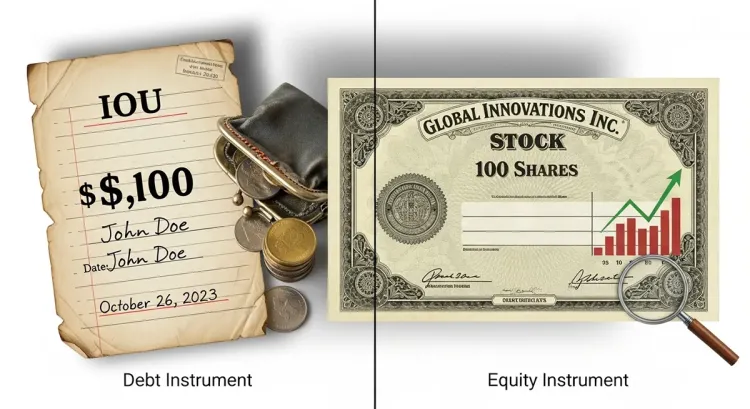
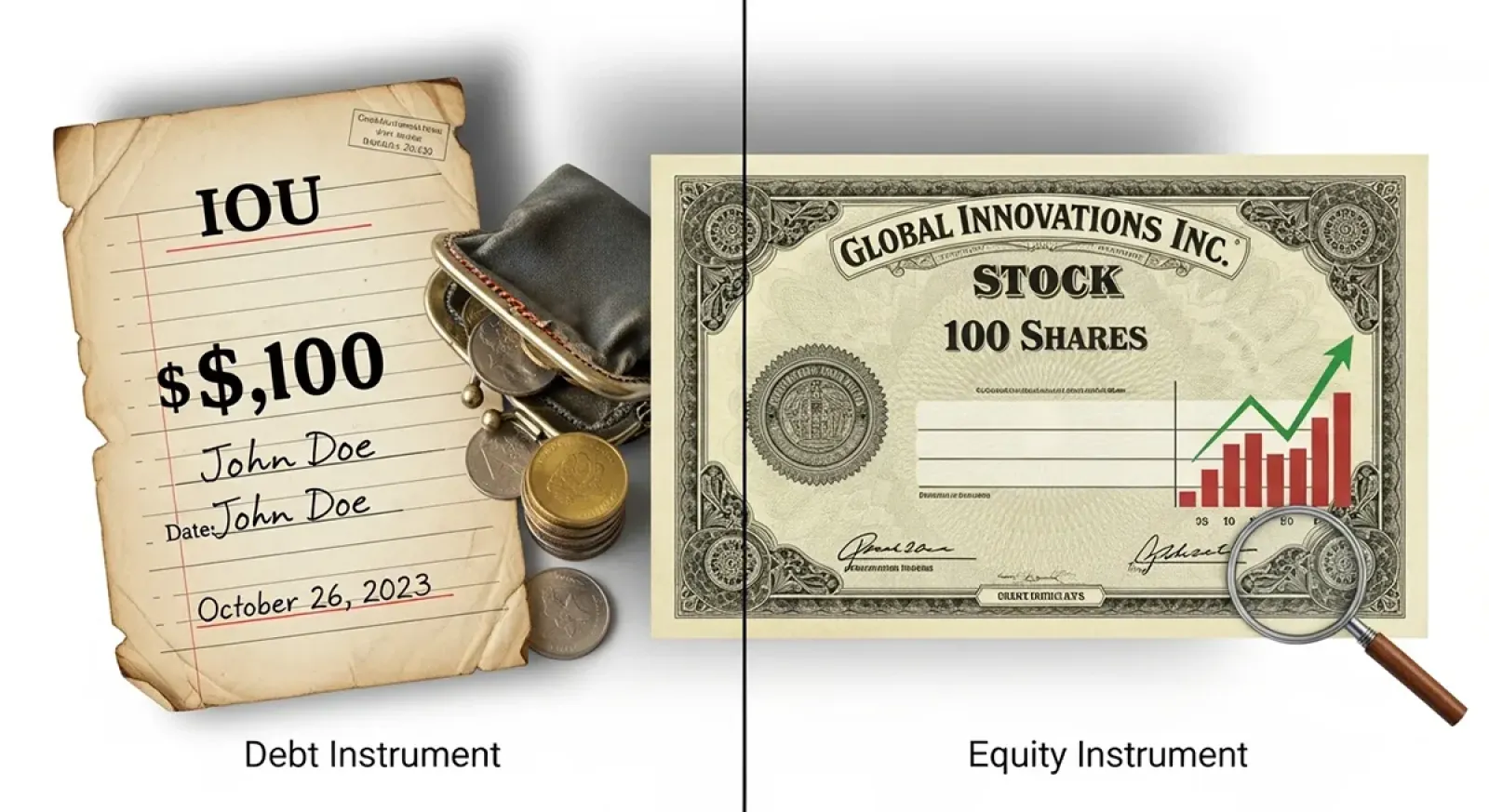
If you're determined to have some financial stake tied to Koch Industries, corporate bonds are the only realistic option available to investors. Koch Industries and its subsidiaries periodically issue bonds to raise debt capital for operations, acquisitions, and refinancing. These bonds trade in secondary markets where institutional investors and some retail investors can buy them. But buying Koch bonds is nothing like owning Koch Industries stock—you're a lender, not an owner, and your returns are capped regardless of how well the company performs.
What Bond Investors Actually Get
Bonds and stocks provide fundamentally different returns and rights, making Koch bonds a poor substitute for equity ownership if what you really want is to participate in the company's growth.
Bond investor rights and returns:
-
Fixed interest payments at a predetermined rate (coupon) paid semi-annually or annually
-
Return of principal at maturity if the company doesn't default
-
Priority over equity holders in bankruptcy or liquidation scenarios
-
No voting rights or say in company operations or strategy
-
No participation in company growth or value appreciation beyond credit quality improvement
-
No dividends or profit sharing beyond the contracted interest payments
-
Credit risk exposure to Koch's ability to service debt obligations
-
Interest rate risk if you need to sell before maturity
Bond vs. Stock Comparison
Understanding what you give up by owning bonds instead of the stock that doesn't exist helps set realistic expectations.
IF Koch Industries doubles in value over 10 years… THEN bond investors still receive only their contracted interest rate and principal—no upside participation.
IF Koch Industries grows earnings by 15% annually… THEN bondholders get the same fixed coupon payments regardless—equity holders would capture that growth.
IF Koch Industries pays generous dividends… THEN stock investors would receive those payments, but bond investors only get their interest—no dividend access.
IF Koch Industries' credit rating improves… THEN bonds may trade at a premium to par value, providing modest capital appreciation, but nothing like equity gains.
IF Koch Industries struggles financially… THEN bondholders face default risk and potential losses, similar to stock investors, but without the upside that compensates stock investors for taking risk.
Where and How to Buy Koch Bonds
Accessing Koch bonds requires navigating corporate debt markets that aren't as simple as buying stocks through a retail brokerage app.
Potential access points:
-
Corporate bond desks at major brokerages for accredited or high-net-worth investors
-
Bond ETFs or mutual funds that hold Koch debt as part of diversified portfolios
-
Secondary market purchases when existing bondholders sell
-
Institutional platforms if you have access through a wealth advisor or private bank
-
Limited availability for retail investors due to minimum purchase requirements often at $1,000 or $5,000 par value
-
Opaque pricing with bid-ask spreads that can be wide for less liquid issues
Limitations and Realities
Even if you can access Koch bonds, they come with constraints that make them unsuitable for most investors looking for exposure to the company's business success.
DO: Understand that Koch bonds provide credit exposure, not business exposure—you're betting on their ability to repay debt, not their growth prospects.
DO: Check credit ratings from agencies like Moody's or S&P before buying—Koch typically carries investment-grade ratings but verify current status.
DO: Compare yields to similar industrial bonds to ensure you're getting fair pricing—don't overpay just because it's Koch.
DON’T: Confuse bond ownership with equity ownership—you're not participating in Koch's success beyond them not defaulting.
DON’T: Expect liquidity comparable to stocks—corporate bonds can be harder to sell and may trade at unfavorable prices in secondary markets.
DON’T: Buy Koch bonds if what you really want is Koch Industries stock—they're fundamentally different instruments serving different investment purposes.
Comparable Public Companies to Consider


Since you can't buy Koch Industries stock, the next best option is identifying public companies that operate in similar industries or have comparable business models. No single public company perfectly replicates Koch's diversification, but you can build exposure to the same sectors where Koch generates revenue. This approach lets you participate in the industries where Koch competes, even if you can't invest in Koch itself.
Public alternatives across Koch's business segments:
-
Energy and refining: EOG Resources, ConocoPhillips, Valero Energy, Phillips 66, Marathon Petroleum
-
Chemicals and polymers: Dow Inc., DuPont, LyondellBasell, Eastman Chemical, Celanese
-
Industrial gases: Air Products and Chemicals, Linde
-
Forest and consumer products: International Paper, Kimberly-Clark, Packaging Corporation of America
-
Diversified industrials: Berkshire Hathaway, 3M, Honeywell, General Electric
-
Commodities and agriculture: Archer Daniels Midland, Bunge Limited
-
Building materials: Louisiana-Pacific, Weyerhaeuser
-
Textiles and fibers: No perfect public comparison for Invista's nylon and polyester operations
Why These Aren't Perfect Substitutes
Even with a basket of public stocks covering Koch's industries, you're not replicating what Koch Industries stock would provide if it existed.
Key differences from owning Koch directly:
-
Public companies face quarterly earnings pressure that Koch avoids, potentially leading to different strategic decisions
-
You're buying multiple companies with different management teams, cultures, and strategies rather than Koch's unified approach
-
Transaction costs and complexity of managing a portfolio of 5-10 stocks vs. owning one diversified company
-
No single company matches Koch's specific competitive positions or market share in each segment
-
Public companies in these industries may have different risk profiles, leverage levels, and capital allocation priorities
-
You miss Koch's private company advantages like strategic flexibility and long-term focus
-
Correlation doesn't equal causation—these stocks move based on their own dynamics, not Koch's performance
Building a Basket Approach
If you want exposure similar to what Koch Industries stock would theoretically provide, consider building a diversified basket weighted toward the sectors where Koch has the largest revenue contributions.
Koch derives significant revenue from energy and refining, so companies like ConocoPhillips or Valero might comprise 30-40% of your basket. Chemicals represent another major segment, suggesting positions in Dow or DuPont at perhaps 20-30%. Forest and consumer products through Georgia-Pacific could be replicated with positions in International Paper or Kimberly-Clark. The remaining allocation could go to diversified industrials like Berkshire Hathaway that share Koch's conglomerate structure.
This basket approach gives you sector exposure but comes with higher fees, more complexity, and less precision than simply owning Koch Industries stock would provide. You're also exposed to company-specific risks across multiple holdings—if one of your chosen companies misexecutes while Koch's equivalent division thrives, your basket underperforms relative to what owning Koch directly would have delivered.
Keep In Mind: Building a basket of public companies in Koch's industries gives you sector exposure but fundamentally differs from owning Koch Industries stock—you get the industry exposure without Koch's specific competitive advantages, management decisions, strategic positioning, or the benefits of its private ownership structure
What If Koch Ever Went Public?


The hypothetical IPO of Koch Industries would be one of the largest in American history, creating instant wealth for the Koch family while giving public investors access to a massive industrial conglomerate. But speculation about Koch Industries stock hitting public markets is just that—speculation with very low probability of actually happening. Understanding why helps you stop waiting for something that isn't coming and focus on investments you can actually make.
IF Koch Industries decided to go public with a traditional IPO… THEN the offering would likely value the company at $100-150 billion or more based on comparable public company multiples, making it one of the largest IPOs in U.S. history.
IF the Koch family wanted to maintain control while going public… THEN they might use a dual-class share structure like Google or Facebook, giving public investors economic exposure but limited voting rights.
IF market conditions were favorable and investor appetite strong… THEN Koch Industries stock would likely see significant first-day gains as institutional and retail investors competed for shares in a rare opportunity to own such a large private company.
IF the IPO included only a minority stake like 10-20% of the company… THEN the Koch family would retain control while providing some liquidity and establishing a public market valuation for their holdings.
IF Koch went public during a market downturn or sector weakness… THEN the reception might be muted regardless of the company's fundamentals, as timing matters enormously for IPO success and pricing.
Historical Examples of Major Private-to-Public Transitions
Looking at other large companies that went from private to public provides context for what a Koch IPO might look like and how the market typically responds.
Relevant comparisons:
-
Berkshire Hathaway transition from textile company to Buffett's conglomerate (though this was an acquisition rather than IPO)
-
Saudi Aramco IPO in 2019 at $1.7 trillion valuation—largest IPO ever, showing appetite for massive private company debuts
-
Facebook IPO in 2012 at $104 billion valuation faced technical issues but stock eventually performed well
-
Alibaba IPO in 2014 at $168 billion valuation was well-received and stock gained significantly
-
Visa IPO in 2008 at $17.9 billion during financial crisis still succeeded despite terrible timing
-
General Motors re-IPO in 2010 after bankruptcy showed even troubled giants can return to public markets
Why It Probably Won't Happen
Despite the theoretical appeal of Koch Industries stock trading publicly, multiple factors make an IPO extremely unlikely in any reasonable timeframe.
The Koch family has consistently demonstrated preference for private ownership and the strategic advantages it provides. They've never signaled interest in going public, never hired investment banks to explore the option, and never faced the financial pressure that forces some private companies to access public markets. The company generates enough cash flow to fund growth internally and can access debt markets when needed, eliminating the primary reason companies go public—raising capital.
Family control and legacy preservation matter more to the Kochs than liquidity. The family is already extraordinarily wealthy, so converting company equity to cash through an IPO doesn't solve a problem they have. Going public would subject the company to scrutiny, activism, quarterly pressures, and all the disadvantages of public markets that Koch has successfully avoided for decades. The cost-benefit analysis doesn't favor an IPO from the family's perspective.
The Cargill comparison reinforces why Koch likely stays private. Cargill is the largest private company in America, even bigger than Koch, and has remained private since 1865 through multiple generations of family ownership. If Cargill hasn't gone public after 150+ years despite enormous size and similar dynamics, Koch probably won't either. Both companies have found that private ownership serves their interests better than the liquidity and capital access that public markets provide.
The Reality of Koch Industries Stock


Koch Industries stock doesn't exist, won't exist anytime soon, and pining after it won't make you a better investor. This isn't a temporary situation waiting to be resolved or a company in the late stages of preparing for an IPO. It's a deliberate choice by one of America's most successful business families to keep their company private, and that choice isn't changing because retail investors wish they could buy shares. Accept this reality and move on to the thousands of investment opportunities that are actually available to you.
Focus on What You Can Control
The investment universe contains tens of thousands of publicly traded stocks, bonds, funds, and other securities you can actually buy. Obsessing over the one company you can't access is a waste of mental energy that could go toward researching companies you can invest in. If you like Koch's diversification across energy, chemicals, and manufacturing, build a portfolio of public companies in those sectors. If you admire Koch's long-term focus and private company advantages, look for public companies with similar characteristics—strong cash flow, low debt, patient capital allocation, and management teams that think in decades rather than quarters.
You can also learn from Koch's strategy without owning Koch Industries stock. The company's success comes from operational excellence, smart capital allocation, willingness to hold assets through cycles, and freedom from short-term pressures. These principles apply whether you're running a private company or investing in public ones. Look for public companies that demonstrate similar discipline—businesses that invest for the long term even when the market punishes them, that make unpopular decisions that prove correct years later, that prioritize sustainable competitive advantages over quarterly earnings beats.
The broader lesson is that not everything worth owning is available to own. Private markets contain enormous value that retail investors can't access—venture capital, private equity, large private companies like Koch and Cargill, family offices, and more. This is the reality of modern capital markets. The public market universe has actually been shrinking as more companies stay private longer or avoid going public entirely. Understanding this trend helps you appreciate what you do have access to rather than resenting what you don't.
