



Understanding Fibonacci Extension Levels


Fibonacci extensions are a technical analysis tool that helps traders project price targets beyond the current price range. While Fibonacci retracements tell you where price might pull back to during a trend, extensions tell you where price might go once it resumes moving in the trend direction. They're based on the Fibonacci sequence—a mathematical pattern found throughout nature that somehow shows up in market movements too.
What makes Fibonacci extensions useful:
-
Provides objective price targets based on mathematical relationships rather than guessing
-
Works across all timeframes and markets—stocks, forex, crypto, commodities
-
Helps traders set profit targets and scale out of positions at logical levels
-
Creates confluence when extension levels align with other technical factors
-
Used by both discretionary traders and algorithmic trading systems
-
Based on ratios that appear repeatedly in financial markets for reasons not fully understood
Extensions vs. Retracements
Fibonacci retracements and extensions serve different purposes in trade planning, though they're often confused because they use similar mathematical principles.
Retracements measure pullbacks within an existing move—they tell you where price might find support or resistance as it corrects against the trend. Common retracement levels are 38.2%, 50%, and 61.8%. You use retracements to find entry points when trading with the trend.
Extensions, on the other hand, project targets beyond the original move—they tell you where price might go after it completes a retracement and resumes the trend. Common extension levels are 127.2%, 161.8%, and 261.8%. You use extensions to set profit targets and understand how far the trend might continue.
The Mathematical Foundation
The Fibonacci sequence starts with 0 and 1, then each subsequent number is the sum of the previous two: 0, 1, 1, 2, 3, 5, 8, 13, 21, 34, 55, 89, and so on. When you divide any number in the sequence by the previous number, you get approximately 1.618—the golden ratio that appears in art, architecture, and nature.
Extension levels come from this golden ratio and its variations:
-
127.2% is the square root of 1.618
-
161.8% is the golden ratio itself (1.618)
-
200% is simply doubling the original move
-
261.8% is 1.618 squared (approximately 2.618)
-
These ratios appear in expanding wave patterns in markets
Why This Matters for Trading
The fibonacci extension tool doesn't predict the future—it identifies price levels where the market has historically shown a tendency to pause, reverse, or accelerate. Whether this happens because of the underlying mathematical harmony in market movements or because enough traders watch these levels to make them self-fulfilling is debatable. What matters is that they work often enough to be useful.
When you project extension levels after a pullback, you're essentially saying "if this trend resumes, here are the mathematical targets based on the relationship between the original move and the correction." Price doesn't always reach these targets, and when it does, it doesn't always stop there. But the levels provide a framework for setting realistic profit targets instead of hoping price goes up indefinitely or exiting too early out of fear.
Fibonacci extensions help traders answer the question "where should I take profits?" by providing mathematically-derived price targets that align with how trends tend to develop—giving you objective levels to aim for rather than making emotional decisions about when to exit positions.
The Key Fibonacci Extension Levels
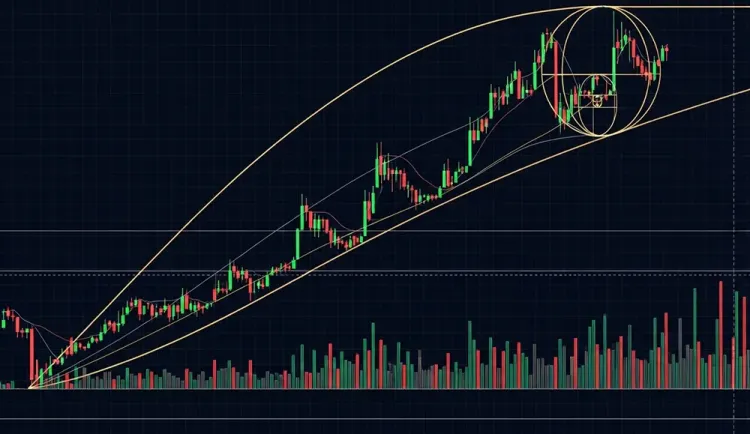
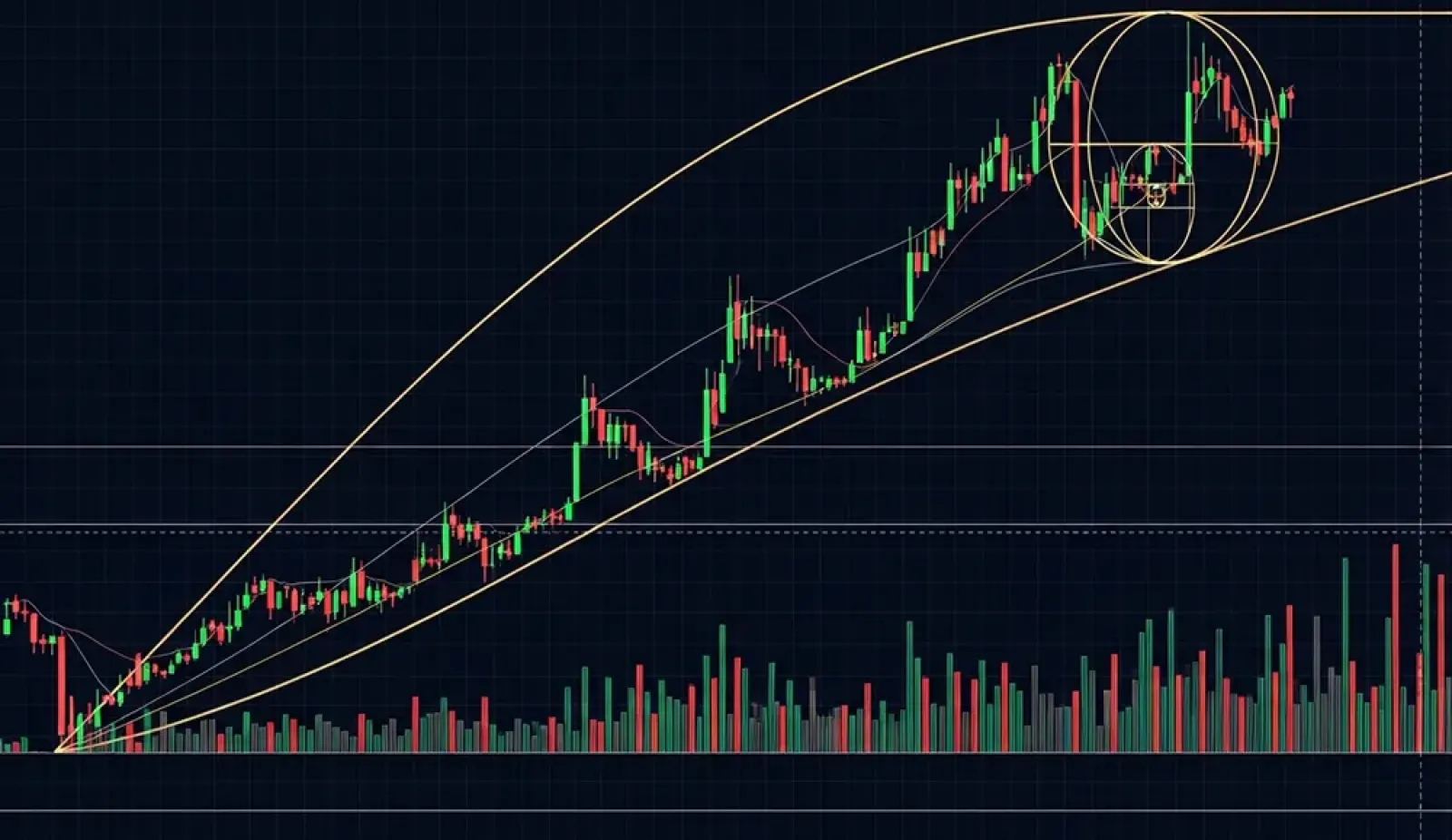
Not all Fibonacci extension levels are created equal. While you can calculate dozens of ratios, traders focus on a handful that show up repeatedly as meaningful price targets. These levels represent where trends often pause, accelerate, or reverse after completing a pullback and resuming their original direction.
The primary extension levels:
-
127.2% (1.272): First extension level beyond the initial move, often the minimum target for trend continuation after a pullback—represents the square root of the golden ratio
-
161.8% (1.618): The golden ratio itself and the most watched extension level—price frequently reaches this target in strong trends, making it a primary profit-taking zone
-
200% (2.0): Psychological level representing a complete doubling of the original move—clean, round number that attracts attention and often acts as resistance
-
261.8% (2.618): Extended target for very strong trends, calculated as 1.618 squared—less commonly reached but powerful when price gets there
-
300% and 423.6%: Extreme extensions rarely used except in parabolic moves or multi-year projections—more theoretical than practical for most trading
Why These Levels Function as Targets
The effectiveness of fibonacci extension levels as price targets comes from a combination of mathematical relationships, trader psychology, and self-fulfilling behavior in markets.
Why extensions work:
-
Markets move in waves with expansion and contraction phases—extensions measure the natural expansion after contraction
-
The 1.618 golden ratio appears in natural growth patterns and translates to financial market expansion
-
Institutional algorithms and trading systems incorporate these levels, creating automated buying or selling at extension targets
-
Retail traders worldwide watch the same levels, creating concentration of orders that affects price action
-
The levels provide logical profit-taking zones, so traders exit positions there, causing price to pause or reverse
-
Extension levels often align with other technical factors like prior highs, round numbers, or resistance zones, creating confluence
The Bottom Line: The primary fibonacci extension levels—127.2%, 161.8%, 200%, and 261.8%—work as price targets because they represent mathematical relationships found in trending market moves, and their widespread use by traders and algorithms creates zones where supply and demand concentrate, making them self-reinforcing levels where price frequently reacts.
How to Draw Fibonacci Extensions


Drawing fibonacci extension levels correctly requires identifying three specific points on your chart—the beginning and end of an initial move, plus the end of the pullback. Get these anchor points wrong and your extension levels become meaningless. Most trading platforms have a Fibonacci extension tool, but the placement is what matters.
The three points you need:
-
Point 1: The swing low (for uptrends) or swing high (for downtrends) where the initial move begins
-
Point 2: The swing high (for uptrends) or swing low (for downtrends) where the initial move ends
-
Point 3: The pullback low (for uptrends) or pullback high (for downtrends) where price retraces before resuming
-
These three points define the pattern: initial move, correction, and the launching point for extension targets
Tool Mechanics in Trading Platforms
Most charting software includes a Fibonacci extension tool in the drawing toolbar. The mechanics vary slightly between platforms, but the process is similar—you click three points in order and the tool automatically projects extension levels forward from point 3.
In an uptrend, you start at the swing low (point 1), drag to the swing high (point 2), then click the pullback low (point 3). The platform draws horizontal lines at 127.2%, 161.8%, 200%, and 261.8% extensions above point 3. These lines represent your potential profit targets if the uptrend resumes.
In a downtrend, you reverse the process—start at the swing high (point 1), drag to the swing low (point 2), then click the pullback high (point 3). The extension levels project below point 3, showing where price might go if the downtrend continues.
Drawing in Uptrends vs. Downtrends
The logic is the same for both directions, but the anchor points flip. Understanding which scenario you're in prevents the most common error of drawing extensions backwards.
IF you're trading an uptrend and looking for targets above current price… THEN start at the swing low before the rally, go to the swing high where it topped, then mark the pullback low where it's currently bouncing from.
IF you're trading a downtrend and looking for targets below current price… THEN start at the swing high before the decline, go to the swing low where it bottomed, then mark the pullback high where it's currently reversing from.
IF price hasn't pulled back yet after the initial move… THEN you can't draw extensions—you need all three points, and point 3 requires a completed retracement.
IF you're unsure which swing points to use… THEN zoom out to a higher timeframe to identify clear, significant swings rather than minor fluctuations.
IF the pullback retraces more than 100% of the initial move… THEN the pattern is invalidated and extensions aren't reliable—the trend may have reversed entirely.
Common Placement Mistakes
Getting the anchor points wrong is the primary reason fibonacci extension levels fail to work as intended. These errors turn a useful tool into noise.
Mistakes that invalidate your extensions:
-
Using intraday swing points for daily chart analysis—timeframe mismatch creates meaningless levels
-
Selecting point 1 or point 2 in the middle of a move rather than at clear swing extremes
-
Placing point 3 before the pullback actually completes—you're guessing rather than measuring
-
Drawing extensions on choppy, sideways price action without clear trend structure
-
Using wicks instead of candle bodies for anchor points (or vice versa) inconsistently
-
Switching between uptrend and downtrend anchor logic mid-analysis, creating backwards projections
-
Forcing extensions on every minor move rather than waiting for significant swings worth measuring
-
Not adjusting extensions when new higher highs or lower lows invalidate the original pattern
The Psychology Behind Extensions


Markets are driven by human behavior, and human behavior follows patterns. Whether fibonacci extension levels work because of some inherent mathematical harmony in nature or simply because enough traders believe in them doesn't really matter—the result is the same. Price tends to react at these levels often enough to make them useful.
Why price respects these mathematical projections:
-
Traders worldwide use the same Fibonacci tools, creating concentrated areas of buying and selling at extension levels
-
Profit-taking naturally clusters at logical targets, and extensions provide those targets
-
Risk management systems often place stops beyond Fibonacci levels, creating liquidity zones
-
The levels align with how trends naturally develop in waves of expansion and contraction
-
Pattern recognition in human psychology makes us see and respect these ratios unconsciously
The Self-Fulfilling Prophecy Element
When thousands of traders all watch the same fibonacci extension level as a profit target, they start exiting positions as price approaches that level. This concentrated selling (in uptrends) or buying (in downtrends) creates resistance or support exactly where the Fibonacci level predicted, making the level "work."
It's a feedback loop. The 1.618 extension becomes a target because people believe it's a target, and because they believe it's a target, they act on it, which makes it become a target. This doesn't make it less real—self-fulfilling prophecies are still prophecies that fulfill themselves. The mechanism doesn't matter as much as the result.
This is why the most popular levels (1.618 and 2.0) work better than obscure ratios nobody watches. If you calculate a 1.414 extension or some other mathematical ratio, but no one else is watching it, price won't react there because there's no concentrated order flow. The wisdom of crowds applies—the levels work because the crowd uses them.
Institutional Use and Algorithmic Trading
Retail traders aren't the only ones watching Fibonacci levels. Institutional trading desks and algorithmic systems incorporate these projections into their models.
Did You Know? Many institutional trading algorithms automatically calculate fibonacci extension levels on multiple timeframes and factor them into position sizing and profit-taking decisions—this means large order flow concentrates at these levels even without human discretion.
Did You Know? High-frequency trading firms program their systems to recognize when price is approaching major Fibonacci levels and adjust their strategies accordingly—they might provide liquidity below the level and remove it above, or vice versa depending on the setup.
Did You Know? Portfolio managers at hedge funds and mutual funds often use Fibonacci extensions to set price targets for positions they're building or exiting over days or weeks—this institutional flow can create momentum toward extension levels.
Natural Market Rhythms and Fractals
There's a case to be made that fibonacci extension ratios appear in markets because they reflect natural growth and contraction patterns found throughout complex systems. Markets are fractal—similar patterns repeat at different scales. A trend on a 5-minute chart looks structurally similar to a trend on a weekly chart.
The Fibonacci sequence and golden ratio show up in plant growth, shell spirals, and galaxy formations. If markets are natural systems driven by collective human behavior, maybe they express similar mathematical relationships. Trees don't branch at random angles—they follow patterns that maximize efficiency. Maybe market trends extend at ratios that reflect efficient price discovery and growth patterns.
This is speculative philosophy more than proven science, but it provides a framework for why these levels might work beyond just self-fulfilling prophecy. Whether you believe markets follow natural mathematical laws or just respond to trader psychology, the practical application remains the same—the levels work often enough to be useful tools for setting targets.
Keep In Mind: Whether fibonacci extension levels work due to mathematical harmony, trader psychology, or institutional algorithms is less important than recognizing that they do work often enough to provide valuable price targets—focus on using them correctly rather than debating why they exist.
Using Extensions for Price Targets


The primary practical use of fibonacci extension levels is setting profit targets. Instead of guessing where to exit a trade or hoping price goes up forever, extensions give you mathematically-derived levels where you can plan to take profits. This turns emotional decision-making into systematic trade management.
Practical applications for extension targets:
-
Breakout targets: After a stock breaks out of consolidation, project extensions from the consolidation range to estimate how far the breakout might run
-
Post-pullback targets: Measure the initial trend move and the pullback, then project where price might go when it resumes trending—most common application
-
Swing trade exits: Use the 1.272 or 1.618 extension as your primary profit target on swing trades, with the 2.0 extension as a stretch goal
-
Scaling strategy: Exit half your position at the 1.618 extension, quarter at 2.0, and trail a stop on the remainder—captures profit while leaving room for extended moves
-
Multiple timeframe confirmation: Calculate extensions on both daily and weekly charts—when they align at similar price levels, the target becomes stronger
-
Pattern-based projections: After a flag, triangle, or cup-and-handle breaks out, use extensions to project the continuation move beyond the pattern
-
Risk/reward planning: Before entering a trade, check if the nearest fibonacci extension provides at least 2:1 or 3:1 risk/reward ratio from your entry to your stop
Practical Implementation
Using fibonacci extension levels for price targets works best when you combine them with your overall trade management strategy rather than treating them as absolute destinations price must reach. Some trends extend to the 1.618 level and reverse. Others blow through 2.0 and reach 2.618. You don't know in advance which scenario you'll get.
The most practical approach is scaling out of positions. Exit a portion at the first extension level (usually 1.272 or 1.618), which locks in profit and reduces risk. If price continues, you're still participating with the remaining position. If price reverses at the first target, you captured gains before the reversal. This balanced approach respects the probabilistic nature of extensions without demanding perfection.
Multiple timeframe analysis adds confidence. If you calculate extensions on a daily chart and get a 1.618 target at $87, then zoom out to the weekly chart and find a separate extension pattern also projecting to $86-88, that's confluence. The overlap of multiple fibonacci extension calculations from different swing patterns increases the likelihood that price will react at that zone. Single timeframe extensions work, but multi-timeframe confirmation works better.
Combining Extensions with Other Technical Analysis


Fibonacci extensions work better when they align with other technical factors. A 1.618 extension sitting at a random price level is useful. A 1.618 extension that lands right at a prior high, a round number, and the 200-day moving average is significantly more reliable. This is confluence—multiple independent analysis methods pointing to the same price zone.
Technical factors that strengthen fibonacci extension targets:
-
Prior swing highs/lows: Extension level that aligns with a previous resistance or support zone where price reversed before—adds historical significance to the mathematical target
-
Round numbers: Extensions landing at $50, $100, $150 or other psychologically significant prices—human psychology makes these levels sticky
-
Volume profile: High-volume nodes or low-volume gaps that align with extension levels—shows where institutional accumulation or distribution occurred
-
Moving averages: Major moving averages (50-day, 200-day) meeting extension targets—provides dynamic support/resistance that aligns with the Fibonacci projection
-
Chart pattern measured moves: Head and shoulders, flags, or triangles with measured targets that coincide with extension levels—pattern analysis confirming Fibonacci math
-
Pivot points: Standard, Fibonacci, or Camarilla pivot levels clustering near extension targets—multiple calculation methods agreeing
-
Trendlines: Extension level where an ascending or descending trendline intersects—geometric and Fibonacci analysis converging
-
Gap fills: Unfilled gaps from past price action that sit at or near extension levels—market has unfinished business at that price
Building Confluence Around Extension Targets
The more factors that align at a specific fibonacci extension level, the higher the probability that price will react when it reaches that zone. One technical factor creates a possible target. Three or four technical factors create a high-probability target worth structuring your entire trade around.
This is why experienced traders don't just draw Fibonacci extensions and blindly aim for the levels. They calculate the extensions first, then check what else exists at those prices. If the 1.618 extension lands at a former swing high where the stock topped out twice before, and it's also near the 200-day moving average, and it happens to be a round number like $75, that target deserves more weight than an extension sitting in empty space.
Volume profile adds another dimension. If your extension target lands in a low-volume zone between two high-volume areas, price has room to move through that level quickly. But if the extension aligns with a high-volume node where significant trading occurred in the past, that's where buyers or sellers showed up before, making it more likely they'll show up again. The combination of Fibonacci math and volume analysis gives you both the target and the historical behavior at that price.
Extensions in Different Market Conditions


Fibonacci extensions don't work equally well in all market environments. Trending markets with clear directional momentum give you the best results because extensions measure trend continuation. Choppy, sideways markets make extension analysis nearly worthless because there's no trend to extend. Understanding when to use extensions and when to ignore them improves your success rate.
Trending Markets vs. Ranging Markets
Trending markets: Extensions shine when price is making clear higher highs and higher lows (uptrend) or lower lows and lower highs (downtrend). The pattern of impulse move, pullback, continuation gives you clean anchor points for drawing extensions. Price tends to respect the projected levels because the trend has momentum behind it. The 1.618 extension often gets hit in strong trends, with 2.0 or 2.618 reached in powerful moves.
Ranging markets: Extensions become unreliable when price is bouncing between support and resistance in a horizontal channel. There's no dominant trend direction, so the concept of "extending" doesn't apply. You might draw extensions from range highs to range lows, but price just oscillates back and forth without reaching projected targets. Better to use support/resistance levels and ignore Fibonacci extensions until a breakout establishes a trend.
High Volatility vs. Low Volatility
High volatility: When price swings are large and fast, fibonacci extension targets can be reached quickly, sometimes within days. However, high volatility also means price can blow through extension levels without pausing, or whipsaw back and forth around them. The levels work but require wider stops and faster decision-making. Extensions in volatile conditions are less precise but the moves are larger.
Low volatility: In calm, steady trends, price grinds toward extension targets over weeks or months. The advantage is that levels tend to be respected more precisely—price approaches the 1.618 extension and actually pauses there rather than spiking through. The disadvantage is the time required to reach targets. Low volatility environments give you more accurate extension reactions but demand more patience.
Bull Markets vs. Bear Markets
Bull markets: Uptrends in bull markets frequently reach the 1.618 extension and often push to 2.0 or beyond. Bullish trends tend to be sustained and orderly, with pullbacks that set up clean extension patterns. The fibonacci extension tool works particularly well for setting profit targets on long positions during bull markets because the momentum supports reaching or exceeding mathematical projections.
Bear markets: Downtrends in bear markets can be violent and fast, reaching extensions quickly but also prone to sharp counter-trend rallies that invalidate patterns. Extensions work for setting targets on short positions, but bear markets are messier than bull markets. Downside extensions are hit less reliably than upside extensions because fear creates more volatility than greed. The 1.272 and 1.618 levels work better than 2.0+ in bear market downtrends.
When Extensions Work Best
Fibonacci extensions perform optimally under specific conditions that combine trend strength, volatility characteristics, and market structure.
Ideal conditions for extension analysis:
-
Clear, established trend with at least two impulse moves in the same direction
-
Moderate volatility—not so low that price barely moves, not so high that everything is noise
-
Clean pullback that retraces 38.2% to 61.8% of the initial move—shallow or deep retracements complicate extension accuracy
-
Strong momentum resuming after the pullback—confirming the trend is alive and likely to reach targets
-
Bull market environment for upside extensions, or confirmed bear market for downside extensions
-
Multiple timeframe agreement—daily and weekly extensions projecting similar target zones
Remember: Fibonacci extensions work best in trending markets with clear momentum and moderate volatility—trying to apply them in choppy, range-bound conditions or during extreme volatility produces unreliable targets that are more likely to fail than succeed.
Common Mistakes with Fibonacci Extensions


Fibonacci extensions are useful when applied correctly, but traders make predictable errors that turn a helpful tool into a source of confusion and losing trades. Most mistakes come from forcing the tool onto inappropriate price action or treating mathematical projections as guarantees rather than probabilistic targets.
Mistakes that undermine fibonacci extension analysis:
-
Pattern forcing: Drawing extensions on every minor move rather than waiting for significant trends worth measuring—cluttering charts with meaningless projections
-
No pullback patience: Trying to project extensions before a pullback completes—you need all three anchor points, and guessing where point 3 will be invalidates the measurement
-
Random anchor points: Placing points on arbitrary candles in the middle of moves rather than clear swing extremes—garbage in, garbage out
-
Single-method reliance: Using only Fibonacci extensions without checking if other technical factors support the target—ignoring confluence
-
Certainty mindset: Treating extension levels as exact prices where things must happen rather than zones where reactions become more likely
-
Timeframe mismatch: Drawing extensions on 5-minute charts then wondering why weekly price action doesn't respect them—scale matters
-
Ignoring invalidation: Continuing to trust extension targets after new highs or lows break the original pattern—not adjusting when structure changes
-
Over-optimization: Calculating obscure extension levels like 1.414 or 3.618 that nobody watches—if the crowd doesn't use it, it won't work
-
No context checking: Applying extensions in ranging markets where trends don't exist—the tool requires directional movement
-
Backwards drawing: Mixing up uptrend and downtrend anchor sequences—starting at the wrong point produces inverted projections
Proper Application Guidelines
Using fibonacci extension levels correctly means knowing when to apply them, how to place them, and what role they play in your overall analysis.
DO: Wait for a clear trend with at least one impulse move and a completed pullback before drawing extensions
DO: Place anchor points at obvious swing extremes that other traders would also identify
DO: Check if extension targets align with other technical factors like support/resistance or moving averages
DO: Use extensions as target zones rather than exact prices—think of them as areas where reactions become likely
DON'T:: Draw extensions on every small wiggle in price—reserve the tool for significant moves that matter
DON'T: Trust extensions that land in the middle of nowhere without any confluence from other analysis
DON'T: Assume price will definitely reach your extension target—probability isn't certainty
DON'T: Keep using extension targets after the original pattern gets invalidated by new price extremes
The fibonacci extension tool provides mathematically-derived price targets that work often enough to be useful for planning exits and setting realistic profit goals—but forcing them onto inappropriate price action, treating them as guarantees, or using them without confluence from other technical factors turns a probabilistic edge into random noise that hurts more than it helps.
Making Fibonacci Extension Levels Work
Fibonacci extensions give you objective price targets based on mathematical relationships that show up repeatedly in trending markets. They're not magic—they're probability zones where price has a higher likelihood of pausing, reversing, or accelerating based on historical patterns and collective trader behavior. Treating them as certainties sets you up for disappointment. Treating them as useful guideposts for planning exits helps you trade more systematically.
Extensions Within Broader Context
The fibonacci extension tool works best as one element in a comprehensive trading approach, not as a standalone system. When a 1.618 extension aligns with a prior swing high, lands near the 200-day moving average, and coincides with a round number, you have multiple independent reasons to expect a reaction at that price. The Fibonacci level provides the mathematical framework, but the confluence with other factors is what makes the target compelling.
Patience matters more with extensions than with entry signals. You might enter a trade based on a breakout or pattern, but reaching the extension target could take days, weeks, or months depending on the timeframe you're trading. Some trends reach the 1.618 extension and reverse. Others blow through it and hit 2.0 or 2.618. You can't know in advance which scenario you'll get, which is why scaling out at multiple extension levels makes sense—you capture profit incrementally rather than demanding perfection.
The temptation is to overtrade extensions by drawing them on every move and treating each projected level as a trading opportunity. Resist that urge. The best extension setups come from clean trends with clear anchor points, completed pullbacks, and confluence with other technical factors. Most price action doesn't meet these criteria. Being selective about when you apply fibonacci extension analysis keeps you focused on high-probability setups rather than forcing trades on mediocre patterns.
The Bottom Line: Fibonacci extensions provide mathematically-derived price targets that help traders set realistic profit goals and plan exits systematically—but they work best when combined with other technical analysis for confluence, applied only to clear trending patterns, and treated as probability zones where reactions become likely rather than guaranteed destinations price must reach.
