

You know the trip.
You walk into the shop for three things: milk, eggs, bread.
Simple mission. Clean setup. No drama.
By the time you get to the checkout, you have extra chips, cereal, a suspiciously large bag of apples, two things that were on sale, and it is only when you get back to the car that you realize you still have no milk.
The original plan was not bad. You just stopped following it the moment the environment started offering alternatives.
Trading can get like that very quickly.
You open the charts with one clear idea. Maybe you are watching for a higher low on the 15-minute timeframe. Maybe you want a backtest of previous resistance. Maybe you are waiting for volume to confirm a breakout instead of guessing early and calling it confidence.
Then the market opens.
A ticker starts moving without you. Someone mentions another name. A candle gets big. Your watchlist suddenly looks like it has had three coffees and no adult supervision.
Ten minutes later, you are in a trade that has nothing to do with your original plan.
By lunchtime, you cannot really explain why you took it, other than the market looked busy and you did not want to feel left behind. And by the end of the day, you still have no milk.
That is the grocery list problem.
The List Was There For A Reason
A trading plan is not supposed to make you feel clever. It is supposed to keep you from becoming a different person after two red candles and a loud chat room.
The plan is the grocery list.
It tells you what you came for. It narrows the field. It protects your attention from every shiny thing the market puts near the checkout.
Without it, every chart can start to look like an opportunity. That sounds exciting, but it is usually just mental clutter wearing a nice jacket.
Good traders are not scanning for everything. They are scanning for their thing.
That difference matters.
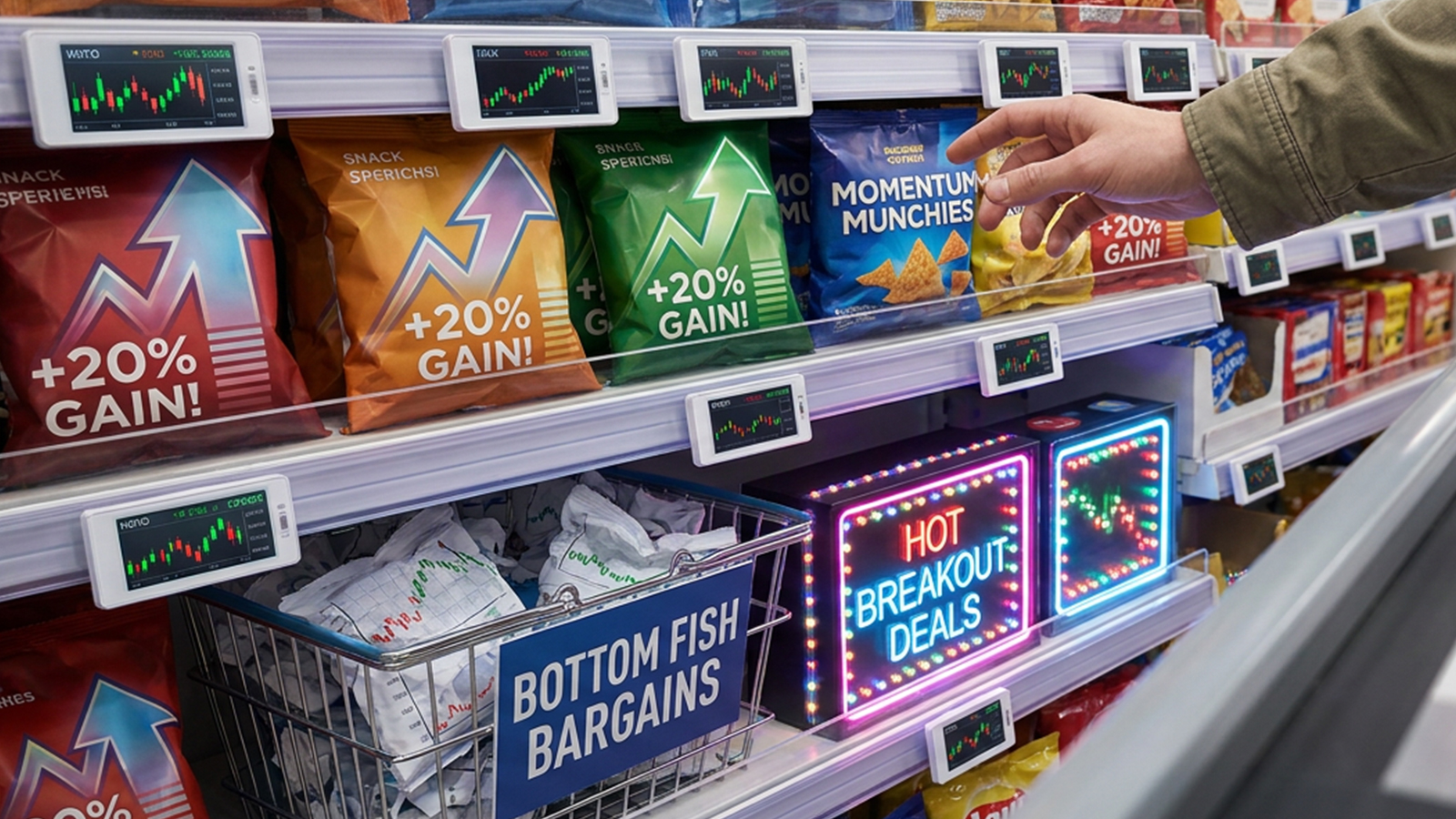
The Market Is Very Good At Selling Snacks
Markets are designed to tempt you.
Not intentionally in the personal sense. The market does not know you, your account size, your last three trades, or the fact you promised yourself this morning you would be more patient.
But price action creates temptation anyway.
A sudden breakout tempts you to chase. A sharp drop tempts you to bottom fish. A name you ignored all week suddenly starts running, and now your brain is trying to rewrite history so it can pretend it saw the move coming.
This is where traders often confuse activity with opportunity.
Something moving is not the same as something matching your setup.
Something exciting is not the same as something with a defined risk profile.
Something annoying to miss is not the same as something you need to trade.
The market will always have snacks. Your job is to remember what you came in for. If you want to know exactly how that snack-grabbing turns into a habit, our Tips & Tricks To Avoid Overtrading ebook breaks down the pattern.
Define The Trade Before The Trade Defines Your Mood
A lot of bad trading starts with vague intent.
“I’ll see what happens.”
“I’ll just watch the open.”
“I’m interested if it looks strong.”
There is nothing wrong with observation. The problem is that vague observation can become accidental participation.
Before you know it, you have entered a trade because it felt like the moment was getting away from you.
A clearer approach is to define the trade before emotion gets a vote.
What is the setup?
What timeframe matters?
Where is the invalidation?
What would prove you wrong?
What would make you do nothing?
That last question is underrated. Traders spend a lot of time planning entries and not enough time planning the conditions where they will leave the mouse alone.
The Real Skill Is Saying “Not Mine”
There will always be trades that work without you.
Some will be beautiful. Some will be ugly and still pay. Some will move exactly how you thought they might, just without giving the entry you wanted.
That is annoying. It is also normal.
A trader who needs to be involved in every move is not trading a strategy. They are trying to avoid the discomfort of missing out.
That discomfort is part of the job.
You do not need to own every clean candle. You do not need to catch every breakout. You do not need to turn every market wiggle into a personal assessment of your ability.
Sometimes the best thing you can say is, “Good move. Not mine.”
That is not weakness. That is selectivity.

Make The List Smaller
If you keep abandoning your plan, the plan might be too broad.
A list with thirty items is not a list. It is a lifestyle choice of meal planning and managing how much you will eat before food goes bad.
The same applies to trading.
If your daily plan has ten tickers, five setups, three timeframes, two bias scenarios, and a note that says “stay flexible”, you may have technically prepared while still leaving yourself completely exposed to impulse.
Preparation should reduce decisions, not multiply them.
Try making the list smaller.
One primary setup.
One or two priority tickers.
One clear invalidation level.
One rule for when you stop trading.
We go deeper on actually building that list, not just shrinking it, in our Build A Comprehensive Trading Plan guide
You can always adapt if the market gives a clean reason, but adaptation is not the same as wandering around the aisles because the chips were half price.
A Simple Pre-Trade Check
Before entering a trade, ask yourself:
Is this the trade I planned, or just the trade currently making the most noise?
Do I know where I am wrong?
Am I taking this because it fits, or because I am irritated that something moved without me?
If I had not seen anyone mention this ticker, would I still want the trade?
Can I explain the setup in one sentence without using the word “maybe” four times?
You do not need a complicated checklist. You need enough friction to stop your hand from turning a passing thought into an open position.
The Lesson
The goal is not to become rigid.
Markets change. Good traders adapt. Sometimes the original idea is wrong, and the best decision is to throw it out. Sometimes the food you eat the most is on sale and it’s worth stocking up.
But there is a difference between adapting to new information and abandoning your process because the market made something look exciting for twelve seconds.
Your plan is there to protect you from the version of yourself that appears when price starts moving fast.
Use it.
Bring the list. Stick to the list. And if you do come home with extra snacks, at least make sure you got the milk.
