


What Risk of Ruin Means for Your Trading


Risk of ruin is the probability that you'll lose enough of your trading capital to effectively end your trading career. It's not about having a bad day or a rough week—it's about the mathematical likelihood that a series of losses will deplete your account to the point where recovery becomes impossible or you psychologically quit. Every trader who risks money has some probability of ruin, and most traders dramatically underestimate what that probability actually is for their approach. Understanding your risk of ruin transforms abstract concepts about position sizing and risk management into concrete numbers that reveal whether your trading plan leads to long-term survival or eventual account destruction.
Why Survival Matters More Than Returns
The first goal of trading isn't maximizing profits—it's staying in the game long enough for your edge to play out over sufficient trades.
Why survival trumps return maximization:
-
You can't compound returns if you've blown up your account
-
Even strategies with genuine edge experience losing streaks that can be devastating at improper position sizes
-
The mathematics of recovery work against you as drawdowns deepen—a 50% loss requires a 100% gain just to break even
-
Aggressive position sizing might maximize expected returns on paper but dramatically increases the probability you never realize those returns
-
Professional traders prioritize survival because they understand that staying alive through inevitable drawdowns is what allows long-term compounding
-
One catastrophic loss sequence can eliminate years of profitable trading if risk per trade is too high
The Mathematical Reality of Account Destruction
Account destruction isn't bad luck or a failure of skill—it's a statistical certainty for traders who ignore the mathematics of ruin.
If you risk too much per trade relative to your win rate and reward-to-risk ratio, ruin becomes not just possible but probable over enough trades. A strategy that wins 50% of the time with 1:1 reward-to-risk has zero edge and guarantees eventual ruin at any meaningful risk level. Even strategies with genuine edge can lead to ruin if position sizing exceeds what the edge can support. The math doesn't care about your confidence, your analysis skills, or how well your strategy worked last month. It cares only about the interaction between your win rate, your reward-to-risk ratio, and how much you risk per trade—and it delivers ruin to those who get that equation wrong.
What This Article Covers
This article explains risk of ruin calculations and how to use them to protect your trading capital.
Topics this article will explain:
-
The core concept of risk of ruin and the mathematics behind the calculations
-
How to use a risk of ruin calculator and interpret its output
-
The impact of win rate, risk per trade, and reward-to-risk ratio on your ruin probability
-
Maximum drawdown considerations and the concept of psychological ruin
-
Practical scenarios showing how different trading approaches affect survival probability
-
Specific strategies for reducing your risk of ruin
-
Common mistakes that increase ruin probability without traders realizing it
The Bottom Line: Risk of ruin is the probability that your trading approach will eventually destroy your account, and understanding this number—rather than ignoring it or assuming it won't happen to you—is the foundation of building a trading plan that can actually survive long enough for your edge to compound into meaningful returns.
Understanding Risk of Ruin
Risk of ruin represents the statistical probability that a trader will lose a specified percentage of their account—often defined as total loss or a drawdown severe enough to end their trading career. The concept comes from gambling mathematics but applies directly to trading, where each trade represents a bet with defined probability of winning or losing. Unlike casual discussions about "risk management," risk of ruin provides a concrete number: given your win rate, reward-to-risk ratio, and risk per trade, there is a calculable probability that you will eventually hit a losing streak severe enough to destroy your account.
The Probability of Losing Your Account
Every combination of trading parameters produces a specific ruin probability that exists whether you calculate it or not.
A trader risking 10% per trade with a 50% win rate and 1.5:1 reward-to-risk faces approximately 100% risk of ruin over enough trades—account destruction is virtually guaranteed despite having a positive expected value on paper.
A trader risking 1% per trade with identical win rate and reward-to-risk metrics faces less than 1% risk of ruin—the same edge becomes survivable simply by reducing position size.
How Consecutive Losses Compound Into Ruin
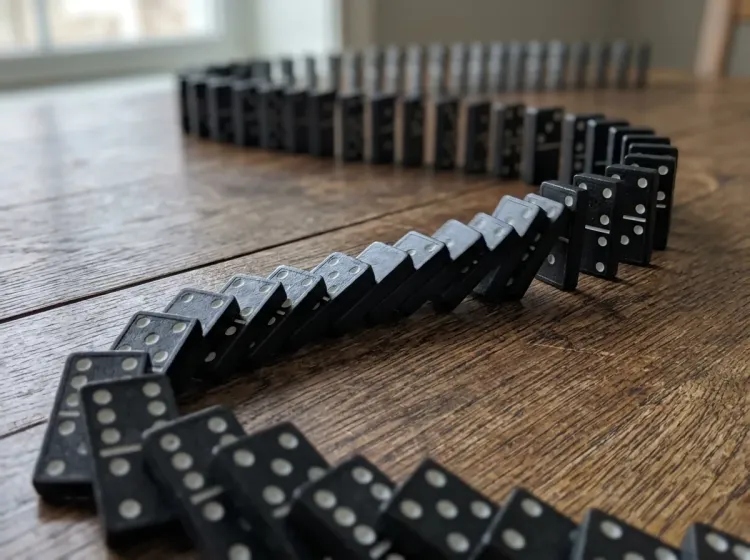
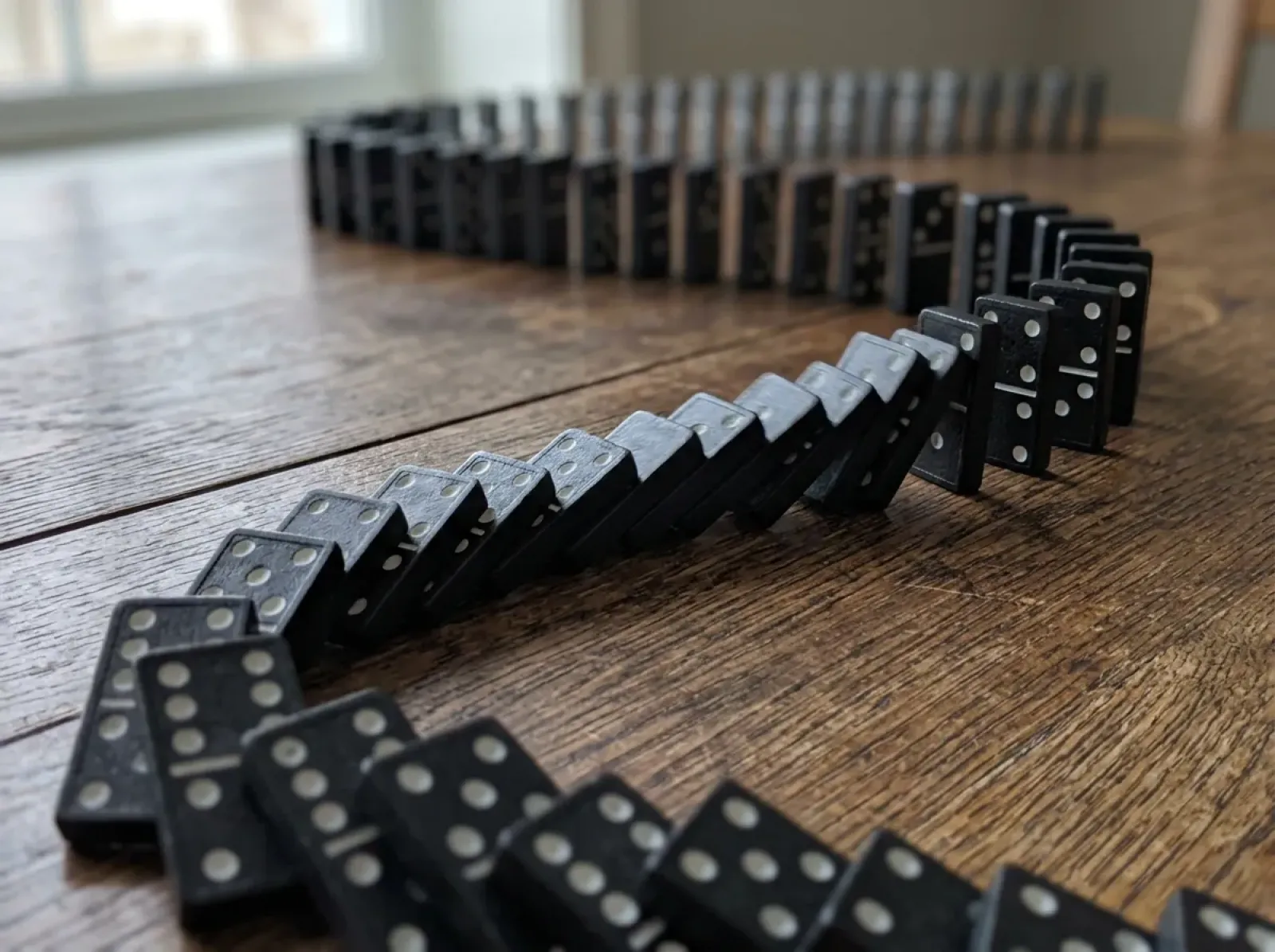
The danger of ruin comes not from any single loss but from sequences of losses that compound against a shrinking account balance.
If you risk 5% per trade and experience ten consecutive losses—which will happen eventually to any trader over enough trades—your account drops by approximately 40%. That requires a 67% gain just to recover to breakeven. At 10% risk per trade, ten consecutive losses would reduce your account by roughly 65%, requiring a 186% gain to recover. The mathematics turn brutal quickly because each subsequent loss is taken against a smaller base, but recovery must be earned against that depleted base. This asymmetry between losing and recovering is why consecutive losses compound into ruin even for strategies with genuine edge.
Why Every Trader Has Non-Zero Risk of Ruin
No trading approach completely eliminates the possibility of ruin—risk can only be reduced, never erased entirely.
Why ruin probability is never zero:
-
Even small per-trade risk combined with long enough timeframes produces some probability of devastating loss sequences
-
Losing streaks that seem impossible in theory occur in practice—fifteen or twenty consecutive losses happen eventually over thousands of trades
-
Market conditions change, potentially degrading your edge without warning and turning previously sustainable risk into ruin territory
-
Black swan events can produce losses far exceeding normal stop levels through gaps, halts, or liquidity failures
-
Correlation between positions can turn what seems like diversified risk into concentrated exposure during market stress
-
Psychological breakdown during drawdowns often leads to increased risk-taking precisely when risk should be reduced
-
The risk of ruin calculation assumes consistent application of your strategy—real traders deviate, often in ways that increase ruin probability
The Mathematics Behind Risk of Ruin

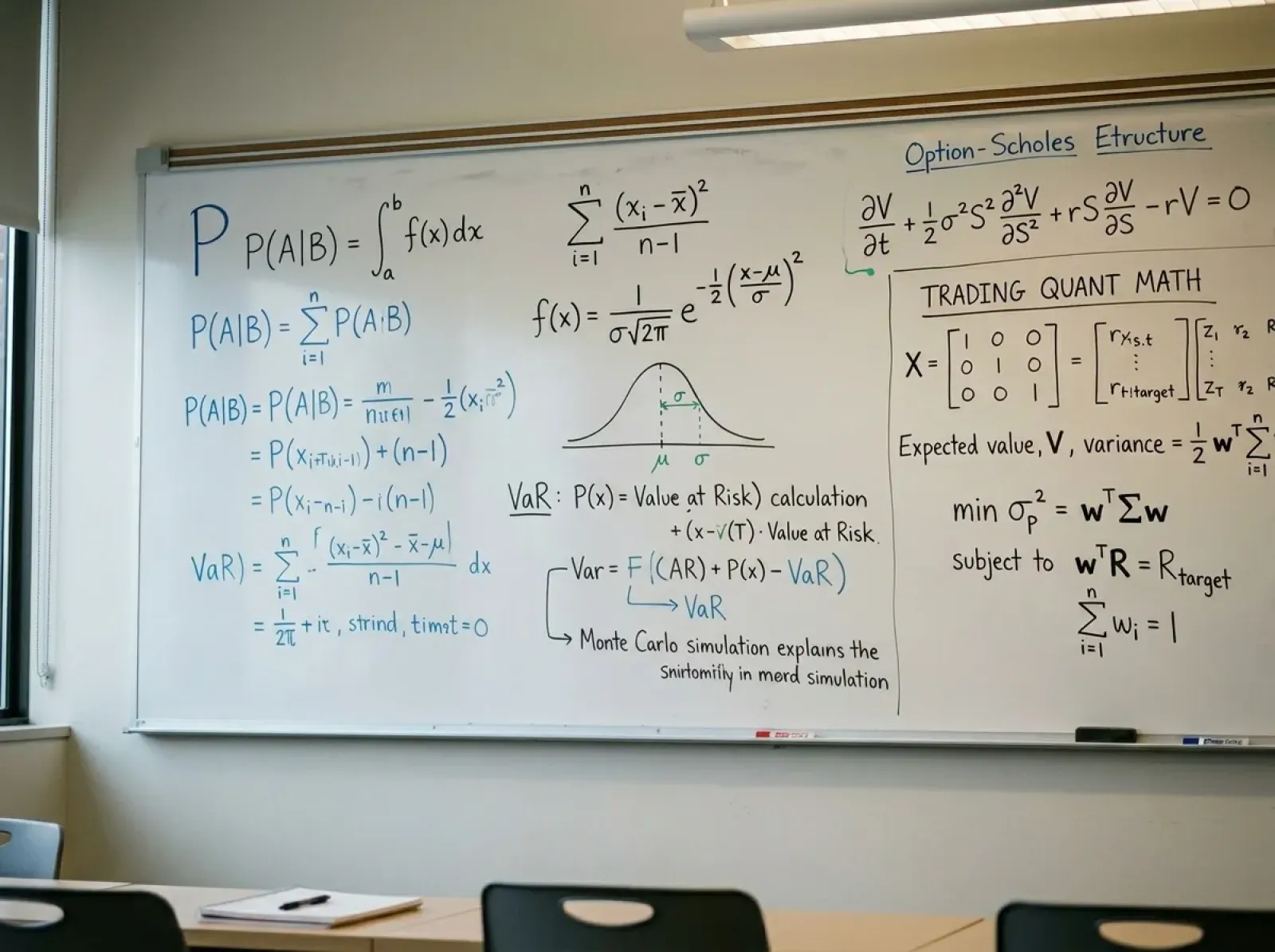
Risk of ruin calculations distill your trading approach into a probability based on three primary variables. These inputs interact in ways that aren't always intuitive—a high win rate doesn't guarantee safety, and a small edge can be destroyed by excessive position sizing. Understanding the mathematics helps you see why certain combinations of parameters lead to survival while others lead to inevitable account destruction.
The three key variables in risk of ruin calculations:
-
Win rate: the percentage of trades that result in profit, expressed as a decimal (e.g., 55% = 0.55)
-
Risk per trade: the percentage of your account you risk on each trade, representing your maximum loss if stopped out
-
Reward-to-risk ratio: the average winning trade size relative to average losing trade size (e.g., 2:1 means winners are twice as large as losers)
How These Variables Interact
The three inputs don't operate independently—they combine to determine whether your approach has positive expectancy and whether that expectancy can survive realistic position sizing.
How the variables combine:
-
Expectancy = (Win Rate × Average Win) - (Loss Rate × Average Loss)
-
Positive expectancy is necessary but not sufficient for survival—you can have positive expectancy and still face high ruin probability
-
Higher win rates allow lower reward-to-risk ratios and vice versa, but the combination must produce positive expectancy
-
Risk per trade acts as a multiplier on both returns and ruin probability—it doesn't change your edge but determines whether you survive long enough to realize it
-
A strategy with 60% win rate and 1:1 reward-to-risk has identical expectancy to one with 40% win rate and 2:1 ratio, but they behave differently during losing streaks
-
Lower win rate strategies experience longer losing streaks even with equivalent expectancy, requiring smaller risk per trade to survive
The Exponential Nature of Drawdown Recovery
Recovery from drawdowns requires exponentially larger gains as losses deepen, creating an asymmetry that makes large drawdowns potentially unrecoverable.
A 10% drawdown requires an 11% gain to recover—modest and achievable. A 25% drawdown requires a 33% gain—harder but still reasonable. A 50% drawdown requires a 100% gain—you must double your remaining capital just to break even. A 75% drawdown requires a 300% gain—nearly impossible for most traders to achieve. This exponential recovery requirement explains why risk of ruin calculations focus heavily on drawdown depth. The difference between a 30% maximum drawdown and a 60% maximum drawdown isn't just 30 percentage points of pain—it's the difference between a recoverable setback and potential career-ending damage.
Why Small Risk Changes Have Large Impacts
The relationship between risk per trade and ruin probability is not linear—small increases in risk create disproportionately large increases in ruin probability.
IF you increase risk per trade from 1% to 2%... THEN your ruin probability might increase from under 1% to over 5%, a five-fold jump from doubling the risk.
IF you increase risk per trade from 2% to 4%... THEN your ruin probability might jump from 5% to over 25%, as the compounding effect of losses accelerates dramatically.
IF you increase risk per trade from 4% to 8%... THEN your ruin probability might exceed 50%, meaning account destruction becomes more likely than survival.
IF you decrease risk per trade from 2% to 1%... THEN your ruin probability might drop from 5% to under 1%, dramatically improving survival odds at the cost of slower growth.
IF you have marginal edge and risk 5% or more per trade… THEN even positive expectancy may not save you, as losing streaks will deplete your account faster than winners can rebuild it.
Remember: The mathematics of risk of ruin show that win rate, reward-to-risk ratio, and risk per trade interact to determine your survival probability, with risk per trade having disproportionate impact—small reductions in risk per trade can dramatically improve survival odds while small increases can push a viable strategy into ruin territory.
Using a Risk of Ruin Calculator


A risk of ruin calculator transforms your trading parameters into a concrete probability of account destruction. Rather than guessing whether your position sizing is appropriate or relying on vague intuitions about risk, the calculator provides a specific number that tells you how likely your approach is to survive long-term. Most calculators are freely available online and require only a few inputs to generate results that can fundamentally change how you think about your trading plan.
What inputs the calculator requires:
-
Win rate: your historical or expected percentage of winning trades
-
Average win: either as a dollar amount or as a ratio relative to average loss
-
Average loss: either as a dollar amount or as a ratio (if using reward-to-risk format, this is typically set to 1)
-
Risk per trade: the percentage of your account risked on each trade
-
Ruin threshold: what percentage loss constitutes ruin (often 100%, but some calculators allow you to set 50% or another level)
-
Number of trades: some calculators ask for expected trade count, others calculate probability over infinite trades
-
Starting capital: required by some calculators to compute absolute dollar figures
Interpreting the Output
The primary output is your risk of ruin percentage—the probability that you will eventually hit your defined ruin threshold given your inputs.
A risk of ruin below 1% is generally considered acceptable for serious traders, indicating that account destruction is highly unlikely given consistent application of your strategy. A risk of ruin between 1% and 5% represents elevated but potentially acceptable risk depending on your circumstances and risk tolerance. A risk of ruin above 5% should concern you, suggesting your position sizing is too aggressive for your edge. A risk of ruin above 20% indicates your trading plan is more likely to fail than succeed over the long term, requiring immediate adjustment. Some calculators also output expected maximum drawdown, probability of various drawdown levels, and time-to-ruin estimates that provide additional context.
Running Different Scenarios
The real power of a risk of ruin calculator comes from running multiple scenarios to understand how changes affect your survival probability.
Quick tip: Start by entering your actual trading statistics, then systematically adjust one variable at a time to see how each input affects your ruin probability independently.
Quick tip: Run worst-case scenarios where your win rate drops by 10% or your reward-to-risk ratio degrades—understanding how your ruin probability changes under adverse conditions reveals how robust your approach truly is.
DO run scenarios with your actual historical statistics from enough trades to be meaningful.
DO test how reducing risk per trade affects ruin probability—often small reductions dramatically improve survival odds.
DO calculate ruin probability at different ruin thresholds, such as 50% drawdown, to understand your psychological ruin risk.
DO revisit your calculations periodically as your trading statistics evolve.
DO use conservative estimates for your inputs rather than optimistic ones.
DON'T rely on a small sample of trades to determine your win rate and reward-to-risk ratio—insufficient data produces unreliable outputs.
DON'T assume your historical statistics will persist unchanged into the future—market conditions shift.
DON'T ignore high ruin probability because you feel confident in your abilities—the math doesn't care about confidence.
DON'T run the calculator once and forget about it—your parameters change as your trading evolves.
Understanding the Limitations
Risk of ruin calculators provide valuable insight but rest on assumptions that real trading doesn't always satisfy.
The calculations assume consistent risk per trade, but real traders often deviate—risking more when confident, less when uncertain, or more when trying to recover losses. They assume independent trades, but many strategies involve correlated positions or sequential trades affected by the same market conditions. They assume your edge remains constant, but win rates and reward-to-risk ratios fluctuate as markets change. They don't account for gaps, slippage, or liquidity failures that can produce losses exceeding your intended risk. They don't capture psychological factors that cause traders to abandon strategies during drawdowns or increase risk at precisely the wrong times. The calculator provides a baseline probability under idealized conditions—your actual ruin risk is likely higher due to these real-world complications.
The Bottom Line: A risk of ruin calculator requires your win rate, reward-to-risk ratio, and risk per trade to compute the probability of account destruction, and while the output provides invaluable insight into whether your trading plan can survive long-term, understanding the limitations—including assumptions about consistency and independence that real trading violates—helps you interpret the results appropriately and build in additional safety margin.
Win Rate and Its Impact on Risk of Ruin

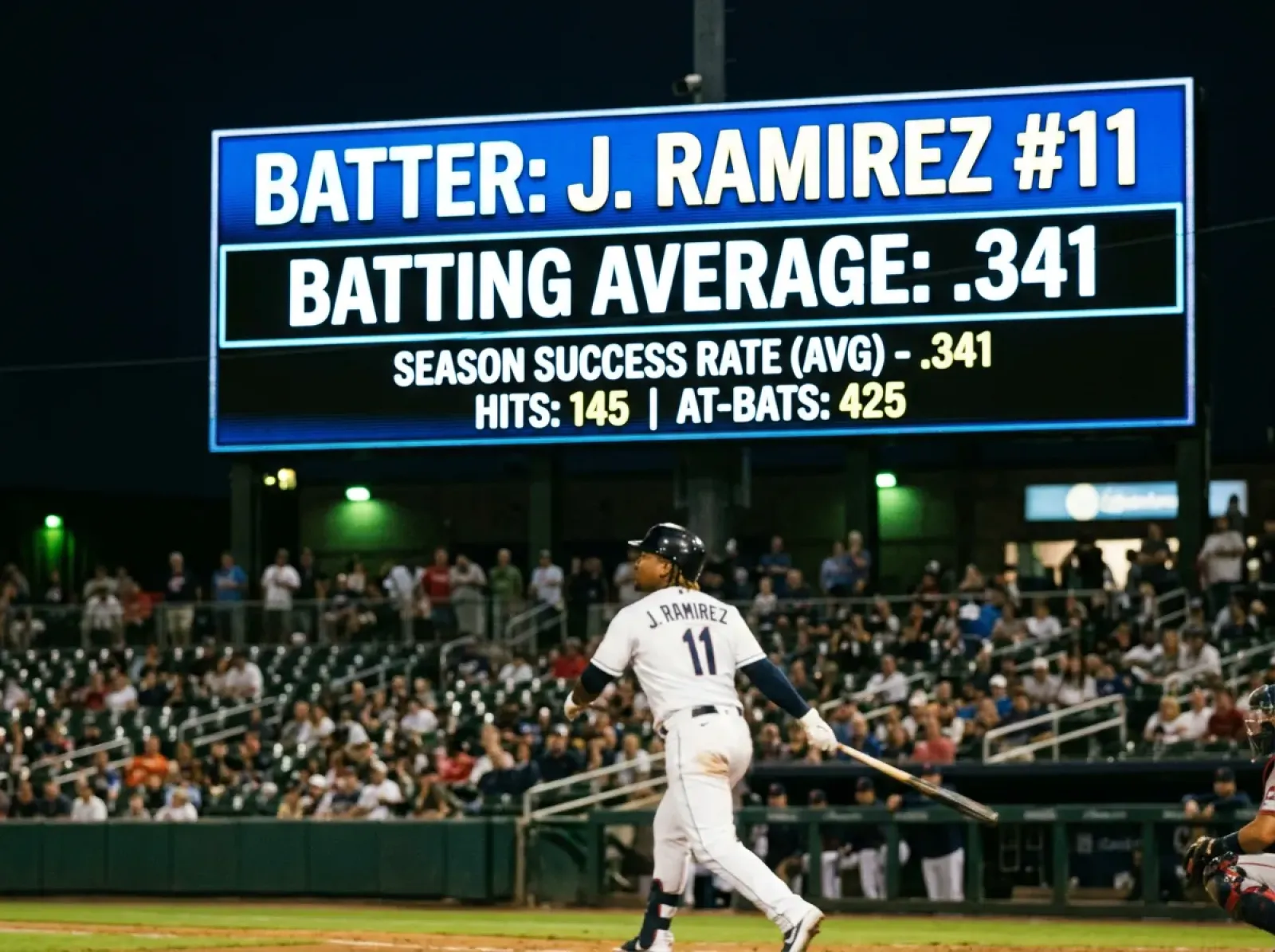
Win rate measures how often your trades end profitably, expressed as a percentage of total trades. It's the variable traders obsess over most, often at the expense of understanding the other factors that determine survival. While win rate matters significantly for risk of ruin calculations, its importance is frequently misunderstood—a high win rate doesn't guarantee safety, and a low win rate doesn't guarantee failure. What matters is how win rate combines with reward-to-risk ratio to produce expectancy, and whether position sizing allows that expectancy to survive inevitable losing streaks.
How win rate affects survival probability:
-
Higher win rates produce shorter average losing streaks, reducing the depth of drawdowns during normal variance
-
A 70% win rate means your longest losing streaks will typically be shorter than those experienced by a 40% win rate trader
-
Shorter losing streaks allow higher risk per trade while maintaining acceptable ruin probability
-
Lower win rates require lower risk per trade to survive the longer losing streaks they inevitably produce
-
Win rate directly affects how quickly you recover from drawdowns—more frequent winners rebuild capital faster
-
The psychological impact of win rate matters too—lower win rate strategies test emotional discipline more severely
The Relationship Between Win Rate and Reward-to-Risk
Win rate and reward-to-risk ratio work together to determine expectancy, and each can compensate for the other within limits.
A trader with 70% win rate and 0.8:1 reward-to-risk (smaller winners than losers) can still be profitable: (0.70 × 0.8) - (0.30 × 1.0) = 0.26 positive expectancy per unit risked. A trader with 35% win rate needs much larger winners to compensate: at 3:1 reward-to-risk, expectancy is (0.35 × 3) - (0.65 × 1) = 0.40 positive expectancy per unit risked—actually higher than the first trader despite winning far less often. The tradeoff is that lower win rate strategies experience longer losing streaks and deeper drawdowns during those streaks, requiring smaller position sizes to survive. Risk of ruin calculations capture this relationship—the 35% win rate trader with 3:1 reward-to-risk might need to risk half as much per trade as the 70% win rate trader to achieve the same ruin probability.
Why High Win Rates Don't Guarantee Safety
Many traders assume that winning most of their trades protects them from ruin, but this assumption ignores the other half of the equation.
Pro Tip: A 90% win rate with 0.1:1 reward-to-risk (taking profits ten times smaller than losses) produces negative expectancy—you'll win nine times and give it all back plus more on the tenth trade.
Pro Tip: High win rate strategies often achieve those rates by using wide stops or refusing to take losses, which eventually produces catastrophic losing trades that dwarf accumulated small wins.
Keep In Mind: Risk of ruin depends on the combination of win rate and reward-to-risk ratio producing positive expectancy, plus position sizing that allows survival through losing streaks—high win rates create an illusion of safety while potentially masking negative expectancy or encouraging excessive position sizing that leads to ruin when losing streaks finally arrive.
Realistic Win Rate Expectations
Different trading strategies produce different win rate ranges, and understanding what's realistic prevents both discouragement and dangerous overconfidence.
Realistic win rate ranges by strategy type:
-
Scalping strategies typically achieve 55-70% win rates with smaller reward-to-risk ratios
-
Day trading momentum strategies often range from 40-55% win rates with 1.5:1 to 3:1 reward-to-risk
-
Swing trading approaches commonly produce 35-50% win rates with 2:1 to 4:1 reward-to-risk
-
Trend following strategies may win only 30-40% of trades but capture large moves at 3:1 to 10:1 ratios
-
Mean reversion strategies often achieve 60-70% win rates with 0.5:1 to 1.5:1 reward-to-risk
-
Any claim of 80%+ win rates sustained over large sample sizes deserves extreme skepticism
-
Your actual win rate over hundreds of trades is more relevant than any theoretical expectation
Risk Per Trade: The Most Controllable Variable


Of all the inputs that determine your risk of ruin, position sizing is the one you have most direct control over. You can't simply decide to have a higher win rate—that emerges from your strategy, execution, and market conditions. You can't will your reward-to-risk ratio to improve without changing how you trade. But you can decide exactly how much to risk on each trade, and this single decision has more impact on your survival probability than any other factor. The same strategy that leads to ruin at 5% risk per trade can become virtually bulletproof at 1% risk per trade, with no change to the underlying edge.
Why Position Sizing Matters More Than Anything Else
Position sizing determines whether your edge survives long enough to compound or gets destroyed by a losing streak that was always statistically inevitable.
A trader with marginal edge—say 52% win rate with 1.2:1 reward-to-risk—can still build wealth over time if position sizing is conservative enough. That same marginal edge becomes a guaranteed path to ruin if position sizing is aggressive. The math is unforgiving: your edge is your edge, but your survival depends entirely on whether you size positions to withstand the variance your edge produces. Professional traders understand this intuitively. They don't try to maximize returns on any single trade because they know that maximizing single-trade returns inevitably leads to ruin over enough trades. They optimize for survival first, knowing that survival allows compounding, and compounding over time produces far greater wealth than aggressive sizing that ends in account destruction.
The Dramatic Difference Between 1%, 2%, and 5% Risk
Small changes in risk per trade create enormous differences in ruin probability and drawdown experience.
How different risk levels compare:
-
At 1% risk per trade, a ten-trade losing streak costs approximately 9.5% of your account—painful but easily recoverable
-
At 2% risk per trade, that same losing streak costs approximately 18%—more significant but still manageable
-
At 5% risk per trade, ten consecutive losses cost approximately 40%—requiring a 67% gain just to recover to breakeven
-
At 10% risk per trade, ten losses devastate the account by 65%—recovery requires nearly tripling your remaining capital
-
The probability of ten consecutive losses is the same at all risk levels—only the consequences differ
-
A strategy with 5% ruin probability at 1% risk might have 50% ruin probability at 3% risk—same strategy, vastly different outcomes
-
The relationship between risk and ruin is exponential, not linear—doubling risk more than doubles ruin probability
How Professional Traders Approach Position Sizing
Professionals prioritize survival above returns, understanding that staying in the game is the prerequisite for long-term compounding.
Did You Know? Most professional traders and hedge fund managers risk between 0.5% and 2% of capital per trade, with many defaulting to 1% as their standard position size regardless of conviction level.
Did You Know? The Kelly Criterion—a mathematical formula for optimal position sizing—typically suggests risking far less than traders intuitively want to, and most professionals use "fractional Kelly" (half or quarter of the Kelly suggestion) to build in additional safety margin.
Quick tip: If you're unsure about appropriate position sizing, default to 1% risk per trade—this level survives almost any realistic losing streak while still allowing meaningful compounding over time.
Quick tip: Calculate your risk of ruin at your current position size, then calculate it at half that size—if the ruin probability drops dramatically, you're probably risking too much even if your current size feels comfortable.
Reward-to-Risk Ratio and Risk of Ruin


Reward-to-risk ratio measures how much you make on winning trades relative to how much you lose on losing trades. A 2:1 ratio means your average winner is twice the size of your average loser. This variable works hand-in-hand with win rate to determine whether your strategy has positive expectancy, and it directly affects your risk of ruin by determining how quickly you recover from losing streaks. Higher ratios allow you to be profitable with lower win rates, but they typically come with the tradeoff of winning less often—a balance that affects both mathematical survival and psychological sustainability.
How Larger Winners Offset Lower Win Rates
A trader who wins only 35% of the time can outperform a trader who wins 60% of the time if the reward-to-risk ratios differ enough.
The Tradeoff Between Win Rate and Reward-to-Risk
Increasing your reward-to-risk ratio typically decreases your win rate, creating a fundamental tradeoff that every trader must navigate.
How the tradeoff manifests:
-
Taking profits quickly increases win rate but reduces average winner size
-
Holding for larger targets increases reward-to-risk but allows more winners to reverse and become losers
-
Using tight stops reduces loss size but increases the frequency of being stopped out on trades that would have worked
-
Using wider stops improves win rate but increases the cost of each loss
-
There's no universally optimal balance—the right combination depends on strategy, psychology, and market conditions
-
Both extremes cause problems: tiny winners with high win rate often can't overcome commissions and slippage, while massive reward-to-risk targets may never be reached
-
Your risk of ruin depends on finding a sustainable combination, not maximizing either variable in isolation
Why Ratio Matters for Long-Term Survival
The reward-to-risk ratio directly affects how quickly you can recover from drawdowns and whether your edge can compound over time.
Why ratio impacts survival:
-
Higher ratios allow fewer winners to offset more losers, reducing the impact of losing streaks on account equity
-
A 3:1 ratio means one winner erases three consecutive losses plus adds profit—powerful protection against drawdowns
-
Lower ratios require winning more frequently to stay afloat, creating less margin for error when losing streaks extend
-
During drawdowns, higher ratio strategies recover faster because each winner contributes more to rebuilding capital
-
Risk of ruin calculations show that equivalent expectancy produces different ruin probabilities depending on ratio—higher ratios generally produce lower ruin risk at the same position size
-
Ratio affects psychological sustainability too—watching many small losses can be tolerable if winners are meaningfully larger, but many losses with only slightly larger winners tests discipline
-
The ratio must be combined with appropriate risk per trade—a 4:1 ratio doesn't protect you if you're risking 10% per trade
Think of it this way: Your reward-to-risk ratio determines how much work each winner does toward both profitability and recovery from drawdowns—higher ratios create more cushion against losing streaks and reduce your risk of ruin, but only if combined with realistic win rate expectations and position sizing that allows your edge to survive the inevitable variance every trading strategy produces.
Maximum Drawdown and Psychological Ruin


Traditional risk of ruin calculations focus on losing your entire account or reaching some catastrophic threshold like 90% loss. But real trading careers often end long before financial ruin arrives. Psychological ruin—the point where you lose confidence, abandon your strategy, or simply can't take the pain anymore—typically occurs at much shallower drawdowns than complete account destruction. A 50% drawdown is mathematically recoverable, but most traders who experience one never actually recover. Understanding psychological ruin alongside financial ruin gives you a more realistic picture of what you must survive to succeed.
Financial Ruin vs. Psychological Ruin
Financial ruin means your account is effectively depleted. Psychological ruin means you've quit, blown up emotionally, or abandoned sound practices—often with capital remaining.
Why 50% Drawdowns End Most Trading Careers
A 50% drawdown requires a 100% return just to break even, but the mathematics are only part of why these drawdowns prove fatal.
Why deep drawdowns end careers:
-
The psychological weight of losing half your capital is crushing regardless of mathematical recovery potential
-
Confidence in your strategy evaporates—if it could lose 50%, maybe it's completely broken
-
The time required to recover extends months or years, testing patience beyond most traders' limits
-
Family, financial obligations, and self-doubt pressure you to quit rather than continue
-
Many traders increase risk during deep drawdowns, trying to recover faster and accelerating toward complete ruin instead
-
The longer you spend in drawdown, the more opportunities you have to make emotional decisions that deepen losses
-
Even if you maintain discipline, watching your account slowly rebuild while knowing one bad streak could erase progress is exhausting
-
Risk of ruin calculations that define ruin as 100% loss dramatically underestimate real career-ending probability
Setting Maximum Drawdown Limits
Defining a maximum acceptable drawdown before you begin trading creates a circuit breaker that protects against both financial and psychological ruin.
How to set drawdown limits:
-
Determine the drawdown level beyond which you would realistically quit or lose confidence in your approach
-
Most traders overestimate their drawdown tolerance—assume you can handle less than you think
-
Common maximum drawdown limits range from 20% to 30% for serious traders
-
Setting a 25% maximum drawdown limit means reducing risk or stopping entirely if you approach that threshold
-
Run your risk of ruin calculations using your maximum drawdown as the ruin threshold rather than 100% loss
-
This produces higher ruin probabilities but more realistic ones for actual trading survival
-
Your position sizing should be calibrated so that your maximum expected drawdown stays comfortably below your limit
-
Consider the drawdown limit as the point where you stop trading, reassess your strategy, and potentially restart with reduced size
Recovery Mathematics at Different Drawdown Levels
The mathematics of recovery work increasingly against you as drawdowns deepen, making prevention far more valuable than cure.
Recovery requirements at different levels:
-
10% drawdown requires 11% gain to recover—achievable within normal trading variance
-
20% drawdown requires 25% gain to recover—still manageable but requiring sustained performance
-
30% drawdown requires 43% gain to recover—significant effort needed, often taking months
-
40% drawdown requires 67% gain to recover—challenging even for skilled traders with genuine edge
-
50% drawdown requires 100% gain to recover—you must double your remaining capital just to break even
-
60% drawdown requires 150% gain to recover—territory where most traders psychologically capitulate
-
75% drawdown requires 300% gain to recover—mathematical possibility, practical impossibility for most
-
The asymmetry accelerates exponentially, which is why risk of ruin calculations and position sizing that prevent deep drawdowns matter more than any recovery strategy
Practical Risk of Ruin Scenarios

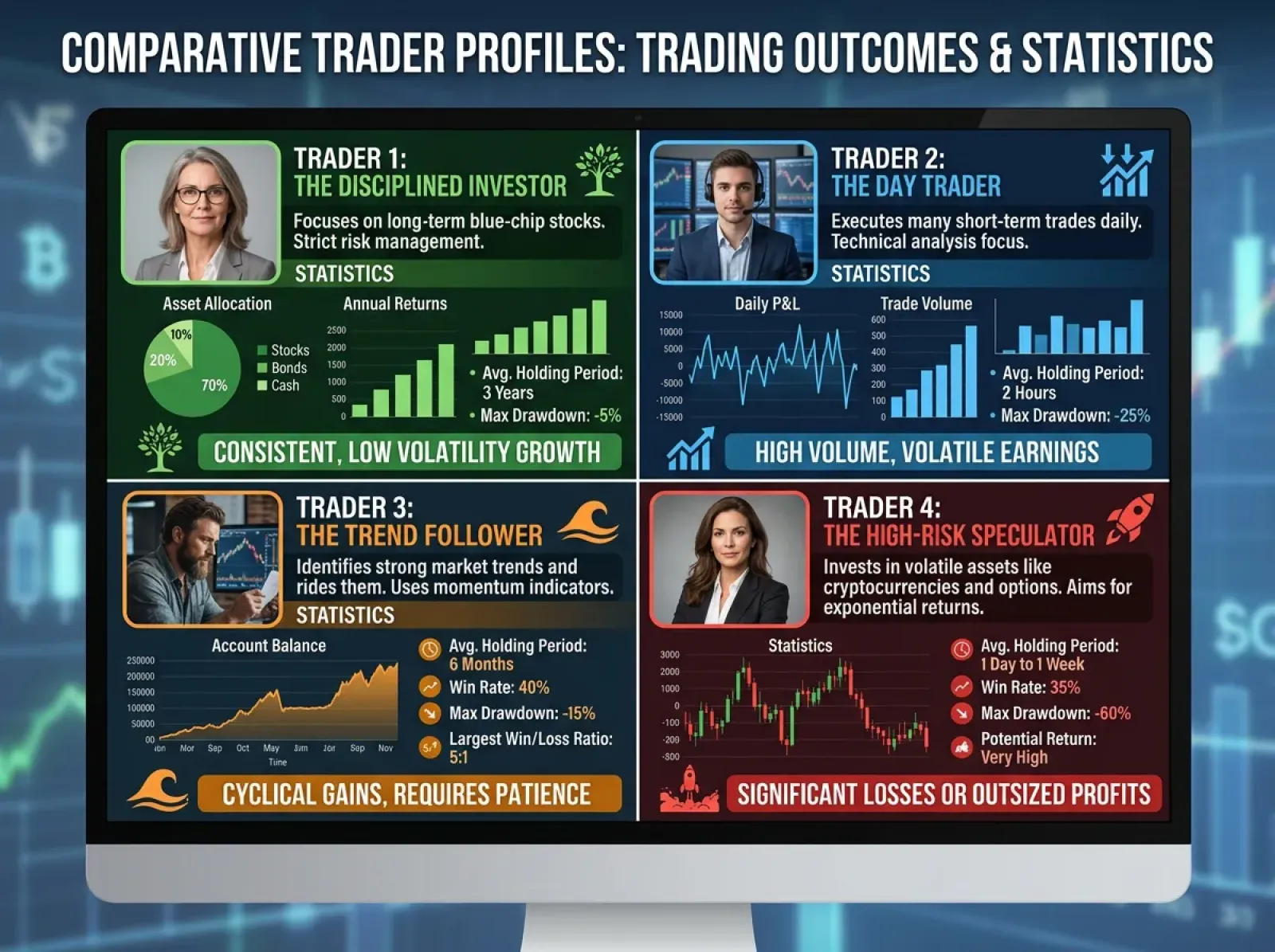
Abstract calculations become meaningful when applied to realistic trading scenarios. Seeing how different combinations of win rate, reward-to-risk, and position sizing produce vastly different survival probabilities helps you understand where your own trading falls on the spectrum. These scenarios illustrate that neither aggressive nor conservative approaches are inherently right or wrong—what matters is whether the combination of parameters produces acceptable risk of ruin for your goals and risk tolerance.
Practical scenarios illustrating risk of ruin:
-
Aggressive trader risking 5% per trade with 50% win rate and 1.5:1 reward-to-risk: Despite positive expectancy, this trader faces approximately 40-60% risk of ruin over enough trades. A ten-trade losing streak—which will happen eventually—costs roughly 40% of capital. The math is survivable on paper, but psychological ruin becomes likely during inevitable deep drawdowns. Most traders with these parameters eventually blow up or quit.
-
Conservative trader risking 1% per trade with 50% win rate and 1.5:1 reward-to-risk: Same edge as the aggressive trader, but risk of ruin drops below 1%. A ten-trade losing streak costs only about 9.5% of capital—painful but easily recoverable. This trader sacrifices growth rate for survival, but survival allows compounding over years that the aggressive trader never achieves.
-
Scalper with 65% win rate, 0.8:1 reward-to-risk, risking 2% per trade: The high win rate creates positive expectancy despite smaller winners than losers. Risk of ruin is approximately 5-10%—elevated but potentially acceptable. The danger is that win rate degradation of even 5-10% pushes expectancy negative, at which point ruin becomes certain. This trader survives if conditions remain favorable but has little margin for error.
-
Swing trader with 40% win rate, 2.5:1 reward-to-risk, risking 1.5% per trade: Strong positive expectancy with larger winners offsetting frequent losses. Risk of ruin is approximately 2-5%. The challenge is psychological—losing six or seven trades in a row happens regularly, testing discipline. If position sizing stays consistent through losing streaks, this approach survives and compounds effectively.
What These Scenarios Reveal
The scenarios demonstrate that survival depends on the interaction between all three variables, not any single factor.
The aggressive trader and conservative trader have identical edge but completely different survival probabilities—position sizing alone determines whether the same strategy leads to ruin or wealth. The scalper's high win rate creates an illusion of safety that masks vulnerability to small changes in market conditions. The swing trader accepts more frequent losses in exchange for more robust mathematics that survive variance. None of these approaches is objectively superior—they represent different tradeoffs between growth rate, drawdown experience, and ruin probability. What matters is choosing parameters consciously rather than defaulting to whatever feels comfortable or exciting.
The Key Is: Risk of ruin scenarios reveal that identical edges produce vastly different survival probabilities depending on position sizing, that high win rates don't guarantee safety while low win rates don't guarantee failure, and that conscious selection of parameters based on mathematical reality rather than emotional preference separates traders who survive long-term from those who eventually become statistics.
Reducing Your Risk of Ruin


Once you've calculated your risk of ruin and found it higher than acceptable, you have three levers to pull: reduce risk per trade, improve win rate, or increase reward-to-risk ratio. Each lever has different tradeoffs and different degrees of controllability. Position sizing can be changed immediately with complete certainty. Win rate and reward-to-risk improvements require strategy refinement and may take months to validate. Understanding how each lever affects your ruin probability helps you prioritize which changes will have the greatest impact.
Questions to ask yourself:
-
Is my current risk per trade the result of deliberate calculation or arbitrary habit?
-
Could I cut my risk per trade in half and still find trading worthwhile?
-
Am I taking setups that genuinely meet my criteria, or am I forcing trades that dilute my win rate?
-
Am I exiting winners based on strategy rules or based on fear of giving back profits?
-
Am I letting losers run beyond my stops, hoping for recovery that increases average loss size?
-
Have I calculated what my ruin probability would be with 20% worse statistics than my current numbers?
Lowering Risk Per Trade
Reducing position size is the fastest, most reliable way to lower your risk of ruin because it requires no improvement in trading skill—only discipline.
If your current risk of ruin is unacceptable, cutting risk per trade in half will dramatically improve your survival probability regardless of any other changes. The impact is immediate and certain. You don't need to wait for a larger sample of trades to validate the improvement—the mathematics guarantee it. The cost is slower account growth during profitable periods, but this tradeoff is almost always worthwhile because survival enables compounding that aggressive sizing prevents. Many traders resist reducing position size because it feels like admitting weakness or limiting potential. In reality, it's the single most professional decision you can make.
Improving Win Rate and Reward-to-Risk
Enhancing your edge through better setup selection and exit management provides a second path to reducing ruin probability, though it requires more effort and time to validate.
DO review your trading journal to identify which setups perform best and focus exclusively on those higher-probability patterns.
DO analyze losing trades to determine if you're taking setups that don't actually meet your criteria or entering at suboptimal points.
DO examine whether you're exiting winners too early out of fear, leaving potential reward-to-risk improvement on the table.
DO track whether you're honoring stops or letting losers run, which destroys reward-to-risk ratio even if win rate stays constant.
DO give yourself enough trades to validate any changes before concluding they've worked—at least 50-100 trades minimum.
DON'T assume you can dramatically improve win rate or reward-to-risk quickly—these improvements typically come gradually through refinement.
DON'T chase higher win rate by widening stops or taking profits too early, which may hurt reward-to-risk more than it helps win rate.
DON'T abandon a working strategy to chase better statistics—sometimes your current edge is sustainable and position sizing is the only adjustment needed.
DON'T ignore that market conditions affect your statistics—improvements during favorable conditions may not persist.
Combining Multiple Improvements
The most powerful risk of ruin reduction comes from making modest improvements across all three variables simultaneously.
You don't need to cut risk per trade dramatically, double your win rate, or achieve massive reward-to-risk ratios. Small improvements across all three variables compound into substantial ruin reduction. Cutting risk from 3% to 2%, improving win rate from 48% to 52%, and increasing reward-to-risk from 1.3:1 to 1.5:1 might individually produce modest ruin reduction—but combined, they could transform a 25% ruin probability into a 3% probability. This compound effect means you should pursue all three paths rather than obsessing over any single variable. Focus on position sizing for immediate improvement, then work on edge enhancement over time.
The Bottom Line: Reducing your risk of ruin starts with lowering risk per trade—the only lever you can pull immediately with guaranteed effect—while simultaneously working to improve win rate through better setup selection and reward-to-risk through better exit management, with the combined effect of modest improvements across all three variables producing far greater ruin reduction than dramatic improvement in any single area.
Common Mistakes That Increase Risk of Ruin


Most traders don't consciously choose parameters that lead to ruin—they drift into dangerous territory through predictable mistakes that feel reasonable in the moment. These errors typically stem from emotional reactions to recent results, failure to understand how risks compound, or simply not doing the math on what their behavior implies for long-term survival. Recognizing these patterns before you fall into them is far easier than escaping once you're already in a drawdown spiral.
Common mistakes that increase risk of ruin:
-
Risking too much per trade because it feels right, matches your conviction, or produces exciting returns during favorable periods
-
Never calculating what your actual ruin probability is at your current position size
-
Increasing risk during losing streaks to recover losses faster, precisely when reduced risk is most appropriate
-
Doubling down or averaging into losing positions, dramatically increasing exposure when you should be limiting damage
-
Ignoring correlation between positions, believing you're diversified when all your trades move together during market stress
-
Holding multiple positions that will all lose simultaneously if the market moves one direction, effectively multiplying your risk per trade
-
Overconfidence after winning streaks, increasing position size because you feel like you've figured it out
-
Treating recent results as predictive of future results rather than normal variance within your actual edge
-
Not accounting for slippage, which increases average loss size beyond your calculated stop distance
-
Ignoring gap risk, especially when holding overnight positions that can open far beyond your stop level
-
Using theoretical risk calculations that assume perfect execution when real trading involves imperfect fills
-
Underestimating how market conditions change, running calculations on favorable periods that don't represent full-cycle performance
-
Taking correlated trades across multiple accounts or strategies, creating concentration you don't see when viewing accounts separately
-
Treating paper profits as reduced risk, sizing up because you're playing with "house money" rather than recognizing all capital as real
The Pattern Behind These Mistakes
Every mistake on this list involves underestimating actual risk of ruin by ignoring factors that real trading imposes on theoretical calculations.
Theoretical calculations assume consistent position sizing, but traders increase risk when confident and during drawdowns. They assume independent trades, but real portfolios often hold correlated positions. They assume clean execution at stop levels, but slippage and gaps produce larger losses than intended. They assume stable edge, but market conditions shift and degrade statistics. Each mistake represents a gap between the idealized inputs you put into a risk of ruin calculator and the messy reality of actual trading. Closing these gaps requires not just running the calculator but honestly accounting for how your real behavior differs from the disciplined consistency the mathematics assume.
Quick tip: Calculate your risk of ruin assuming your statistics are 20% worse than your historical numbers—this builds in a buffer for the execution imperfections, condition changes, and behavioral drift that theory doesn't capture.
Quick tip: Track your actual average loss including slippage and compare it to your intended risk per trade—many traders discover their real risk exceeds their theoretical risk by 20-50%, dramatically increasing their true ruin probability.
