


Naked Stock: What It Really Means to Trade Without a Net


Every trader faces the same fundamental question: do I protect this position, or do I let it run free? A naked stock position is exactly what it sounds like—you own shares (or you're short shares) with nothing else attached. No protective puts underneath catching your fall. No covered calls capping your upside. No collars, no spreads, no insurance policy. Just you, the stock, and whatever the market decides to do next.
The Simple Truth About Going Unhedged
When you hold a naked stock position, you're accepting the full range of outcomes. The stock can move 10% in your favor, and you capture all of it. It can move 10% against you, and you feel all of that too. This directness has real advantages:
-
Lower complexity - You're tracking one position, not a multi-legged strategy with different expiration dates and strike prices
-
No time decay - While options premiums evaporate day by day, your shares just sit there waiting for price movement
-
Complete flexibility - You can exit whenever you want without unwinding multiple positions or calculating breakevens across different instruments
-
Reduced costs - Every hedge has a price, and those prices add up faster than most traders realize
Why This Choice Matters More Than You Think
For long-term investors buying index funds or blue-chip stocks they plan to hold for years, hedging barely registers as a consideration. They're playing a different game—one where short-term volatility is just noise on the way to compound growth. But for active traders, the naked versus hedged decision shapes everything. Your holding period might be days or weeks, not decades. Your risk management strategy determines whether you can stay in the game long enough to let your edge play out, and going naked stock means you need a different kind of discipline.
The real tension isn't between being reckless and being safe. Anyone can be reckless, and anyone can hedge themselves into permanent mediocrity. The question is whether you can hold conviction without crossing into denial, whether you can stay exposed without letting fear make your decisions for you.
The Case for Going Naked
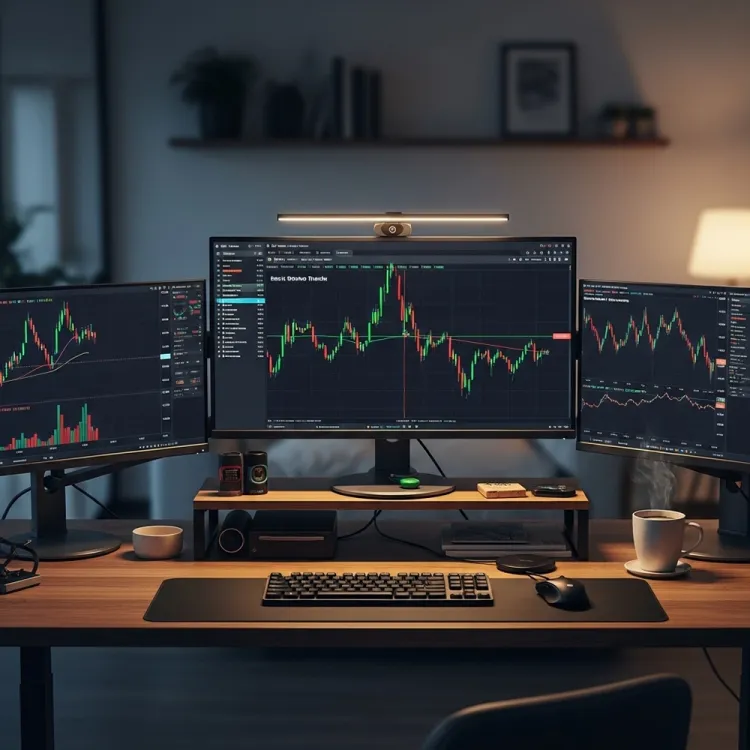
There's something honest about a naked position. When you strip away all the protective layers, you're forced to confront what you actually believe about the trade. This clarity can be uncomfortable, but it's also powerful. If you can't stomach holding shares without insurance, maybe you shouldn't be in the position at all. And if your analysis is solid enough to bet real money on, maybe the insurance is just expensive noise.
IF your technical setup shows a clear breakout above resistance with strong volume confirmation, multiple timeframe alignment, and healthy market internals, THEN the probability of follow-through is high enough that hedging costs become a drag rather than protection.
IF you're buying a stock that just gapped up 8% on exceptional earnings with raised guidance, entering for a continuation move with a tight stop below the gap, THEN a protective put adds cost to a trade where your risk is already well-defined.
IF the broader market is in a confirmed uptrend with breadth expanding and volatility contracting, THEN paying for downside protection is betting against the very conditions that make your directional trade attractive.
What Hedging Actually Costs You
The sticker price on a protective put is just the beginning. Options premiums feel abstract until you calculate what they mean over multiple trades. A 3% insurance policy repeated across ten positions throughout the year isn't 3%—it's 30% of your capital slowly leaking away, even when you're right about direction.
-
Direct premium costs - That put you bought for "just 2% of the position" represents 2% you need to make back before you even break even
-
Opportunity cost - Money spent on hedges is money that can't compound in winning positions
-
Complexity overhead - Tracking expiration dates, managing spreads, adjusting strikes—every layer adds friction and decision fatigue
-
Psychological distance - When you're hedged, you care less about being right, and that subtle shift in attention can make you sloppier
-
Exit timing problems - Unwinding a hedged position means coordinating multiple moving parts, often at precisely the wrong moment
When Markets Reward Direct Exposure
Not all market environments are created equal. Sometimes the conditions align in ways that make naked stock positions the rational choice, not the reckless one.
-
Strong trending environments - When a market or sector is in confirmed motion with persistent momentum, hedging against the trend is expensive and usually unnecessary
-
Low volatility regimes - When the VIX is subdued and price action is orderly, protection costs less but also matters less
-
Post-capitulation rallies - After significant washouts, the path of least resistance is often sharply higher with minimal pullbacks to threaten stops
-
Sector rotations with clear catalysts - When money is flowing into specific areas with identifiable drivers, direct exposure captures the move without hedge drag
The Mental Edge of Simplicity
A naked stock position forces you to make better decisions upfront. You can't hide behind complexity or tell yourself that your hedge will save you if you're wrong. This clarity cuts both ways—it can feel uncomfortable, but it also sharpens your thinking. When you know there's no safety net, you size positions more carefully. You place stops more thoughtfully. You actually exit when your thesis breaks instead of hoping your protective put will soften the blow. The psychological weight of full exposure keeps you honest in ways that hedged positions sometimes don't.


When Naked Makes Sense
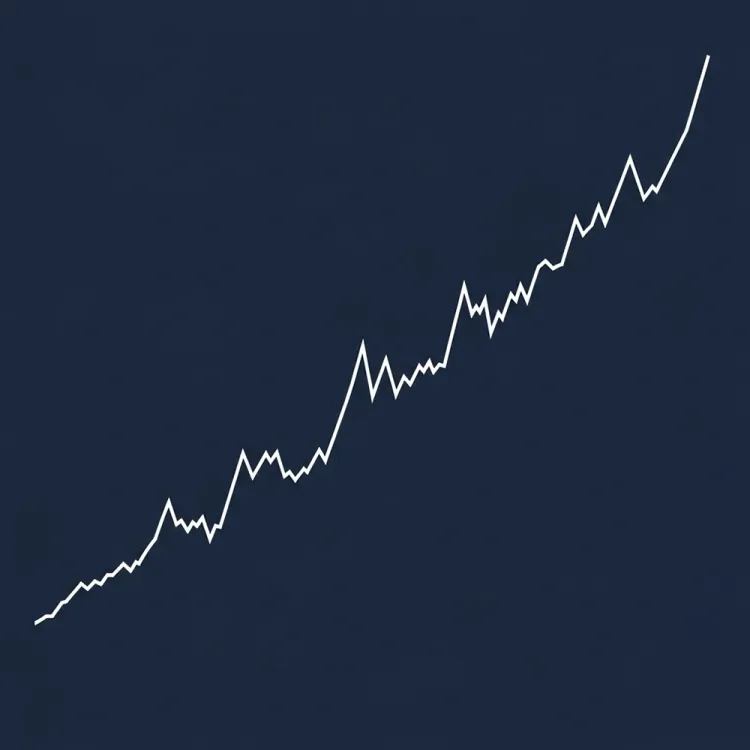
Not every situation calls for hedging. In fact, some of the cleanest, highest-probability trades work better when you just take the position and manage it directly. The key is recognizing the difference between legitimate exposure and reckless gambling. Going naked isn't about being brave or stupid—it's about matching your approach to the conditions in front of you.
-
Strong trending markets with clear directional bias - When the market or a sector is in confirmed motion with persistent momentum, price action that respects key levels, and breadth supporting the move, hedging against that trend is expensive insurance you probably don't need
-
High-conviction trades with defined risk parameters - If your analysis shows multiple confirming factors, a clear invalidation point, and risk-reward that makes sense, a naked stock position lets you capture the full move without hedge drag reducing your gains
-
Position sizing that allows for natural volatility - When you size small enough that normal price swings won't trigger emotional decisions, you don't need options to manage what proper position sizing already handles
-
Shorter timeframes where hedge costs outweigh benefits - For swing trades lasting days or a couple of weeks, the premium you'd pay for protection often exceeds the actual risk of a well-placed stop loss
-
Strong technical or fundamental confirmation - When price action, volume, market structure, and fundamental catalysts all align in the same direction, layering hedges on top of that confluence just dilutes what's already a high-quality setup
Reading the Environment
Markets speak if you listen. A strong uptrend with higher highs and higher lows, expanding breadth, sectors rotating constructively, and volatility staying contained—these conditions tell you something about probability. Not certainty, but probability. When the weight of evidence points clearly in one direction, hedging can actually work against you. You're paying to protect against scenarios that the market itself is telling you are less likely. This doesn't mean you abandon risk management. It means you manage risk through position sizing, stop placement, and portfolio construction instead of through expensive options that decay daily. A naked position in a trending market with good confirmation isn't reckless—it's efficient. You're aligning your structure with what the market is showing you, rather than fighting it with insurance policies designed for different conditions.
The best time to go naked is when your setup is so clean that hedging feels like arguing with your own analysis. If you've done the work—identified the pattern, confirmed it across timeframes, checked the broader market context, defined your risk, sized appropriately—then adding a hedge is often just doubt dressed up as prudence. Trust the process you've built, or question why you're taking the trade at all.
When You Should NOT Go Naked
Knowing when to go unhedged is useful. Knowing when not to is survival. Some situations carry risks that no amount of conviction can justify ignoring. These aren't theoretical dangers—they're the scenarios that blow up accounts, turn winning streaks into catastrophic losses, and remind you that the market doesn't care how confident you feel.
-
Holding through major events (earnings, Fed decisions, geopolitical risks) - Binary events create binary outcomes, and naked positions expose you to gap moves that can blast through any stop loss you've placed
-
Extended positions during volatile market regimes - When the VIX is elevated, correlations break down, and intraday swings routinely hit 2-3%, unhedged positions can trigger stops on noise rather than genuine trend changes
-
When position size exceeds your risk tolerance - If you're sizing so large that normal volatility makes you anxious, you're already admitting the position needs protection—either hedge it or size it down
-
Low liquidity stocks that can gap against you - Thinly traded names can move 10-15% on minimal volume, and your stop order becomes a market order into a void where buyers have temporarily disappeared
-
When you're trading outside your edge - Taking positions in unfamiliar sectors, untested strategies, or market conditions you don't understand compounds risk in ways that make naked exposure genuinely dangerous
Understanding What You Can't Control
There's a difference between calculated risk and unmanageable uncertainty. When a company reports earnings, you're not trading a chart anymore—you're trading an unknown number that could be anything. The stock can gap 20% in either direction before you can blink, and your carefully placed stop loss becomes irrelevant. Same with Fed announcements, geopolitical shocks, or unexpected news that hits after hours. These events introduce discontinuous risk—the kind where price doesn't travel through levels, it teleports past them. A naked stock position through earnings might work nine times, but the tenth time can erase all those gains and then some. This isn't about being afraid of volatility. It's about recognizing when the game changes from probabilistic to binary, and adjusting accordingly.
If you're holding a naked stock position and you catch yourself hoping nothing bad happens, you've already admitted you're in the wrong structure. Hope is not a strategy. When the conditions demand protection—either through hedges, reduced position size, or simply being out—ignoring that demand is just ego with a price tag attached.
Managing Naked Position Risk Without Hedges


Going naked doesn't mean going blind. You're just choosing different tools to manage risk—tools that don't involve paying premiums or juggling expiration dates. The traders who succeed with unhedged positions aren't braver or luckier. They've built systems that protect capital without relying on options insurance. These systems are often simpler, more direct, and surprisingly more effective than the hedged alternatives.
-
Position sizing as your primary risk control - If a 5% loss on a position would only dent your account by 0.5%, you've already built in more protection than most hedges provide, and you've done it without any ongoing cost
-
Stop-loss placement that respects both risk and volatility - Stops need to sit beyond normal noise but close enough to preserve capital, using ATR or recent swing structure rather than arbitrary percentages
-
Scaling in and out vs. all-or-nothing entries - Building positions in thirds or quarters lets you test your thesis with minimal risk, then add size only when the market confirms you're right
-
Portfolio-level diversification strategies - Spreading risk across uncorrelated positions, sectors, and timeframes means no single naked position can seriously damage your account
-
Cash allocation as an underrated hedge - Holding 20-30% cash isn't being timid—it's maintaining optionality and reducing overall portfolio volatility without paying a dime in premiums
-
The mental game: staying disciplined when exposed - Following your rules when you're fully exposed and the position moves against you separates professionals from amateurs every single time
Building Your Defense System
Position sizing is the foundation everything else sits on. Get this wrong and nothing else matters. If you're risking 10% of your account on a single naked position, no stop loss can save you from yourself. But risk 1-2% per trade, and suddenly you can be wrong five times in a row without significant damage. This math is boring, unglamorous, and absolutely non-negotiable.
From there, stops become your exit strategy rather than your panic button. Place them using market structure—below support on longs, above resistance on shorts—giving the position room to breathe while defining exactly where your thesis is wrong. Scaling adds another layer of protection. Instead of going all-in at once, you enter with a pilot position. If it works, you add. If it doesn't, you're out with minimal damage. This approach turns position management into a conversation with the market rather than a one-time bet. A properly sized naked stock position with intelligent stops and scaling discipline often carries less real risk than a larger hedged position where the hedge creates a false sense of security.
The mental aspect might be the hardest part. When you're naked and the position moves against you, there's nowhere to hide. The protective put isn't there to soften the psychological blow. This is actually healthy—it keeps you honest. You can't rationalize holding a losing trade because "at least I'm hedged." You either trust your analysis enough to let the stop work, or you exit. That clarity, uncomfortable as it feels, is what keeps accounts alive over the long term.
Hybrid Approaches


The naked versus hedged debate doesn't have to be binary. Some of the smartest traders operate in the middle ground, using hedges selectively rather than religiously. This isn't fence-sitting—it's matching protection to the specific characteristics of each position and market condition. You can hold core positions with downside protection while running tactical trades naked. You can hedge through events and remove the hedge afterward. The flexibility matters more than ideological purity.
-
Hedging core positions while trading satellites naked - Protect your largest, longest-term holdings with options while leaving smaller, shorter-term trades unhedged where the cost-benefit doesn't make sense
-
Time-based hedging (protecting for events, naked otherwise) - Add protection specifically for earnings, Fed meetings, or known volatility catalysts, then remove it once the event passes and uncertainty drops
-
Using position sizing variation instead of options - Take larger positions in low-volatility setups and smaller positions in high-volatility setups, letting size do the work hedges normally do
-
Partial hedging on large positions only - Save premium costs for positions that actually matter to your account, leaving smaller trades to run free with just stop-loss protection
The Core-Satellite Strategy
Think of your portfolio as two distinct parts. The core consists of your largest positions—the ones you've sized meaningfully because you have high conviction over a longer timeframe. These might represent 3-5% of your account each, positions you expect to hold through some volatility. Here, hedging makes sense. A protective put costs money, but it preserves capital on positions large enough to hurt if they go wrong. The satellites are different—smaller trades, shorter timeframes, more tactical in nature. Maybe they're 1-2% risk each, testing setups or catching momentum moves. Hedging these positions would cost more than the protection is worth. A naked stock approach on satellites keeps costs down while the core hedges provide portfolio-level stability. This structure gives you both protection where it matters and efficiency where it doesn't.
Pro Tips for Selective Hedging
Time your protection around knowable events. If you're holding through earnings, buy the put. Once earnings pass and implied volatility collapses, let the position run naked with a stop. You've paid for protection only during the window where gap risk was real.
Use position size as your first hedge. Before reaching for options, ask if you could just size the position smaller. If cutting the position in half would let you sleep at night, that's often better than hedging a full-size position.
Hedge at the portfolio level, not the position level. Sometimes buying a few puts on SPY or QQQ protects your entire book of longs more efficiently than hedging each position individually.
When Hybrid Works Best
Not every situation calls for the hybrid approach, but certain conditions make it particularly effective:
-
Mixed conviction levels - When some positions are high-confidence and others are speculative, differentiate your risk management accordingly
-
Varying timeframes - Long-term holds with short-term trades active simultaneously benefit from different protection strategies
-
Event-heavy calendars - Weeks packed with earnings and economic data warrant more hedging than quiet periods
-
Portfolio concentration - When one or two positions dominate your book, protecting just those while leaving others naked balances cost and protection
DO adjust your approach based on position characteristics rather than applying the same rules everywhere
DO track the cost of your hedges against the actual protection they provided to refine what works
DO remove hedges when the conditions that justified them no longer exist
DON'T hedge small positions just because you hedged large ones—let position size determine structure
DON'T maintain hedges out of habit or fear after the specific risk you were protecting against has passed
DON'T use hybrid approaches as an excuse to avoid making clear decisions about conviction and risk
Common Mistakes and How to Avoid Them


Naked positions amplify both good decisions and bad ones. The mistakes that might sting a little in a hedged portfolio can destroy an unhedged one. Most traders who fail at managing naked positions don't fail because they took risk—they fail because they took the wrong risks for the wrong reasons. These mistakes follow predictable patterns, which means you can learn to spot them before they cost you.
-
Confusing hope with conviction - Holding because you want the trade to work is not the same as holding because your analysis says it should work
-
Ignoring correlation risk across positions - Running five naked long positions in tech stocks isn't diversification, it's concentration dressed up as multiple trades
-
Getting shaken out by normal volatility - Placing stops too tight relative to a stock's natural movement guarantees you'll be stopped out on noise before the real move happens
-
Adding to losing positions without a plan - Averaging down on a naked stock position without predetermined levels and size limits turns one mistake into a compounding disaster
-
The "hedge afterwards" trap - Telling yourself you'll add protection if the trade goes against you rarely works because by then the hedge is expensive and you're emotional
The Reality Check You Need
Hope feels like conviction when you're in the middle of it. You entered the trade with solid reasons, but now it's not working. Instead of acknowledging the thesis might be broken, you start looking for reasons it could still be right. This is when traders hold naked positions way past their stops, adding to losers because "it has to bounce eventually," or ignoring the fact that all their positions are essentially the same bet wearing different tickers. The correlation mistake is particularly deadly—if you're long five semiconductor stocks, you don't have five independent risks. You have one sector bet sized five times larger than you think. When semis sell off, all five positions hit their stops simultaneously, and suddenly you're down 10% on the week instead of 2%.
Volatility kills more good trades than bad analysis does. A stock can have perfect setup, clear direction, solid fundamentals, and still swing 3-4% intraday just because that's what it does. If your stop sits 2% below your entry on a stock that routinely moves 3%, you're not managing risk—you're paying the market to teach you about standard deviation. The solution isn't wider stops on every trade. It's matching your stop width to the personality of what you're trading, or choosing less volatile stocks when you need tighter risk parameters.
The Bottom Line: Most mistakes with naked stock positions come down to lying to yourself—about why you're in the trade, about what would make you wrong, about whether you're actually diversified, or about how much volatility you can handle. The market will happily charge you tuition for every self-deception. The traders who survive are the ones who get honest faster.
Building Your Framework
A framework isn't a straitjacket—it's a decision-making structure that keeps you consistent when emotions run high. Without one, every trade becomes a fresh internal debate about whether to hedge, how much to risk, and when to exit. With one, you're executing a process you've already thought through. Your framework should be personal, tested, and flexible enough to handle different conditions without being so loose that it doesn't actually constrain anything.
-
Questions to ask before going naked on any trade - Can I define exactly where I'm wrong? Does my position size allow me to handle normal volatility without panic? Am I holding through any binary events? Is this trade within my proven edge? Would I enter this same trade again if stopped out?
-
Creating personal rules based on market conditions - Build different playbooks for trending versus choppy markets, high versus low volatility environments, and event-heavy versus quiet periods
-
Tracking outcomes to refine your approach - Log every naked position with entry reasoning, market conditions, how it performed, and whether hedging would have improved or hurt the result
-
When to override your rules (and when never to) - Understand which rules exist for discipline versus which exist for survival, and know the difference between adapting to new information and abandoning structure because you're uncomfortable
The Pre-Trade Checklist
Before you take any naked stock position, run through your checklist. This doesn't have to be complicated—in fact, simpler is usually better. But it needs to happen every single time. What's the broader market telling you? Is this a trending environment or are we chopping around resistance? Where's your stop, and does it make sense relative to the stock's average true range? What's your position size as a percentage of your account, and what happens if you get stopped out? If you can't answer these questions clearly, you're not ready to go naked. The checklist isn't about being perfect. It's about being deliberate. Emotional trades skip the checklist. Disciplined trades don't. Over time, you'll notice patterns—certain setups work better naked, certain conditions demand protection, certain position sizes feel right for your psychology. Your framework evolves as you feed it data, but only if you're actually using it consistently enough to generate meaningful data.
Rules That Adapt to Conditions
Your framework needs different modes for different environments. A one-size-fits-all approach guarantees mediocrity:
-
Strong trend mode - Naked positions up to 3% risk per trade, wider stops that respect the trend's momentum, hold through minor pullbacks
-
Choppy market mode - Reduce naked position size to 1-2%, tighter stops, consider hedging anything held overnight
-
High volatility mode - Smaller positions, wider stops, or shift to hedged structures entirely until conditions calm
-
Event-heavy periods - Default to hedging or cash unless the setup is so compelling it justifies event risk
When to Break Your Rules (And When That's Just Rationalization)
There are legitimate times to override your framework, and there are times when you're just making excuses. Learn to tell the difference:
Override when:
-
New information fundamentally changes your thesis and you have time to adjust
-
Market conditions shift dramatically intraday (flash crash, geopolitical shock, circuit breakers)
-
You identify an error in your original analysis before the market has moved significantly
-
An opportunity is so clear that following normal sizing would mean dramatically under-allocating to your best idea
Never override when:
-
You're losing money and hoping a rule-break will save you
-
You're on a winning streak and feeling invincible
-
You're bored and looking for action
-
You want to hedge a losing position after it's already down because now you're scared
Remember: A naked stock position without a framework is just gambling with extra steps. The framework doesn't eliminate risk—it makes risk manageable, repeatable, and refinable. Build yours, test it, trust it, and update it based on results rather than feelings.
Naked Stock Positions: Making Peace with Uncertainty


Trading without hedges isn't about being fearless. It's about being honest with yourself about what you can control and what you can't. The market doesn't care whether you're hedged or naked—it's going to do what it does regardless. Your job is to structure your positions in ways that let you stay in the game long enough for your edge to work. Sometimes that means protection. Sometimes it means accepting full exposure. The difference between traders who succeed and those who don't often comes down to knowing which is which.
What Going Naked Actually Requires
Strip away the theory and the strategy talk, and naked positions demand a few things that no amount of hedging can substitute for:
-
Genuine self-knowledge - You need to know your actual risk tolerance, not the one you wish you had or the one that sounds tough
-
Position sizing discipline - Without the psychological comfort of hedges, proper sizing becomes non-negotiable rather than optional
-
Clear invalidation points - When there's no put to catch you, knowing exactly where you're wrong is the only thing standing between you and serious damage
-
Emotional regulation - Full exposure means full emotional exposure, and if you can't handle watching your P&L swing, you'll make bad decisions at exactly the wrong times
-
Process over outcome - Some naked positions will lose money even when you do everything right, and you need to be okay with that
The Real Question
Most conversations about hedging focus on the mechanics—which strikes to buy, how much to spend, when to roll. But the deeper question is about your relationship with uncertainty. Markets are uncertain by nature. Hedging doesn't eliminate that uncertainty—it just redistributes it and charges you a fee for the privilege. A naked stock position forces you to sit with the discomfort of not knowing what happens next. That discomfort is actually information. It tells you whether you've sized correctly, whether your conviction is real, whether you've done enough work to justify the risk. Traders who can't tolerate any uncertainty end up hedging everything, paying constant premiums, and ironically taking on the certainty of slowly bleeding their account through costs. Traders who embrace too much uncertainty blow up spectacularly. The balance lives somewhere in between—in knowing when protection makes sense and when it's just expensive noise that prevents you from executing your edge.
Going naked isn't about being tougher or smarter than hedged traders—it's about choosing clarity and efficiency when the conditions warrant it, and having the discipline to manage exposure without insurance policies doing the work for you.
Some traders will never be comfortable with that approach, and that's fine. But if you're going to trade naked positions, do it with intention, structure, and the self-awareness to know when you're crossing the line from calculated risk into something else entirely.
