



Understanding the Bid-Ask Spread
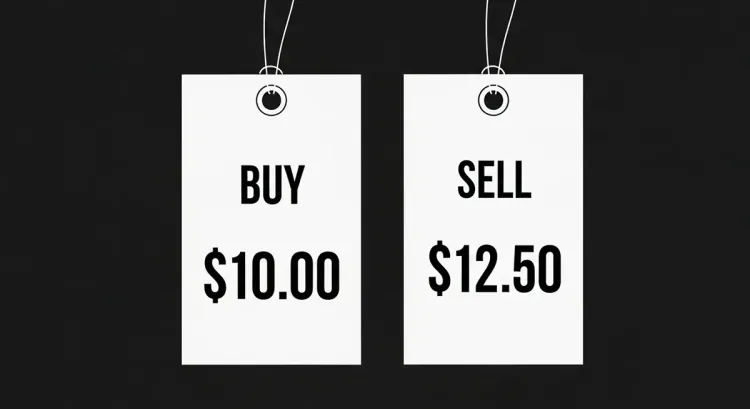

The bid-ask spread is the difference between the highest price a buyer is willing to pay for a security and the lowest price a seller is willing to accept. Every stock, ETF, option, and tradeable instrument has both a bid price and an ask price displayed at any given moment, and the gap between them represents the cost of executing a trade immediately. When you buy at the ask and sell at the bid, you lose the spread—and this happens on every single transaction, whether you notice it or not.
Why the Spread Matters for Every Trade
The bid-ask spread affects your returns in ways that aren't always obvious, especially if you're focused on price charts rather than execution quality.
How the spread impacts your trading:
-
Every market order to buy fills at the ask price, which is higher than the current "price" often quoted
-
Every market order to sell fills at the bid price, which is lower than the quoted price
-
You lose the spread on both entry and exit, meaning it costs you twice to round-trip a position
-
Frequent traders accumulate spread costs that compound into meaningful drag on returns
-
Wide spreads on illiquid securities can turn profitable trade ideas into losing trades after execution costs
-
The spread is an invisible tax that doesn't appear on your brokerage statement as a separate line item
What This Article Covers
The bid-ask spread reveals important information about market liquidity, trading costs, and even potential risks—but many traders never learn to read it properly.
Topics this article will explain:
-
How bid and ask prices work and what they represent
-
What the spread tells you about a security's liquidity
-
Why spreads exist and who profits from them
-
Factors that cause spreads to widen or tighten
-
How the spread functions as a hidden transaction cost
-
Variations in spreads across different markets and securities
-
Reading Level 2 quotes and order book depth
-
Strategies for minimizing the cost of the bid-ask spread
-
When widening spreads serve as warning signs of trouble ahead
Understanding Bid and Ask Prices


Every tradeable security has two prices at any given moment, not one. The single price you see quoted on financial news or in casual conversation is usually the last traded price—what someone actually paid in the most recent transaction. But when you go to execute a trade right now, you're dealing with the bid and the ask, which represent what people are currently willing to pay and accept. Understanding these two prices is fundamental to understanding how markets actually work.
How bid and ask prices function:
-
The bid price is the highest price any buyer is currently willing to pay for the security
-
The ask price (also called the offer) is the lowest price any seller is currently willing to accept
-
The ask is always higher than the bid—if they were equal, a trade would execute immediately
-
The bid-ask spread is the gap between these two prices, measured in cents or dollars
-
When you place a market buy order, you pay the ask price
-
When you place a market sell order, you receive the bid price
-
The last traded price falls somewhere between the bid and ask, depending on whether the most recent trade was a buy or sell
How These Prices Appear on Your Screen
Your trading platform displays bid and ask information in various formats depending on the interface, but the core data remains the same.
What you'll typically see:
-
Bid price displayed alongside the number of shares available at that price (bid size)
-
Ask price displayed alongside the number of shares available at that price (ask size)
-
The spread shown as the numerical difference or as a percentage of the stock price
-
Level 1 quotes showing only the best bid and best ask—the tightest available prices
-
Level 2 quotes showing multiple price levels with depth at each, revealing the order book
-
Colors often distinguish bid (frequently green) from ask (frequently red) for quick visual reference
-
Real-time updates as orders enter and exit the market, constantly shifting bid and ask prices
-
The midpoint price, calculated as the average of bid and ask, sometimes displayed as a reference
The Bottom Line: The bid-ask spread represents the gap between what buyers will pay and what sellers will accept, and understanding that you buy at the higher ask price and sell at the lower bid price reveals why the spread functions as an immediate cost on every trade you execute.
What the Spread Tells You About Liquidity


The bid-ask spread functions as a real-time gauge of how easily you can buy or sell a security without significantly impacting its price. Liquidity—the ability to transact quickly at stable prices—shows up directly in the spread. When many buyers and sellers are actively trading, competition tightens the spread. When few participants are interested, the spread widens to compensate those willing to take the other side of your trade.
What the spread reveals about market conditions:
-
Tight spreads (pennies or fractions of a percent) indicate high liquidity with many active participants competing for trades
-
Wide spreads (multiple cents or significant percentages) indicate low liquidity with fewer participants and higher transaction costs
-
Spreads tighten during active trading hours when volume peaks and competition among market makers intensifies
-
Spreads widen during off-hours, low-volume periods, or when uncertainty reduces participation
-
A stock with a $0.01 spread is far more liquid than one with a $0.25 spread, even if their prices are similar
-
Sudden spread widening often signals that liquidity providers are stepping back due to uncertainty or risk
-
Consistent tight spreads suggest stable, well-functioning markets with reliable execution quality
Volume, Market Makers, and Spread Dynamics
The relationship between trading volume and the bid-ask spread reflects the underlying economics of providing liquidity in financial markets.
IF a stock trades millions of shares daily with constant buyer and seller interest… THEN market makers compete aggressively for order flow, driving spreads down to pennies as each tries to offer slightly better prices.
IF a stock trades only a few thousand shares daily with sporadic interest… THEN market makers widen spreads to compensate for the risk of holding inventory that may be difficult to offload.
IF market makers perceive elevated risk due to pending news or unusual activity… THEN they widen spreads or reduce the size they're willing to trade, protecting themselves from adverse price moves.
IF multiple market makers and high-frequency traders compete for the same order flow… THEN spreads compress because each participant tries to offer marginally better prices to capture trades.
IF a security has only one or two market makers providing liquidity… THEN spreads tend to be wider because less competition means less pressure to offer tight prices.
IF trading volume suddenly drops while price volatility increases… THEN spreads widen rapidly as liquidity providers demand more compensation for taking on uncertain positions.
Keep In Mind: The bid-ask spread is not fixed—it fluctuates constantly based on trading activity, market maker behavior, and perceived risk, meaning the same stock can have a tight spread during active hours and a wide spread during quiet periods or stressful markets.
Why the Bid-Ask Spread Exists


The bid-ask spread isn't arbitrary—it exists because someone has to take the other side of your trade, and that someone needs compensation for the service and risks involved. When you want to buy immediately, you need a seller ready right now. When you want to sell immediately, you need a buyer waiting. Market makers fill this role, standing ready to trade at any moment, but they don't do it for free. The spread is their payment for providing this liquidity on demand.
Why the spread exists:
-
Market makers provide continuous liquidity by always offering to buy at the bid and sell at the ask
-
The spread compensates market makers for the service of being available whenever you want to trade
-
Market makers face inventory risk—they might buy stock from you and watch it decline before they can sell it
-
Holding inventory ties up capital that market makers could deploy elsewhere, requiring compensation
-
Information asymmetry creates adverse selection risk—traders with superior information exploit market makers
-
Market makers must protect against being "picked off" by informed traders who know something they don't
-
The spread covers operational costs including technology, compliance, and the infrastructure required to provide quotes
-
Competition among market makers compresses spreads, but some spread must remain for the activity to be profitable
-
Without compensation through the spread, no one would provide liquidity and markets would function poorly
The Adverse Selection Problem
Market makers face a persistent challenge: they can't easily distinguish between informed and uninformed traders, and this uncertainty drives much of the bid-ask spread.
When you sell a stock to a market maker, they don't know if you're selling because you need cash, because you're rebalancing, or because you know something negative about the company that they don't. If you're an informed trader—maybe you've done extensive research or have access to better information—the market maker is likely buying something that's about to decline. They'll lose money on that trade. Over time, market makers get "picked off" by informed traders often enough that they must widen spreads to compensate for these losses. The uninformed traders end up subsidizing this protection through wider spreads, paying more because market makers can't tell them apart from the informed participants who consistently win at the market maker's expense.
The Bottom Line: The bid-ask spread exists because market makers require compensation for providing immediate liquidity, bearing inventory risk, and protecting themselves against informed traders who might exploit their continuous willingness to trade—without this compensation, no one would stand ready to take the other side of your orders.
Factors That Affect Spread Width


The bid-ask spread isn't static—it fluctuates throughout the day, across different securities, and in response to changing market conditions. Understanding what causes spreads to widen or tighten helps you anticipate execution costs before placing trades and avoid getting caught by unexpectedly poor fills. Some factors are structural and predictable while others emerge suddenly in response to news or market stress.
Factors that influence spread width:
-
Trading volume: High-volume stocks attract more market makers competing for order flow, compressing spreads, while low-volume stocks have wider spreads due to less competition
-
Market capitalization: Large-cap stocks typically have tighter spreads because institutional interest and analyst coverage create more consistent trading activity
-
Stock price: Lower-priced stocks often have wider spreads as a percentage of price, making the relative cost of trading higher
-
Volatility: When price swings increase, market makers widen spreads to protect against rapid moves that could leave them holding losing inventory
-
Uncertainty: Pending news, unclear fundamentals, or confusing market conditions cause liquidity providers to demand more compensation
-
Time of day: Spreads are typically tightest during mid-session when volume peaks and widest at the open, close, and during lunch hours
-
Pre-market and after-hours: Extended hours trading features dramatically wider spreads due to fewer participants and reduced liquidity
-
News events: Earnings announcements, FDA decisions, or unexpected headlines cause spreads to widen as market makers reduce exposure to information risk
-
Market-wide stress: During crashes or panic, spreads widen across all securities as liquidity providers step back from uncertain conditions
-
Number of market makers: Securities with many competing liquidity providers have tighter spreads than those with few
How These Factors Interact
These factors don't operate in isolation—they combine and compound to determine the spread you actually face when executing a trade.
A large-cap stock during regular hours with no pending news might have a one-cent spread that barely impacts your trade. That same stock right before an earnings announcement might see its spread widen to five or ten cents as market makers protect themselves from the upcoming information release. A small-cap stock with low volume might have a twenty-cent spread during normal conditions, and that spread might balloon to fifty cents or more during after-hours trading or market stress. The bid-ask spread you see at any moment reflects the intersection of all these factors, which is why checking the spread before you trade—not just the price—matters for understanding your actual execution cost.
Think of it this way: The bid-ask spread is like surge pricing for liquidity—when conditions are calm and demand for immediate execution is easily met, prices stay low, but when uncertainty rises, volume drops, or everyone wants to trade at once around news events, the cost of getting your order filled immediately increases because the people providing that service face more risk.
The Spread as a Trading Cost
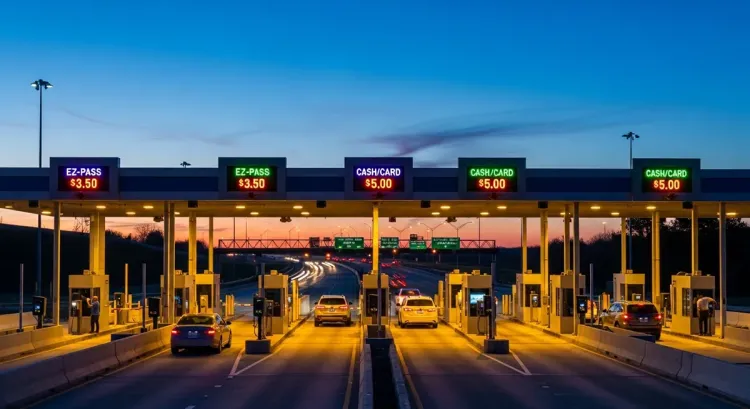

The bid-ask spread represents a real cost that comes out of your returns, even though it never appears as a line item on your brokerage statement. When you buy at the ask and later sell at the bid, you've paid the spread twice—once on entry and once on exit. This cost is invisible compared to commissions but often far more significant, especially for active traders or anyone trading less liquid securities. Ignoring the spread means underestimating what your trades actually cost.
How the spread functions as a cost:
-
You pay the spread immediately when entering a position via market order, buying at the ask rather than the midpoint or bid
-
You pay the spread again when exiting, selling at the bid rather than the ask
-
Round-trip cost equals roughly twice the spread, meaning a $0.05 spread costs you approximately $0.10 per share to enter and exit
-
On a 1,000-share position with a $0.10 spread, you lose $100 to spreads alone before the stock moves a penny
-
Percentage impact is larger on lower-priced stocks—a $0.10 spread on a $10 stock is 1%, on a $100 stock is 0.1%
-
Commission-free trading doesn't mean cost-free trading—the spread remains regardless of what your broker charges
-
Frequent traders multiply this cost across dozens or hundreds of transactions, creating significant drag
-
Short-term traders lose larger portions of potential profits to spreads than long-term holders
-
Scalpers and day traders must overcome the spread just to break even before generating actual profits
-
Wide spreads on illiquid options can consume most or all of a position's theoretical edge
Calculating Your True Transaction Costs
Understanding your actual trading costs requires looking beyond commission charges to include the bid-ask spread and any price impact from your order size.
DO calculate spread cost as a percentage of your position to understand its real impact on returns.
DO track your average spread costs over time by comparing your fill prices to midpoint prices at time of execution.
DO factor spread costs into your trade planning, especially for short-term strategies where the spread represents a larger portion of expected profit.
DO compare the bid-ask spread to your expected profit on a trade—if the round-trip spread cost exceeds your target gain, reconsider the trade.
DO check spreads before placing orders, not after, to avoid unpleasant surprises on illiquid securities.
DON'T assume commission-free trading means your trades are free—the spread is often a larger cost than commissions ever were.
DON'T ignore spread costs because they're invisible on statements—track them manually if your broker doesn't provide this data.
DON'T trade illiquid securities with wide spreads unless your expected holding period and profit target justify the higher execution costs.
DON'T use market orders on wide-spread securities where the difference between bid and ask could significantly impact your fill price.
How Spreads Vary Across Markets


The bid-ask spread you encounter depends heavily on what you're trading, when you're trading, and in which market. A one-cent spread on Apple stock feels very different from a fifty-cent spread on a thinly traded small-cap or a wide spread on an illiquid options contract. Understanding these variations helps you set realistic expectations for execution costs across different instruments and trading sessions.
How spreads vary across markets and securities:
-
Large-cap stocks typically have penny-wide spreads due to high volume, institutional interest, and multiple competing market makers
-
Small-cap stocks often have spreads of five to twenty-five cents or more due to lower volume and fewer liquidity providers
-
Micro-cap and penny stocks can have spreads representing 5-10% or more of the stock price, making them extremely costly to trade
-
Popular ETFs like SPY and QQQ have penny spreads similar to large-cap stocks because of massive trading volume
-
Less popular or niche ETFs may have wider spreads despite tracking liquid underlying assets
-
Options spreads are typically wider than stock spreads, often five to twenty cents for liquid names and dollars for illiquid contracts
-
Deep out-of-the-money and far-dated options have the widest spreads due to low volume and higher market maker risk
-
Forex major pairs like EUR/USD have extremely tight spreads, often fractions of a penny, due to the massive global market
-
Exotic forex pairs have wider spreads reflecting lower liquidity and higher risk for dealers
-
Futures contracts on major indices and commodities typically have tight spreads during active trading hours
-
After-hours and pre-market stock spreads widen dramatically, often five to ten times normal levels
-
Pre-market spreads are widest immediately after overnight news when uncertainty is highest
Spreads in Extended Hours and Special Situations
Trading outside regular market hours exposes you to a completely different bid-ask spread environment that can significantly impact your execution quality.
Did You Know? The bid-ask spread on major stocks during pre-market hours can be ten to twenty times wider than during regular trading, meaning a stock with a one-cent spread during the day might have a ten or twenty-cent spread at 7:00 AM.
Did You Know? Options markets close earlier than stock markets, and attempting to trade options near the close often means facing wider spreads as market makers reduce their exposure heading into overnight risk.
Did You Know? ETF spreads can widen significantly when the underlying markets they track are closed—international ETFs traded during US hours while foreign markets are closed often have wider spreads than usual.
Did You Know? The bid-ask spread on halted stocks doesn't technically exist because trading is paused, and when trading resumes, spreads are often extremely wide as the market discovers new fair value.
Reading Level 2 Quotes and Order Books


Level 1 quotes show you only the best bid and best ask—the tightest prices available at that moment. Level 2 data goes deeper, revealing multiple price levels below the best bid and above the best ask, along with the number of shares available at each level. This depth of market information shows you not just the current bid-ask spread but the entire stack of orders waiting to execute, giving you insight into potential support and resistance, likely price impact of larger orders, and the balance of buying versus selling interest.
What Level 2 Data Reveals
Level 2 quotes display the order book—all the resting limit orders at various price levels waiting to be filled. On the bid side, you see the highest price someone will pay, then the next highest, then the next, each with the number of shares available at that level. On the ask side, you see the lowest price someone will accept, then progressively higher prices with their associated share quantities.
This information tells you how much depth exists at each price point. A stock might have a one-cent bid-ask spread, but if there are only 100 shares at the best bid and 50,000 shares at prices below, you know that any significant selling pressure will quickly push through that thin top layer. Conversely, thick depth at the best bid suggests buyers are prepared to absorb substantial selling without the price moving much. The bid-ask spread tells you the cost of trading small size, but Level 2 depth tells you what happens when larger orders hit the market.
Interpreting Order Book Imbalances
When one side of the order book is significantly heavier than the other, it often signals short-term directional pressure—though this signal is far from foolproof.
If the bid side shows substantially more shares than the ask side, buyers are lined up more aggressively than sellers. This imbalance suggests that incoming market sell orders will be absorbed relatively easily while incoming market buy orders will chew through the thinner ask side quickly, potentially pushing price higher. The reverse applies when ask-side depth dominates—more sellers are waiting than buyers, suggesting downward pressure is more likely.
However, order book imbalances can be deceiving. Large visible orders sometimes get pulled before execution, serving more as signals than genuine trading interest. Sophisticated traders and algorithms read the same Level 2 data you do and may position accordingly, reducing the predictive value once the information becomes widely known. Some participants deliberately display large orders to create the appearance of support or resistance, then cancel them when price approaches. Using Level 2 depth to gauge short-term direction works best as one input among several, not as a standalone trading signal. The bid-ask spread and depth around it provide valuable context, but that context must be interpreted carefully rather than taken at face value.
Strategies for Minimizing Spread Costs


The bid-ask spread is a cost you'll never eliminate entirely, but you can reduce its impact through thoughtful execution practices. The difference between sloppy execution and disciplined order placement compounds significantly over time, especially for active traders making dozens or hundreds of trades per year. Small savings per trade become substantial savings across a portfolio.
Strategies for reducing spread costs:
-
Use limit orders instead of market orders to control your execution price and avoid paying the full spread on every trade
-
Place limit orders between the bid and ask rather than at the bid or ask, potentially capturing a better fill if someone meets you in the middle
-
Trade during peak volume hours, typically mid-morning through mid-afternoon, when spreads are tightest and liquidity is deepest
-
Avoid trading at the open when spreads are wide and prices are volatile as the market finds equilibrium
-
Avoid trading in the final minutes before close when spreads can widen as market makers reduce overnight exposure
-
Stay away from illiquid securities unless your strategy specifically requires them and the expected profit justifies the spread cost
-
Check the spread before placing any order, especially on unfamiliar or lower-volume securities
-
Split large orders into smaller pieces to avoid moving the market and capturing progressively worse prices
-
Be patient with limit orders—accepting a slightly delayed fill often beats paying the full spread immediately
-
Avoid after-hours and pre-market trading unless urgent, as spreads widen dramatically during extended sessions
-
Consider the spread as part of your trade evaluation—if the round-trip spread cost exceeds your edge, skip the trade
Order Placement Tactics
How you structure and place your orders can meaningfully reduce the spread cost you actually pay versus the posted bid-ask spread.
Placing a limit order at the midpoint between bid and ask gives you a chance to get filled at a better price than either side. If the bid is $50.00 and the ask is $50.10, placing a buy limit at $50.05 might get filled if a seller is willing to meet you halfway. You won't always get filled, and you might miss fast-moving opportunities, but over many trades the improved fills add up. This approach works best in liquid markets where the spread isn't already at its minimum and where you're not in a hurry.
Quick tip: If your limit order sits unfilled and price moves away, consider whether the missed opportunity cost exceeds the spread savings—sometimes paying the spread immediately is worth it when timing matters.
Quick tip: Watch the tape or time and sales data to see where trades are actually executing—if most fills occur near the bid, you might get filled placing a buy order slightly above it rather than at the midpoint.
Remember: The bid-ask spread is a cost you control more than you might think—using limit orders, trading during liquid hours, avoiding illiquid securities, and exercising patience with order placement can reduce your effective spread cost well below the posted spread on many trades.
When Wide Spreads Are Warning Signs


The bid-ask spread does more than tell you what a trade will cost—it reveals what market makers and liquidity providers think about the risk of holding a particular security at that moment. When spreads suddenly widen without obvious cause, it often means someone knows something or senses danger that isn't yet reflected in the price. Paying attention to unusual spread behavior can alert you to risks before they fully materialize in price action.
Warning signs from unusual spread behavior:
-
Spreads widening before scheduled announcements suggest market makers are reducing exposure to information risk
-
Sudden spread expansion without news often indicates someone is trading on private information, causing liquidity providers to step back
-
Spreads widening during market stress signal that liquidity providers are protecting themselves and exit costs are rising
-
A stock that normally has penny spreads jumping to nickel or dime spreads warrants investigation
-
Spreads widening while volume drops suggests liquidity is evaporating and execution quality will deteriorate
-
Correlated spread widening across multiple securities indicates market-wide stress rather than stock-specific issues
-
Spreads that widen and stay wide, rather than snapping back quickly, suggest sustained uncertainty or ongoing risk
-
Options spreads widening dramatically before earnings can signal unusual concern about the magnitude of the upcoming move
-
Illiquid securities showing even wider spreads than usual may indicate that even their limited market makers are stepping away
Liquidity Drying Up During Stress
Market stress reveals the conditional nature of liquidity—it's abundant when you don't desperately need it and scarce precisely when you do.
During calm markets, many participants compete to provide liquidity, keeping spreads tight and depth abundant. But when volatility spikes, uncertainty rises, or markets begin falling sharply, liquidity providers face the highest risk of being run over by informed traders or catching falling knives. Their rational response is to widen spreads dramatically, reduce the size they're willing to trade, or step away entirely. The result is that during the moments when you most want to exit a position, the cost of doing so rises substantially. The bid-ask spread during market crashes can widen to levels that feel predatory but actually reflect genuine uncertainty about fair value and legitimate risk for anyone willing to take the other side.
Using Spreads as a Risk Indicator
Monitoring spreads as part of your risk management process helps you identify trouble early and make better decisions about position sizing and timing.
IF spreads on a stock you own suddenly widen without any public news… THEN consider whether someone might know something you don't and whether reducing exposure before the news breaks makes sense.
IF spreads widen across your entire watchlist simultaneously… THEN market-wide stress is likely developing and overall risk management should take priority over individual positions.
IF the bid-ask spread on a position you're about to enter is unusually wide for that security… THEN either wait for conditions to normalize or reduce your position size to account for the higher execution costs and potential volatility.
IF spreads narrow after a period of elevated width… THEN uncertainty is resolving and normal liquidity conditions are returning, potentially signaling a safer environment for trading.
IF options spreads widen dramatically before earnings while stock spreads remain normal… THEN options market makers expect a larger-than-usual move, which might inform your position sizing or strategy selection.
IF spreads widen and you're already in a position hoping to exit… THEN accept that exit costs have risen and factor the wider spread into your decision about whether to exit now at higher cost or wait for conditions to improve.
Making the Bid-Ask Spread Work for You


The bid-ask spread is one of those market fundamentals that separates casual observers from serious traders. Most people never look beyond the quoted price, never consider what their trades actually cost, and never notice when spreads widen as a warning sign of trouble ahead. Simply paying attention to the spread—checking it before you trade, understanding what it tells you about liquidity, and using that information to improve your execution—puts you ahead of the majority who treat execution as an afterthought.
Building Spread Awareness into Your Process
Incorporating the bid-ask spread into your trading process doesn't require sophisticated tools or complex analysis. It starts with looking at the spread before placing any order, especially on securities you don't trade frequently. It means using limit orders as your default rather than accepting whatever price market orders deliver. It means understanding that the spread varies throughout the day and across different markets, and timing your trades accordingly when possible.
Beyond execution, the spread provides valuable information about market conditions and risk. Unusually wide spreads tell you that liquidity providers see elevated uncertainty, whether from pending news, market stress, or information asymmetry. Tight spreads on high-volume securities confirm healthy, competitive markets where your orders will be filled efficiently.
The bid-ask spread is simultaneously a cost to manage and a signal to interpret—handling both aspects well improves your trading results. Cost-conscious execution compounds over time, turning small savings per trade into meaningful portfolio impact over years. And reading spread behavior as a risk indicator helps you sidestep trouble before it shows up in the price. Neither skill is difficult to develop, but both require making the spread a conscious part of how you approach every trade.
